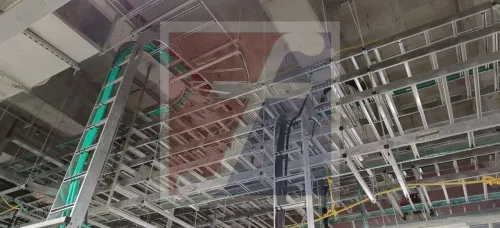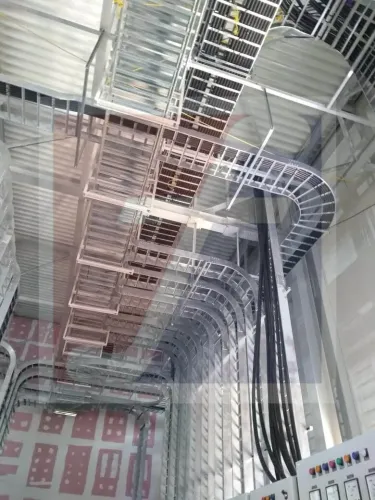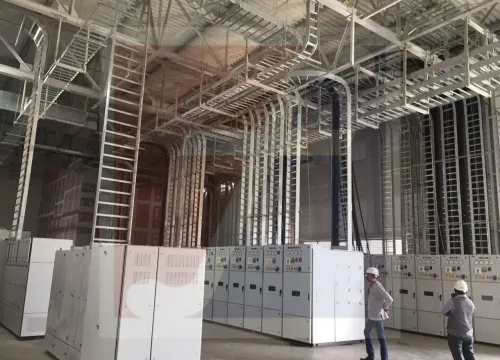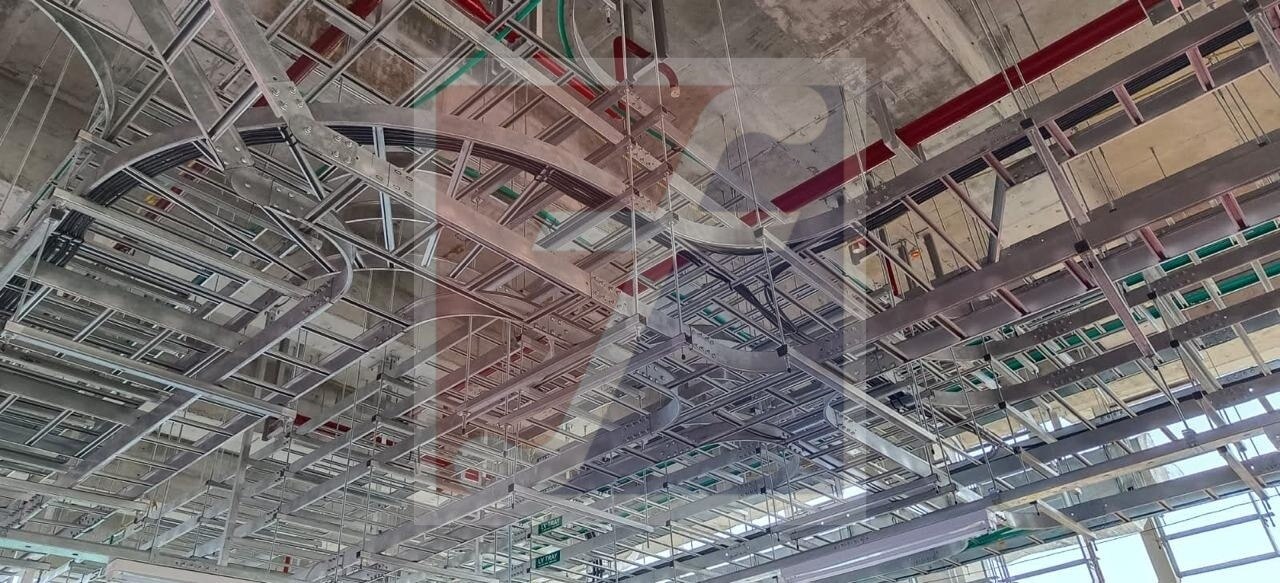
A ladder tray earns its place when ventilation, cable access, long industrial routes, and future expansion matter more than continuous enclosure. By checking cable type, fill, load, span, environment, restraint, and installed cost, you can decide whether it is the right system or whether perforated tray, solid-bottom tray, wire mesh, conduit, or a cable ladder is safer and more economical.
Key takeaways
- Choose ladder trays for long, ventilated routes carrying multiple power cables.
- Check cable fill, tray load, support span, and future capacity before ordering.
- Use solid-bottom, perforated, mesh, conduit, or cable ladder when route conditions demand it.
- Compare material, finish, dimensions, load data, drawings, delivery, and installation support.
When is a ladder tray the right choice for an industrial route?
Choose a ladder tray when an industrial route carries multiple power cables over a long distance and you need ventilation, pulling access, inspection, and room for later additions. Its two side rails and transverse rungs reduce water retention and leave the cables visible, making maintenance easier than in enclosed systems.
| Route condition | Ladder tray decision | Reason |
|---|---|---|
| Medium- or high-voltage power cables in quantity | Usually suitable | Open access supports pulling, separation, and inspection |
| Small control, instrumentation, or communication cables | Use caution | Small or flexible cables can sag between rungs and need extra support |
| Dust, oil, wash-down, falling debris, or persistent spray | Add covers or choose another system | Open construction is not environmental or mechanical enclosure |
| Shielding or strict electromagnetic separation | Not the primary choice | Use separate containment and designed crossing practices |
| Long route with spare capacity planned | Strong candidate | Future cables can be added without dismantling a continuous enclosure |
For ladder tray for industrial projects, decide from the complete route: cable type and quantity, voltage level, length, installation location, maintenance access, and expansion plan. A short, protected route with sensitive instrumentation may favour perforated tray, solid-bottom tray, or conduit instead.
Do not use tray width to approve cable ampacity. Calculate grouping, spacing, ambient temperature, solar heat, process heat, and the number of loaded circuits; open ventilation does not cancel derating. Also confirm the required load at the actual support span, because sheet thickness alone does not establish capacity.
How do you check ladder-tray size, cable fill, load, and support span?
A tray is adequate only when its usable internal space and working-load rating both pass the design check. A width that fits the cables can still fail at the proposed support span.
Use this calculation sequence:
- List every cable’s outside diameter and quantity from the cable schedule. For a single-layer arrangement, add the diameters and the specified gaps between cables; for multiple layers, calculate each layer and check the manufacturer’s arrangement limits.
- Compare that occupied width with usable internal width, not nominal tray width. Subtract side-rail intrusion, preserve separation, bend-radius access, cleat space, and room for inspection. Reserve capacity for planned future cables.
- Do not prove compliance by adding cable diameters alone. Cable arrangement, small-cable support between rungs, vertical retention, bend fittings, and access clearances affect whether the proposed system works.
- Convert cable weights into load over the support span, then add tray self-weight, splice plates, fittings, cleats, covers, and any other permanently supported hardware. Include outdoor wind or snow exposure where the route faces those forces.
- Check the resulting working load against the rating at the actual support spacing. NEMA VE 1 load classes, commonly 50, 75, 100, 125, and 150 lb/ft at specified spans, provide a reference; sheet thickness alone is not a rating.
Request width, side-rail height, rung spacing, allowable span, load class, bend radius, and fitting data for straight sections, joints, bends, tees, reducers, and supports. The complete system must pass, not just the straight tray.
When should you choose perforated tray, solid-bottom tray, mesh, conduit, or cable ladder instead?
Choose another support system when the route needs enclosure, fine-cable support, shielding, or tested fire survival rather than ventilation and easy access.
| Option | Main advantage | Choose it when |
|---|---|---|
| Ladder tray | Ventilation, rung access, and efficient support for larger power cables | The route is clean, accessible, and needs inspection or future cable additions |
| Perforated tray | Continuous cable support with tie points | Small control cables could sag between rungs, or vertical retention and cable grouping matter |
| Solid-bottom tray | Continuous containment | Fine or flexible cables need a stable base, or falling dust and debris must not reach cables |
| Wire mesh tray | Light construction and clear visibility | The route carries lighter cables and you need quick visual inspection; add supports and restraints for small cables |
| Conduit | Enclosed mechanical and environmental protection | Dust, oil, wash-down, persistent spray, impact, or electromagnetic shielding is the primary concern |
A cover improves protection against falling objects and contamination, but it does not turn every ladder tray into a sealed system. Route sensitive instrumentation and communication cables separately from power cables, with designed crossing practices and electromagnetic compatibility checks.
Use cable cleats, ties, or hold-downs where small cables need retention, especially on vertical runs. Cleats also restrain power cables during short-circuit forces; a rung alone does not.
Fire-survival routes need a tested assembly for the specified duration and orientation. Demand evidence covering the cable, tray, joints, supports, anchors, and cleats. Steel alone proves neither fire performance nor electromagnetic shielding.
What installation details make ladder cable support reliable?
A correctly sized tray can still fail when supports, joints, and restraints are misplaced. Support carries cable weight; restraint prevents movement. Use ties for light control cables, cleats for power cables, clamps or hold-downs near bends, and dedicated restraints on vertical runs. Single-core AC cables need non-magnetic cleats or clamps designed for fault forces.
| Device | Location | Purpose |
|---|---|---|
| Ties | Short horizontal runs | Prevent shifting, not fault restraint |
| Cleats | Power routes and bends | Restrain cables and withstand electrodynamic forces |
| Clamps or hold-downs | Vertical runs and transitions | Prevent sliding or lift-off |
| Non-magnetic restraints | Single-core AC circuits | Avoid magnetic heating and movement |
Keep every cable within its manufacturer’s minimum bend radius, align splice plates so the ladder remains straight, and place supports near joints, bends, tees, reducers, and anchors. Maintain cable separation for heat dissipation, installation access, and segregation between power and control circuits.
Long outdoor runs need expansion treatment at locations shown by the design temperature range and installation drawings; rigidly fixing every section can load joints and supports. Ask for support spacing, anchor points, clearances, fitting radii, and complete-system load data.
A ladder cable support in kochi also needs a corrosion decision. Assess chloride, humidity, chemicals, and cut edges: pre-galvanized sheet does not protect post-cut or welded areas like post-fabrication hot-dip galvanizing under ISO 1461. Repair exposed edges as specified.
Finally, bond splice plates where required, size the protective conductor, connect it to the site earthing system, and verify continuity under IEC 61537. A metal tray is not automatically an earth path.
How should you compare a local ladder-tray quotation before choosing it?
Compare the installed route cost, not the price per metre. A lighter tray can require shorter support spans, extra anchors, more erection time, and greater future-access cost than a heavier quotation.
| Quote item | What to verify | Cost consequence |
|---|---|---|
| Straight lengths | Quantity, usable width, load rating, and span | More sections or stronger supports change the total |
| Supports and anchors | Spacing, cantilever type, anchor hardware, and drawings | Shorter spans increase steel and labour |
| Splice plates and bonding links | Matching joints and electrical-continuity provisions | Incompatible parts create rework and earthing risk |
| Bends, tees, reducers, and covers | Complete-system pricing and radii | Missing fittings lead to site fabrication |
| Coating repairs, delivery, erection, and access | Repair method, freight, installation, and access arrangements | A low factory price can become an expensive installed route |
Before choosing a ladder trays manufacturer in Kochi, request this document checklist:
- Material grade, coating method and thickness, dimensional tolerances, and a sample or approved drawing
- Load and span data for straight sections, joints, bends, tees, reducers, and cantilever supports
- Fitting and splice compatibility, support drawings, cable clearances, and expansion provisions for long outdoor runs
- Inspection records, including coating checks and dimensional inspection
- Evidence that cut, drilled, or welded surfaces received approved corrosion protection
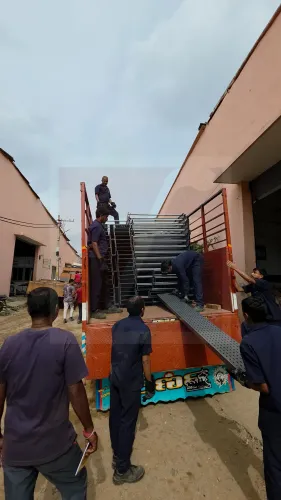
A ladder cable tray manufacturer in Kochi or ladder tray supplier in Kerala can reduce freight, delivery time, and customization time. Count that benefit only when the supplier maintains dimensional consistency and supplies complete-system data. Assess Fixotech Engineering Systems Pvt Ltd: Manufacturer of Cable Management Systems against the same checklist, not against locality alone.
Frequently asked questions
When is a ladder tray the right choice for an industrial route?
Choose a ladder tray for long industrial routes carrying multiple power cables when ventilation, visible inspection, pulling access, and future cable additions matter.
How do you check ladder-tray size, cable fill, load, and support span?
List each cable’s outside diameter and weight, calculate the occupied width and total load, then confirm the tray width, side-rail height, rung spacing, and support span against the manufacturer’s load table.
When should you choose perforated tray, solid-bottom tray, mesh, conduit, or cable ladder instead?
Choose perforated tray for general routing and frequent supports, solid-bottom tray for small cables or debris protection, mesh for light flexible routes, conduit for enclosed individual runs, and cable ladder for heavy cables requiring wide rung support.
What installation details make ladder cable support reliable?
Align and level supports, maintain the specified span, bond tray sections across joints, protect cable bends at entries, avoid sharp edges, and secure cables without crushing them.
How should you compare a local ladder-tray quotation before choosing it?
Compare the quoted material, thickness, finish, dimensions, rung spacing, load capacity, support-span data, accessories, drawings, delivery terms, warranty, and installation assistance.