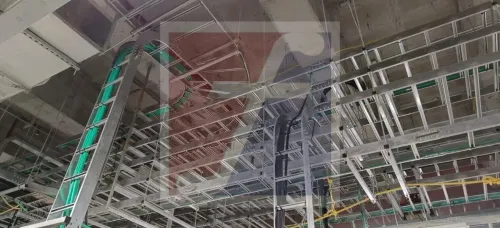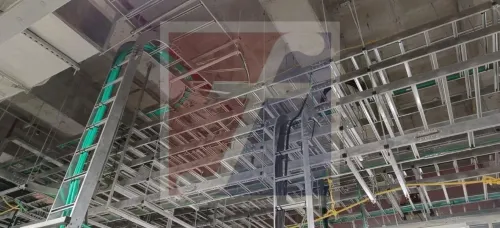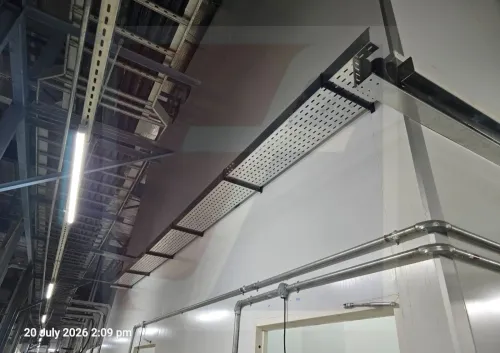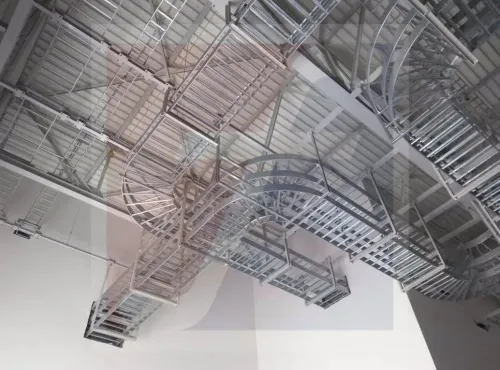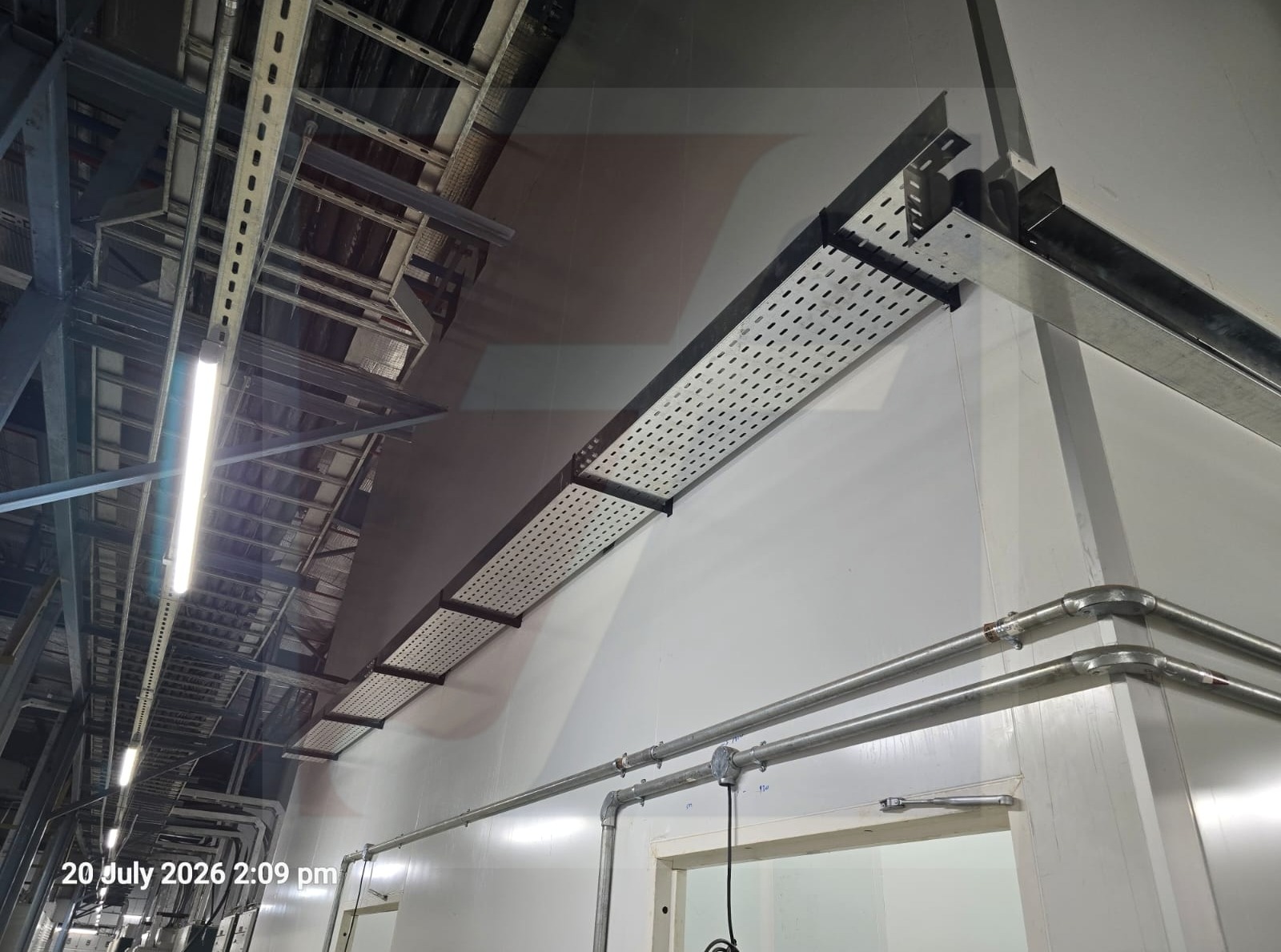
Perforated cable trays are widely considered where cables require continuous underlying support combined with openings for ventilation and cable management. For electrical planners and procurement teams evaluating a Perforated Cable Trays Manufacturer in Bengaluru, understanding the construction and application of these trays can help establish a clearer purchase specification.
A perforated cable tray generally consists of a formed base containing regularly arranged perforations along with raised side sections. The base supports the cable route, while perforations reduce the fully enclosed nature of the pathway and provide ventilation.
This configuration can be relevant for several cable-routing situations, including power distribution, control systems, instrumentation circuits and communication infrastructure, depending on the project's engineering requirements.
The suitability of a perforated tray depends on more than width alone. Buyers should consider:
- Cable type and total cable volume
- Required tray width and side height
- Material thickness
- Material grade or specification
- Environmental conditions
- Required surface treatment
- Cable load
- Routing distance
- Accessories required for bends and branches
Perforated trays can be particularly useful where multiple smaller cables need organized routing along a defined pathway. The supported base helps keep cables within the tray structure, while perforations contribute to ventilation and provide practical flexibility for cable management.
In Bengaluru's industrial environment, perforated trays may be considered across manufacturing facilities, engineering units, commercial developments, utility spaces and other electrical infrastructure projects. Karnataka projects can vary significantly in environmental exposure and operational conditions, making specification-based manufacturing important.
The associated accessories should be considered at the same time as the tray itself. Horizontal bends, vertical bends, tees, reducers and other manufactured components allow the perforated tray route to follow the planned facility layout. Ordering straight sections without determining accessory requirements can leave an incomplete bill of materials.
Another factor is dimensional consistency. When numerous tray sections are used across a project, uniform manufacturing supports compatibility between adjoining components. Buyers can therefore include dimensions, tolerances where relevant, material details and finish requirements in their procurement documentation.
Fixotech Engineering Systems Pvt Ltd manufactures perforated cable trays and related cable management products for Bengaluru-based industrial and project requirements. When comparing manufacturers, project teams can evaluate whether the proposed tray construction corresponds with approved technical specifications rather than relying only on generic product descriptions.
Perforated cable trays are ultimately one component within a broader cable-routing system. Their effectiveness depends on selecting suitable dimensions, construction, accessories and material specifications for the actual cables and operating environment. Clear engineering inputs allow manufacturers to produce trays that correspond more closely with the intended project requirement.