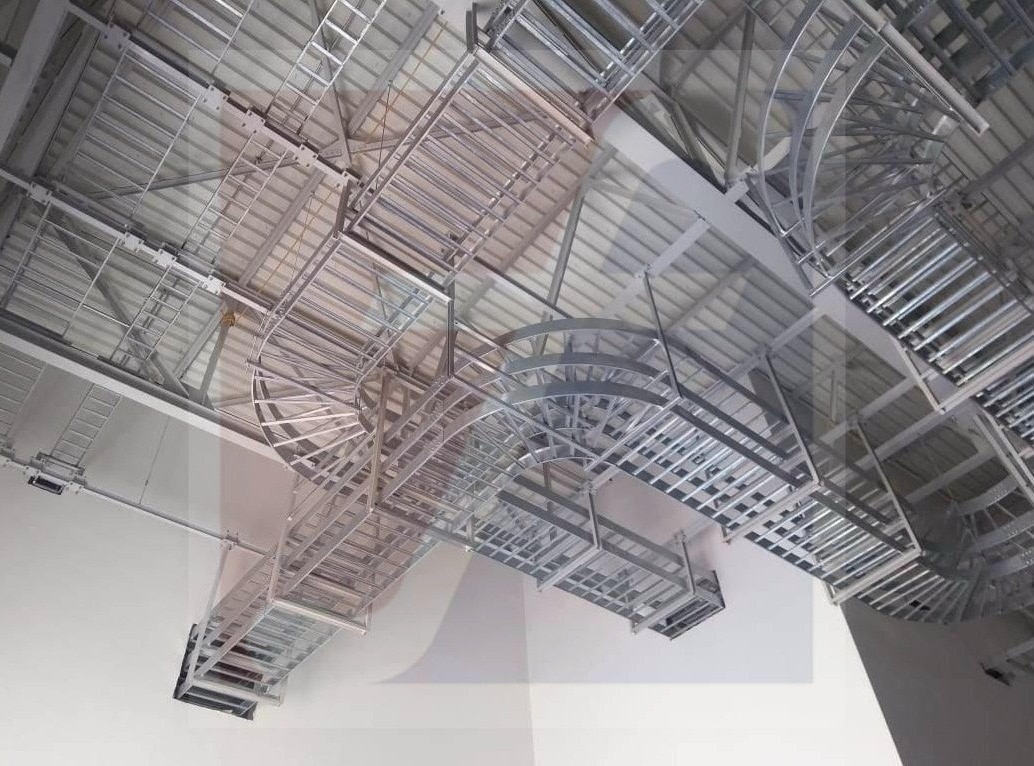
A floor raceway is a defined cable path with a base, side walls, and a removable or hinged cover, but the term also covers several installation formats with different loading, access, and protection requirements. By the end, you will be able to distinguish the available systems, specify their capacity and safety features, and ask a supplier for a complete, installable package.
Key takeaways
- Use a covered raceway when cables need enclosure and service access.
- Reserve spare capacity and separate power from data cables.
- Check cover loads, corrosion resistance, earthing, edges and ingress protection.
- Request drawings, material grade, load data, tests and installation details.
What physically counts as a floor raceway?
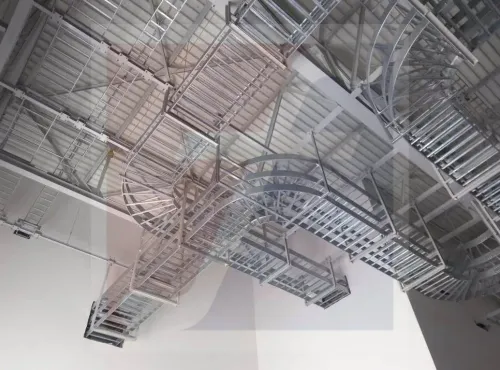
A floor raceway is a defined cable path installed on, within, or immediately below a floor. Its covered form has a base, side walls, and a removable or hinged cover that protects and contains cables; an open-bottom or open-top tray mainly supports exposed cables and does not provide the same enclosure.
The phrase floor raceway cable tray in Bengaluru is incomplete until you identify the physical arrangement:
- Floor trunking: a surface-mounted duct fixed above the finished floor, usually with a removable cover.
- Covered tray: a tray fitted with a cover for added protection, while retaining tray-style cable support.
- Open-bottom tray: a supported route with no continuous base, suitable only where the installation does not need a fully enclosed channel.
- Underfloor duct: a route below the floor surface, below a raised access floor, or inside a service trench.
- Raised-floor raceway: a routing system occupying the void beneath removable access panels.
- Flush floor-box system: a recessed route that terminates at floor boxes level with the finished floor.
A ladder or perforated cable tray leaves cables comparatively exposed and is not automatically a raceway. Conduit encloses cables in a pipe, while a floor box provides an access outlet rather than a continuous route.
A service trench is a building opening or channel; it becomes a raceway only when fitted with a defined cable-support and access system. Specification drawings must name the exact form, because loading, protection, access, and installation work differ.
How is a floor raceway installed and accessed?
A floor cable routing system in Bengaluru is installed in one of three ways: fixed above the finished floor, recessed into the slab or screed, or routed below a raised access floor or inside a service trench. Surface-mounted trunking and raised-floor raceways remain easier to open, extend, and repair after handover.
- Set out the route and mark every floor box, junction box, bend, tee, cross, reducer, drop-out, and access panel. For a flush route, coordinate slab depth, screed thickness, floor finish, expansion joints, and floor-box positions before placing concrete or screed; cutting them in later causes disruptive rework.
- Install supports or brackets, then join straight lengths with couplers and fit the required bends, tees, crosses, reducers, and end caps. Keep the route aligned and leave the specified space for cable bending and entry.
- Fit covers, junction boxes, floor boxes, and access panels as coordinated components rather than treating them as optional extras. Below a raised floor, check that panels can be lifted without striking cables or nearby services.
- Inspect before cable installation: verify finished-floor levels and tolerances, remove burrs from every cut edge, protect cable-entry openings, check that covers seat fully, and confirm no fastener or support creates a sharp obstruction.
Flush covers must finish level with the surrounding floor; an uneven edge becomes a trip point and prevents carts from passing safely. Surface and raised-floor systems provide simpler retrofit access because you can remove a cover or lift a panel without breaking the floor.
How do you size the raceway for cables and future changes?
Size the raceway from cable geometry and maintenance needs, not cable count. A cable schedule must show each cable’s outside diameter, minimum bending radius, route length, bend locations, entry points, and termination method. Use the usable internal width and height—not the external dimensions—to calculate cross-sectional area.
Do not fill that area completely. Closely packed power cables dissipate less heat and can run hotter, while excessive fill blocks replacement and future feeding. Specify reserve space for later additions, then check pulling or feeding points, cover access, and whether a damaged cable can be removed without dismantling the route.
These inputs matter for any floor cable routing system in Bengaluru or floor raceway cable tray in Bengaluru.
1. Separate power, control, instrumentation, fire-alarm, telecommunications, and data cables when voltage, interference, fire strategy, or project standards require it. Use separate raceways or a continuous divider along the full route.
2. Reject a short divider or an unsealed opening as complete segregation. Bond a metal divider correctly to the raceway’s earthing and bonding system; continuity must not stop at a joint or access opening.
3. Record cover loading, impact exposure, IP requirement, and replacement access alongside the cable dimensions. A raceway sized by area alone can fail when a bend exceeds the cable’s minimum radius or when the cover cannot be opened.
4. Put the specification checklist in writing: cable schedule, usable dimensions, fill allowance, spare capacity, route length, bends, entry points, pulling points, cover access, segregation, and reserve space for later additions.
Which load, material, environmental, and safety checks matter?
A floor cable routing system in Bengaluru must be checked against its location, not just its cable load. Calculate cable weight and support spacing, then specify cover loading separately for pedestrians, trolleys, cabinets, or vehicles; a cable-support rating does not prove that the cover can carry traffic.
Include impact, heat, dust, monsoon moisture, wet cleaning, condensation, chemicals, and indoor or outdoor exposure.
| Material | Corrosion resistance | Weight, cost, and installation |
|---|---|---|
| Pre-galvanized steel | Good for dry indoor areas; cut edges need protection | Heavy, economical, easy to install |
| Hot-dip-galvanized steel | Better protection for exposed or damp routes | Heavy, higher cost, extra handling |
| Powder-coated steel | Coating protects broad surfaces, not cut edges or joints | Moderate cost; touch-up and careful installation required |
| Aluminium | Good corrosion resistance and light weight | Higher material cost; easier handling |
| Stainless steel | Strongest choice for wash-down, chemicals, and persistent moisture | Highest cost; heavier fabrication and installation effort |
Metallic joints need verified electrical continuity and protective-earthing bonds; paint, powder coating, loose couplers, and insulating finishes can interrupt the path. Check every joint after installation. A penetration through a fire-rated wall or floor needs a compatible tested fire-stop system that remains serviceable when cables change.
- Trip hazards, protruding edges, sharp cut metal, loose covers, and unsafe access panels
- Open cable exits that undermine the stated IP protection
- Cover deflection under the specified test arrangement
- Corrosion protection at cuts, joints, fasteners, and outdoor interfaces
What should you ask a Bengaluru manufacturer to quote and prove?
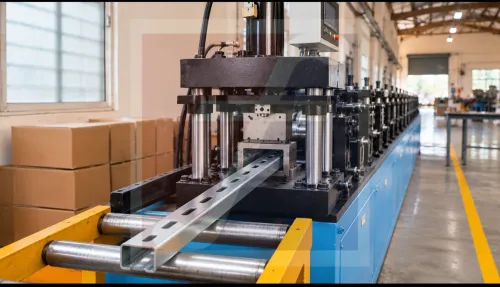
Ask for evidence that the quotation covers an installable system, not just folded sheet metal. A complete raceway should arrive as coordinated components with defined performance; a fabricated channel may still work, but you must prove each missing function.
| Option | What the quotation represents | Evidence to demand |
|---|---|---|
| Complete raceway system | Matched sections, fittings, covers, supports, and bonding parts | Assembly drawings, load and cover tests, material and coating details, accessory compatibility |
| Fabricated sheet-metal channel | A custom channel whose performance depends on site fabrication and joints | Calculations or tests for deflection, continuity, corrosion protection, impact, and cover loading |
Request these as separate bill-of-material items:
- Straight lengths, covers, bends, tees, crosses, reducers, end caps, drop-outs, floor boxes, partitions, couplers, brackets, bonding jumpers, and access covers
State cable outside diameters, fill allowance, minimum bend radius, route and feeding points, cover load class and test arrangement, impact exposure, IP requirement, power-data segregation, earthing method, fire-stop details, material, coating, and installation tolerances. A cover rated only for maintenance access does not prove pedestrian, trolley, cabinet, or vehicle loading.
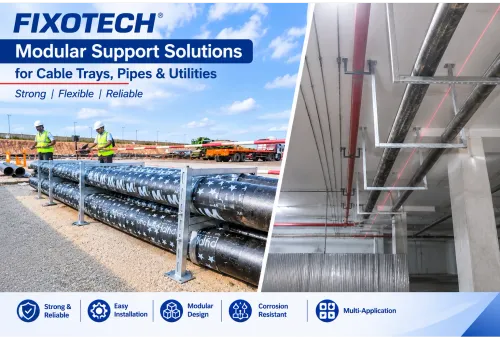
For a buyer searching for a cable trays manufacturer for floor raceway in Bengaluru or a raceway cable tray manufacturer in Bengaluru, Fixotech Engineering Systems Pvt Ltd: Manufacturer of Cable Management Systems should be evaluated against these project inputs, not its product name alone.
Before acceptance, check cover fit and deflection, joint continuity, protective-earthing bonds, deburred edges, corrosion protection at cuts and joints, and compatibility of every bend, box, partition, coupler, and access cover.
Related product
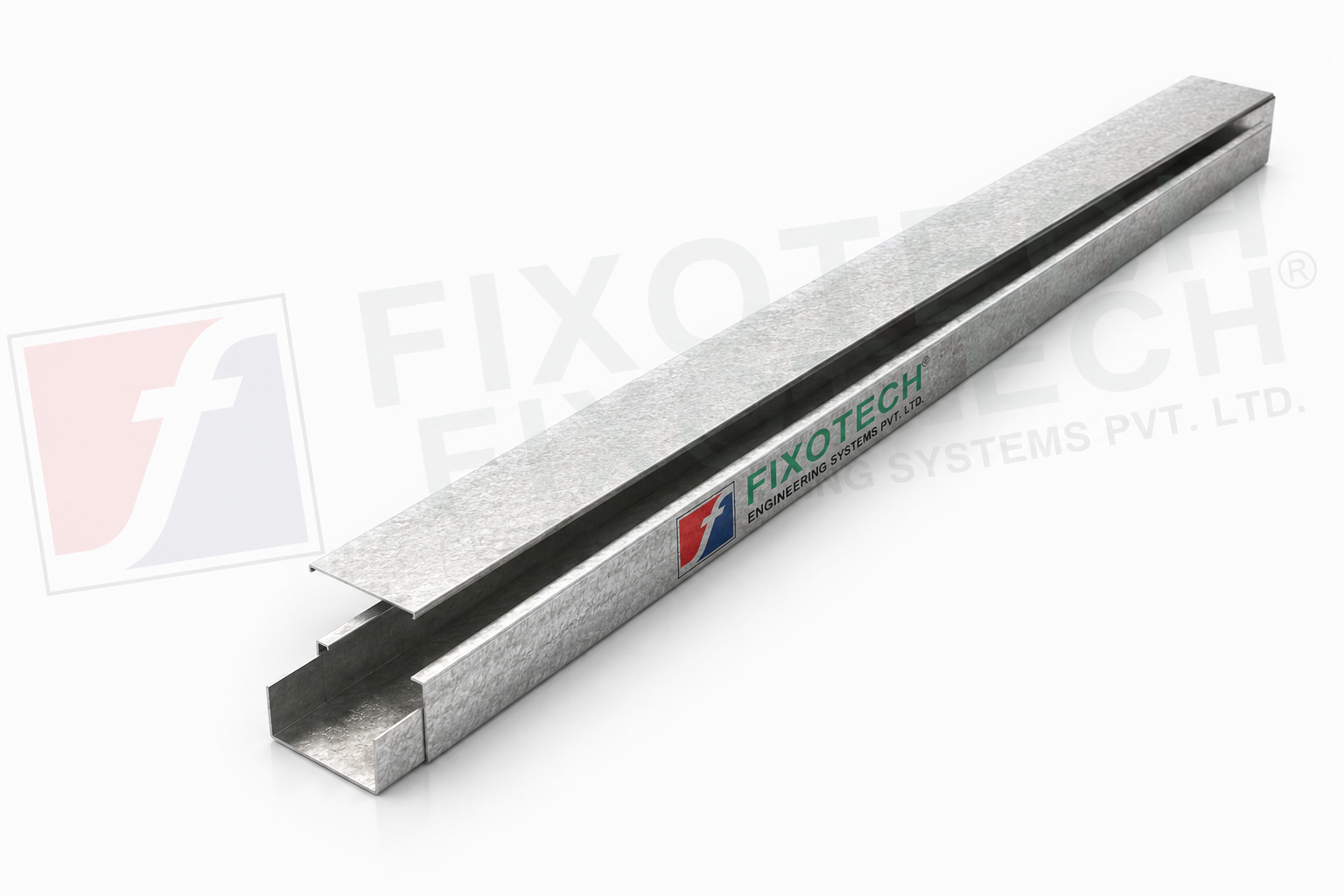 | RACEWAY CABLE TRAY - FLOOR RACEWAY RACEWAY CABLE TRAY - FLOOR RACEWAY A cable management system called a floor raceway cable tray, or just a floor raceway, is used to route and safeguard wires between floors, especially... View product → |
Frequently asked questions
What physically counts as a floor raceway?
A floor raceway is a defined cable path on, within or below a floor. A covered raceway has a base, side walls and a removable or hinged cover; an open tray mainly supports exposed cables.
How do you size a floor raceway for future changes?
Calculate the cable fill from actual cable diameters, maintain separation between power and data circuits, and reserve spare space for planned additions rather than filling the raceway at installation.
Which safety checks matter for a floor raceway?
Check cover load rating, sharp edges, bonding and earthing, corrosion resistance, fire performance where specified, water or dust protection, and safe access for maintenance.
What should you ask a Bengaluru manufacturer to quote?
Request a dimensioned layout, raceway cross-section, material and finish, cover load data, cable capacity, accessories, earthing details, test documents and installation requirements.