Damaged covers, crushed channels, wet slabs, blocked access and overcrowded cables can turn a floor raceway into a safety, maintenance and project-delay problem. You will be able to identify the failure, inspect the complete route, recover it safely and choose between repair, replacement, rerouting or a different containment system.
Key takeaways
- Isolate power before opening a damaged floor raceway.
- Check covers, joints, bends, access points and cable fill before repairs.
- Replace crushed channels and sharp-edged sections instead of patching them.
- Demand drawings, load data, material details and inspection records from suppliers.
What Floor Raceway Problems Look Like on a Bengaluru Project
Floor cable routing problems show up as rocking or cracked covers, crushed channels, sharp edges at joints, blocked access points, trip hazards and cables packed beyond their usable space. At outlets, insufficient bending room forces cables against frames, terminals or covers.
Floor raceway damage often starts during screeding, tile or stone installation. Drilling can strike the channel or embedded services; furniture movement, trolleys, pallet traffic, maintenance vehicles and later fit-out work can impose point loads on covers, edges and unsupported spans.
Check for these linked failures before replacing a cover:
- Water from wet slabs, cleaning or failed joints, plus dust and construction debris inside the route
- Covers sitting proud, deflecting or losing support at edges
- Deformed channel bodies, loose supports, misaligned joints or damaged dividers
- Crushed cable insulation, overcrowded bundles and bends tighter than the cable maker permits
- Broken bonding links or discontinuity in the metallic earthing path
A failed cover can therefore signal damage below it: the channel body, supports, joints, dividers or earthing path may also be unsafe. Do not treat a new cover as a complete repair.
An in-floor, underfloor or flush-floor raceway is not an open cable tray. Check floor-system requirements against IEC 61084-2-2; IEC 61537 applies to cable-tray and cable-ladder systems. Set the frame against the final screed, tile or stone build-up, or the finished cover can become proud, unsupported and hazardous.
How to Inspect Floor Raceway Damage Before Opening the Route
Begin by isolating the affected circuits and recording the route before opening anything. Mark every outlet, joint, access point and nearby embedded service, then classify each finding as cosmetic, mechanical, electrical or environmental.
1. Check the cover first. Confirm that it sits flush, has edge support and retains every fastener. Record rocking, deflection, cracks, deformation and point-loading marks; these indicate floor raceway damage beyond a replaceable finish.
2. Inspect the containment body and joints. Check alignment, sharp metal, damaged coatings, loose dividers and continuity across metallic sections. A failed bonding path is an electrical defect, not a cosmetic one.
3. Examine each cable for crushed insulation, jacket cuts, flattened bends, water staining, corrosion and debris. Measure bends against the cable maker’s permitted radius; a tight outlet bend is one of the common floor cable routing problems.
4. Check the surrounding screed, slab and finished floor for voids, settlement, loose tiles and water paths. Trace moisture to wet cleaning, a leaking service or an unfinished slab rather than sealing over the symptom.
5. Identify the real load case: pedestrians, office furniture, trolleys, pallets or maintenance vehicles. Inspect unsupported spans and cover edges for point-loading damage, especially where cracking follows a wheel path.
6. Before drilling or anchoring, locate post-tensioned tendons, reinforcement, embedded conduits and chilled-water services using approved drawings and detection equipment. Do not assume an existing slab is safe because a new-build support detail was approved.
The Safe Floor Raceway Recovery Process After Damage
Do not return cables to service because a replacement cover looks sound. Safe floor raceway recovery requires proving that the cables, containment, bonding and finished floor are fit for use.
1. Isolate the affected circuits and apply lockout and tagout. Label every cable at both accessible ends, then photograph the route, outlets, joints and access points before removing covers.
2. Remove cable loads with approved support and pulling methods. Do not drag heavy bundles across sharp or wet edges, because floor raceway damage can cut insulation or force cables below their permitted bend radius.
3. Open the route far enough to inspect the channel body, supports, joints, dividers, outlet boxes, bonding links and surrounding slab. Replace crushed sections, distorted frames, broken fasteners and damaged covers; do not bury defects beneath new flooring.
4. Dry and clean water- or dust-contaminated containment, then find and correct the entry path. Galvanized steel alone does not make a jointed raceway watertight. Restore metallic bonding and verify continuity across every replaced section.
5. Test power circuits with insulation-resistance and protective-conductor continuity checks. Use certification testing for structured cabling, and investigate failures before reconnecting equipment or energising circuits.
6. Rebuild screed, adhesive, tile or stone to the approved finished-floor level. Before reopening the area, check that covers sit flush, remain supported under the expected load, fasteners are secure and access points can be opened without damaging the finish.
When to Repair, Replace, Reroute or Change the Containment Type
Repair is justified only when inspection finds a local fault: sound channel, supports, joints, cable insulation and surrounding slab, with the same load case retained. A new cover cannot solve crushed supports, damaged bonding or inadequate bend space.
- Replace the whole run when deformation repeats, access points are undersized, water entry is systemic, earthing continuity is unreliable, or cable fill and bend space are already inadequate.
- Choose overhead routing when floor traffic, wet cleaning or repeated impact makes a flush route unsuitable. Choose underfloor containment when the floor build-up and access strategy support it.
- Move services into walls or ceilings when outlets sit at the perimeter and future maintenance matters more than floor access.
| Option | Protection and access | When it applies |
|---|---|---|
| Conduit | Strong protection; limited pulling access | Short, protected routes |
| Underfloor trunking | Concealed routing with planned access | Continuous floor distribution |
| Raised floor | Distributed access through removable panels | Adaptable office or equipment areas |
| Cable ducting | Enclosed protection | Dust, impact or wash-down exposure |
| Perforated tray | Ventilation and visual inspection | Accessible overhead or service zones |
Keep power, control, fire-alarm and data cables separated using the specified divider height, fixing method and continuity; cable ties are not an equivalent divider. Size from cable outside diameters, fill allowance, bend radius, outlet geometry, pulling access and spare capacity. Joints, bends, dividers and outlet boxes reduce usable space, so width alone misleads.
This decision turns floor cable routing problems into controlled floor raceway recovery: retain a sound local section, replace a failed system, or change the route before another failure is built into the finished floor.
What to Demand from a Floor Raceway Supplier in Bengaluru
Demand a complete, coordinated system submission, not a catalogue image. A floor raceway supplier in Bengaluru must show how the route will carry local traffic, tolerate the finished floor build-up, manage water, preserve cable separation and remain serviceable after installation.
1. Request system drawings with plan, section, joint, outlet and transition details. Require cover load-test evidence for the actual pedestrian, trolley or vehicle load; material grade, coating and corrosion data; operating temperature limits; ingress or sealing details; divider and outlet accessories; bonding provisions; installation tolerances; and replacement-cover availability.
2. Freeze screed thickness, tile or stone thickness, adhesive depth and finished-floor level before setting the flush frame. Approve a site mock-up or sample length, then check for proud covers, unsupported edges, inaccessible joints, rocking and gaps before mass installation.
3. Specify how the route handles wash water, condensate and water from an unfinished slab. Demand defined drainage, falls, seals or barriers; galvanised steel alone does not make a jointed raceway watertight. Require a tested fire-stopping arrangement where the route crosses a fire-resisting slab, wall or compartment boundary.
4. Make the supplier document cable segregation, bend space, earthing continuity and access at every outlet. Evaluate a cable trays manufacturer for floor raceway problems in Bengaluru, including Fixotech Engineering Systems Pvt Ltd: Manufacturer of Cable Management Systems, on its ability to coordinate containment, accessories, load conditions and replacement support as one system.
Reject any submission that omits installation tolerances, bonding verification or a remedy for damaged covers and joints.
Related product
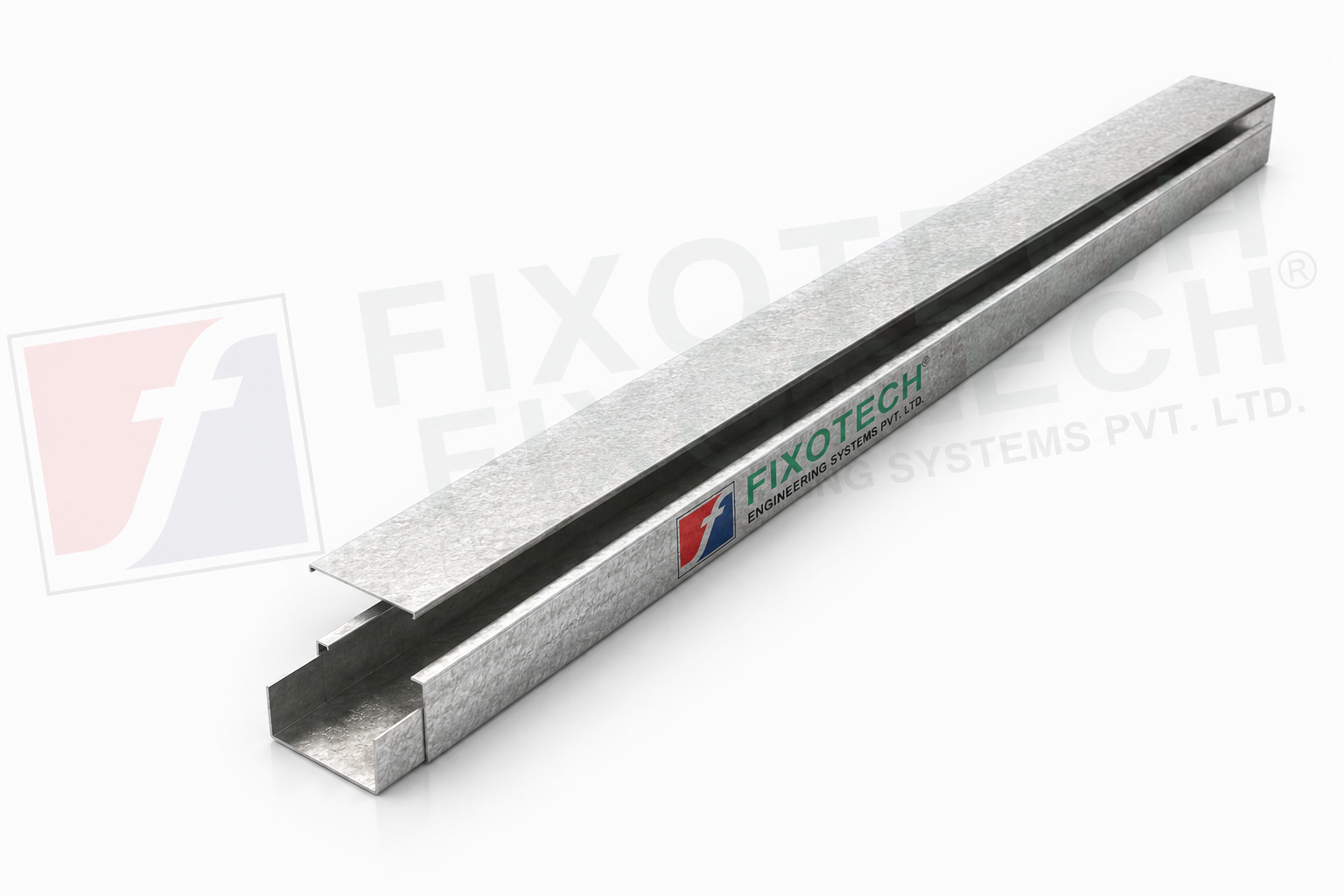 | RACEWAY CABLE TRAY - FLOOR RACEWAY RACEWAY CABLE TRAY - FLOOR RACEWAY A cable management system called a floor raceway cable tray, or just a floor raceway, is used to route and safeguard wires between floors, especially... View product → |
Frequently asked questions
What do floor cable routing problems look like on a Bengaluru project?
Look for rocking or cracked covers, crushed channels, sharp joint edges, blocked access points, trip hazards and cables packed beyond usable space. Check outlets for insufficient bending room that presses cables against frames, terminals or covers.
How do you inspect floor raceway damage before opening the route?
Isolate the affected circuit, review drawings and identify live services before removing any cover. Record damaged covers, channel deformation, joint condition, access points, cable fill, moisture and the clearance available at bends and outlets.
What is the safe floor raceway recovery process after damage?
Make the area safe, isolate and verify circuits, document the damage, remove covers with suitable tools, protect cable insulation, correct the containment defect and test the affected circuits before returning the route to service.
When should you repair, replace, reroute or change the containment type?
Repair a minor, localised defect when the channel remains straight and structurally sound. Replace crushed channels, unsafe covers or sections with sharp edges. Reroute cables when bending space or capacity cannot be restored, and change containment type when the floor route no longer suits the load, access or environment.
What should you demand from a floor raceway supplier in Bengaluru?
Request dimensioned drawings, load and cable-fill data, material and finish specifications, bend and outlet details, installation instructions, inspection records and traceable component information. Confirm that the supplier can support site measurements and replacement parts.