Thank you for writing to us. One of our executive will reach back to you through your submitted medium. In case there’s an urgency, feel free to connect over WhatsApp for faster response.
Prefer calling? Dial +919341960055 (International callers) or +919341960055 (Indian callers).
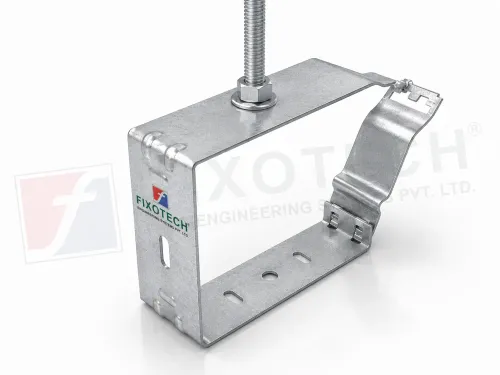
A Raceway Hanger (Openable Type) is a support accessory used to suspend a raceway from the ceiling or structure while allowing it to be opened easily for installation or maintenance of cables.
Typical specification:
Material: GI / MS / SS (as required)
Finish: Pre-Galvanized, Hot-Dip Galvanized (HDG), Powder Coated, or Stainless Steel
Design: Hinged/openable with locking bolt or latch
Mounting: Suspended using threaded rods (M8, M10, or M12)
Applications: Electrical raceways, data cable raceways, instrumentation cable routing
Advantages:
Easy installation and cable additions
Quick maintenance without removing the raceway
Secure support with reusable locking mechanism
Suitable for data centers, commercial buildings, factories, and industrial plants
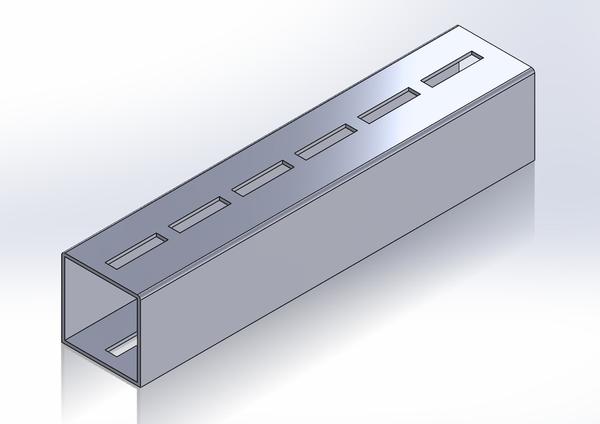
.Precision manufactured slotted square tubes designed for versatile structural and support applications in electrical, industrial, commercial, and infrastructure projects. Fabricated from high-quality steel with accurately punched slots for easy assembly, adjustable mounting, and secure fastening.
Available in Hot Dip Galvanized, Pre-Galvanized, Powder Coated to provide excellent corrosion resistance, durability, and long service life even in demanding environments.
Features
High strength and rigid construction
Precision slotted design for flexible installation
Excellent corrosion resistance with Hot Dip Galvanized finish
Easy cutting, assembly, and modification on-site
Smooth surface finish with accurate dimensions
Suitable for heavy-duty support applications
Applications
Cable Tray Support Structures
Electrical & Mechanical Installations
Equipment Mounting Frames
Solar Support Structures
Industrial Fabrication Works
Pipe & Conduit Support Systems
Warehouse & Utility Structures
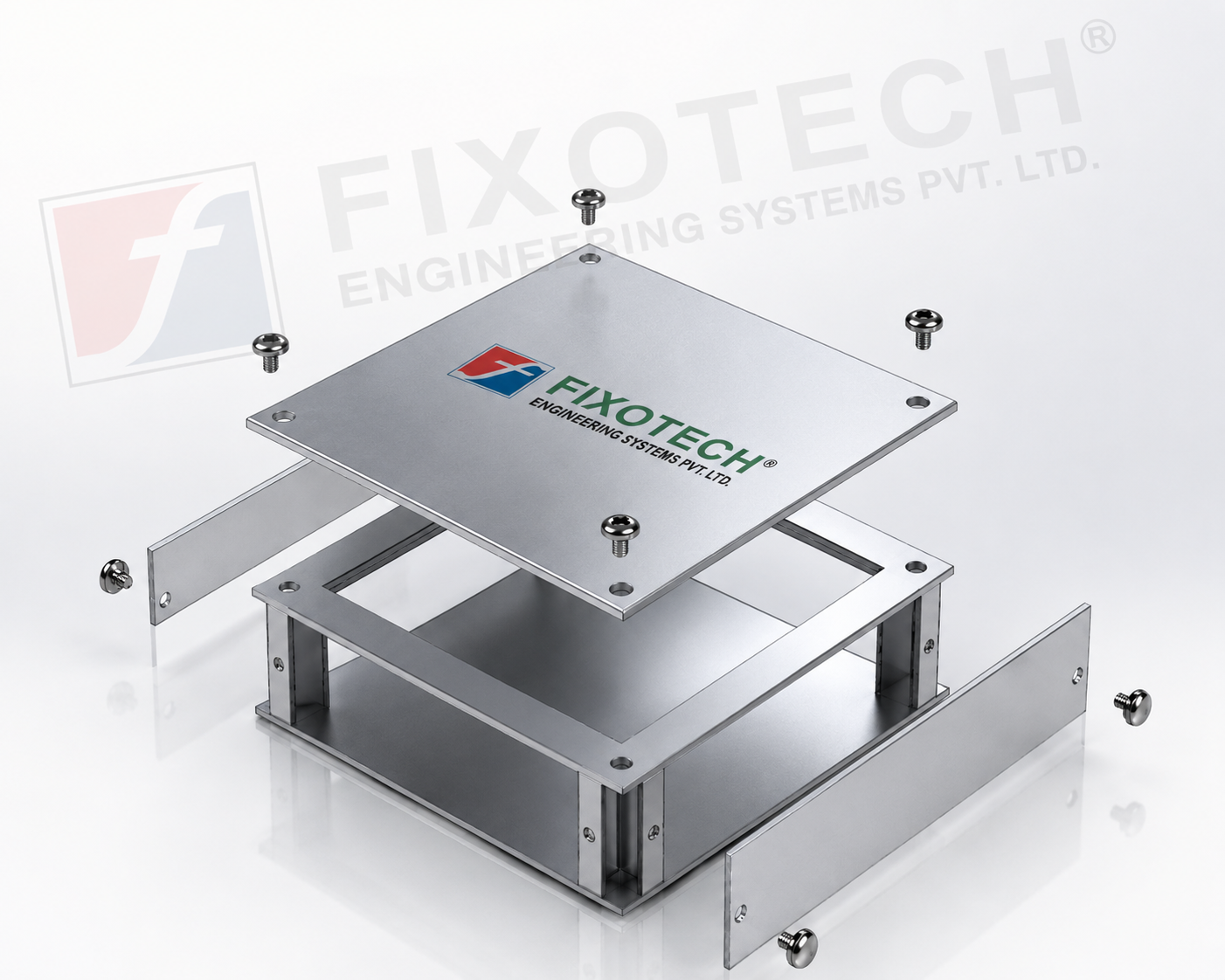
Within a cable management system, a junction box for a raceway cable tray is a specialized enclosure that makes it easier to branch or terminate wires. Here's a summary of its salient characteristics:
Function: In a raceway cable tray system, a junction box's main purpose is to offer a safe, well-organized place for cables to be terminated, branched, or spliced. It makes it possible to distribute wires to various locations across the system effectively.
Design: Raceway cable tray junction boxes are usually made as enclosed enclosures with several cable entry and exit points. They might have mounting holes for attachment to the raceway system, as well as detachable coverings or access panels for simple access to the inside.
Construction: Sturdy materials like steel, aluminum, or PVC are frequently used to build these junction boxes, guaranteeing strength and safety for the cables inside. They are made to offer dependable support and organization while withstanding the weight of cables and the elements.
Versatility: Raceway cable trays junction boxes are adaptable and can be utilized in a variety of settings where cables need to be terminated, branched, or spliced inside a raceway system. They are frequently utilized in data centers, business buildings, industrial settings, and other establishments where cable management is crucial.
Installation: Junction boxes are usually put in place at key sites in the raceway system, like corners, intersections, and terminations. They can be fixed to the raceway itself, or installed on supports, mounting brackets, or other gear meant for raceway installations.
Compatibility: Raceway cable trays' junction boxes are made to work with other cable management parts and common raceway systems, making it simple to integrate them into the current cable infrastructure. For even more personalization, they might also work with add-ons like coverings, dividers, and fittings.
In conclusion, raceway cable trays junction boxes are essential for effectively managing and arranging cables inside a cable management system. They offer a safe and well-organized means to splice, terminate, or branch cables as needed.
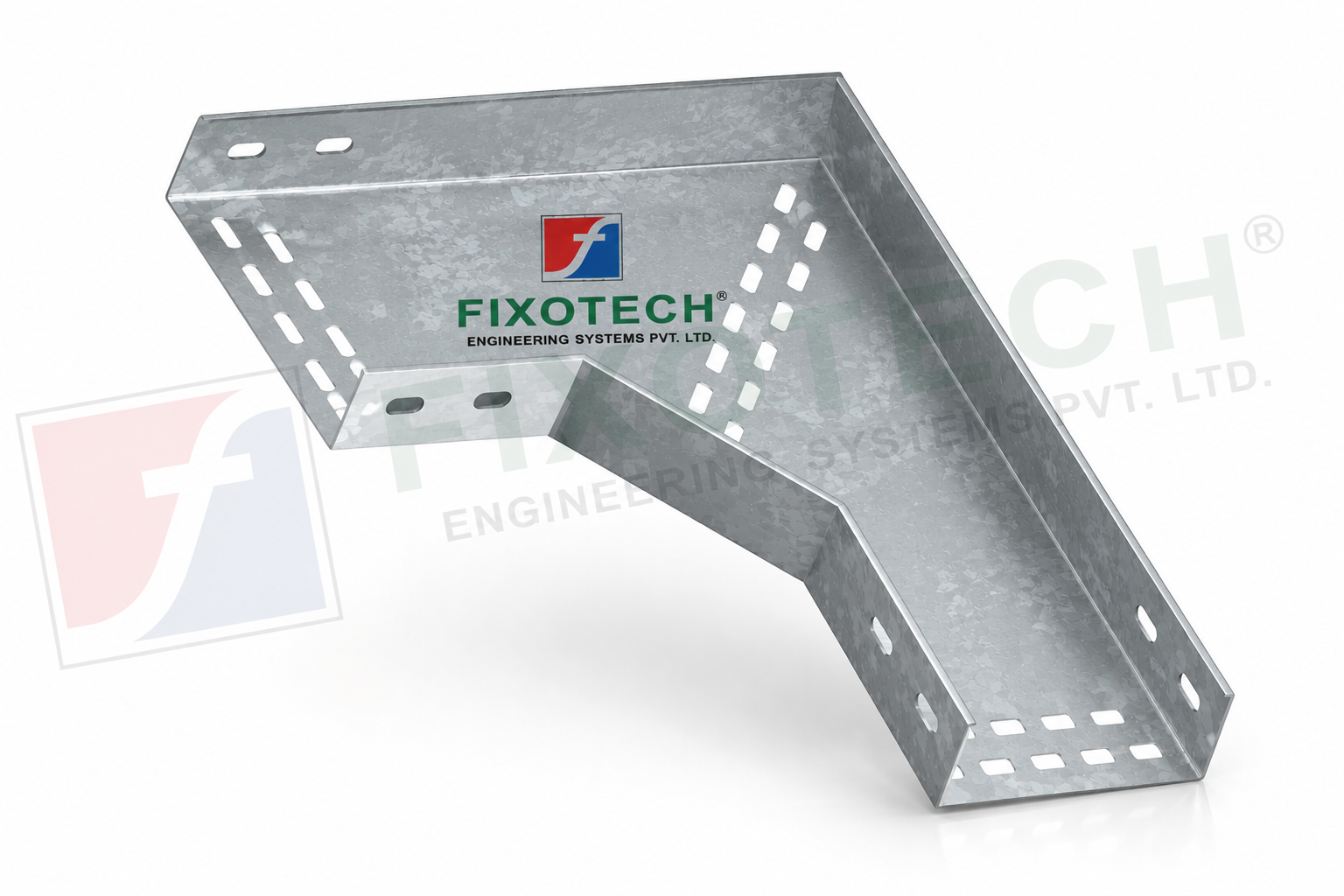
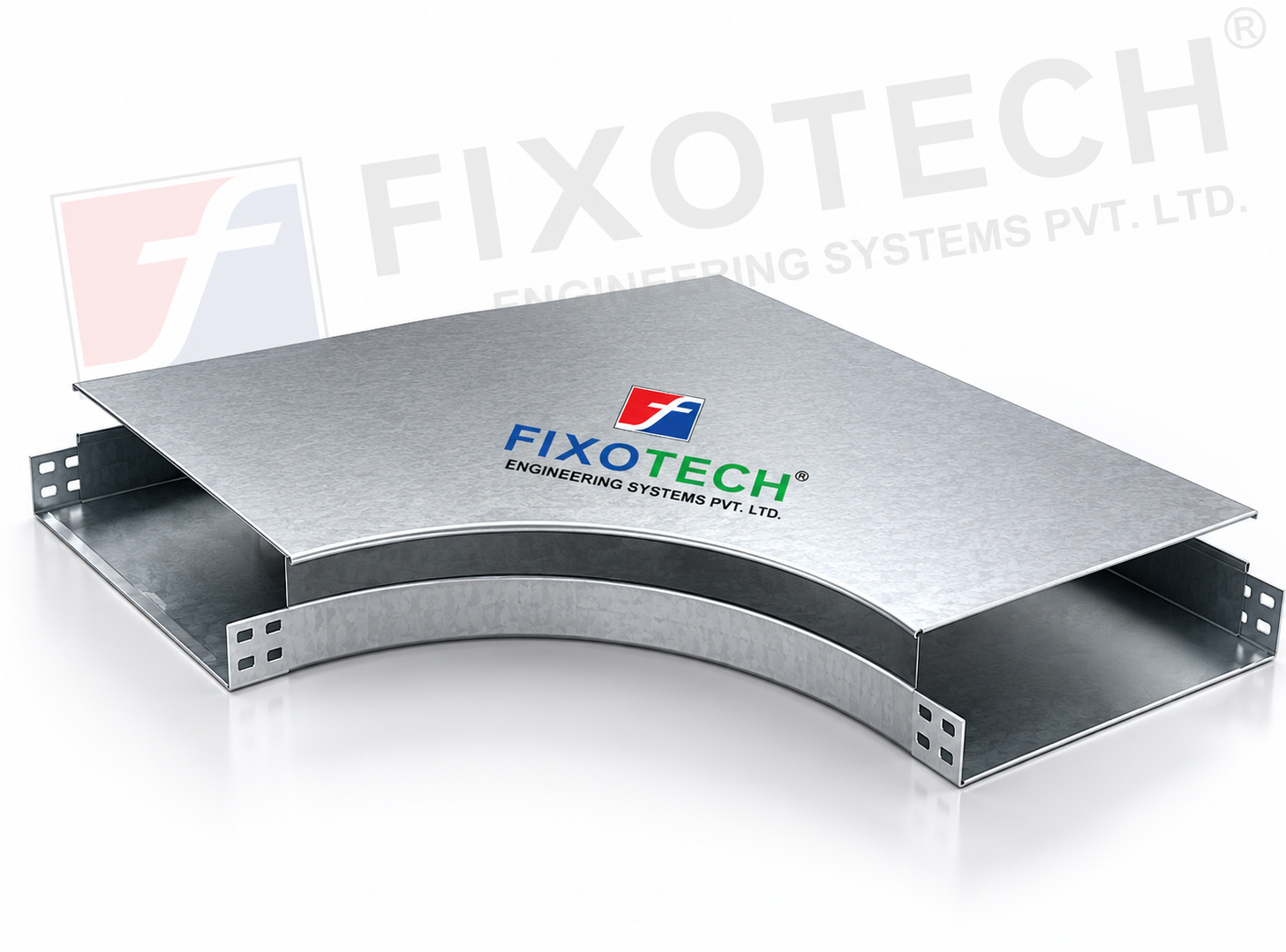
One particular part of cable management systems that is employed when directional adjustments in cable routing along a horizontal plane are required is the perforated horizontal bend cable tray.
We will provide horizontal bends in several radiuses: 300, 600, and 900. based on the needs of the client and the state of the site.
Changes in the horizontal cable routing direction are made easier by the factory made perforated horizontal bend cable tray. The bend permits a seamless transition, guaranteeing appropriate support, organization, and protection of the cables, as opposed to a sharp turn that could strain and endanger their integrity.
As part of the overall cable routing architecture, cable tray systems are equipped with perforated horizontal bend cable trays. Fittings and accessories made for bending and joining tray sections are used to connect them to straight portions of perforated cable trays. A well-installed tray system guarantees seamless cable routing and preserves system integrity.
In industrial, commercial, and infrastructural applications where directional changes in cable routing are required, perforated horizontal bend cable trays are crucial parts of cable management systems. They offer a dependable and effective way to guarantee the right support and protection for the wires while preserving the order and integrity of cable installations.
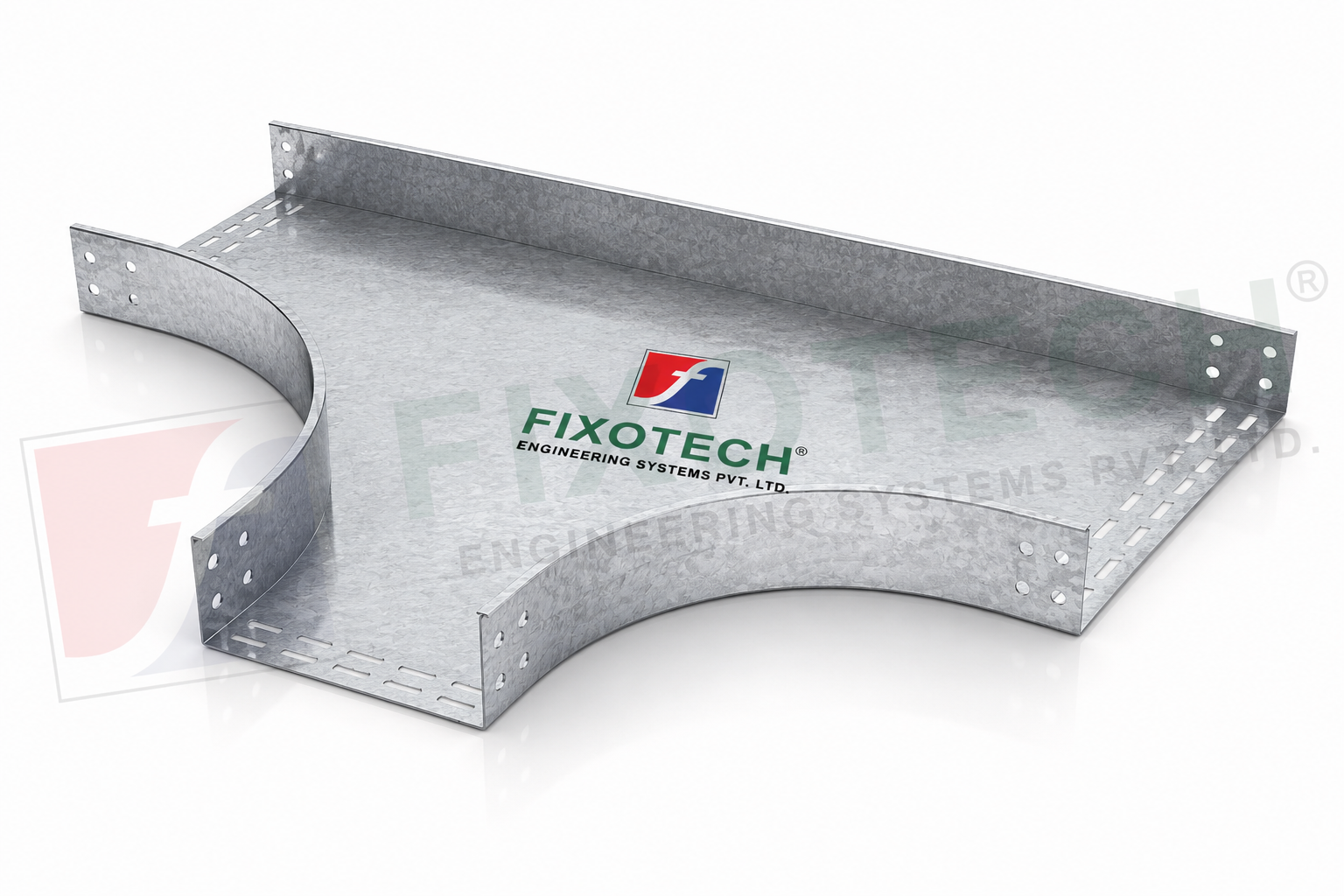
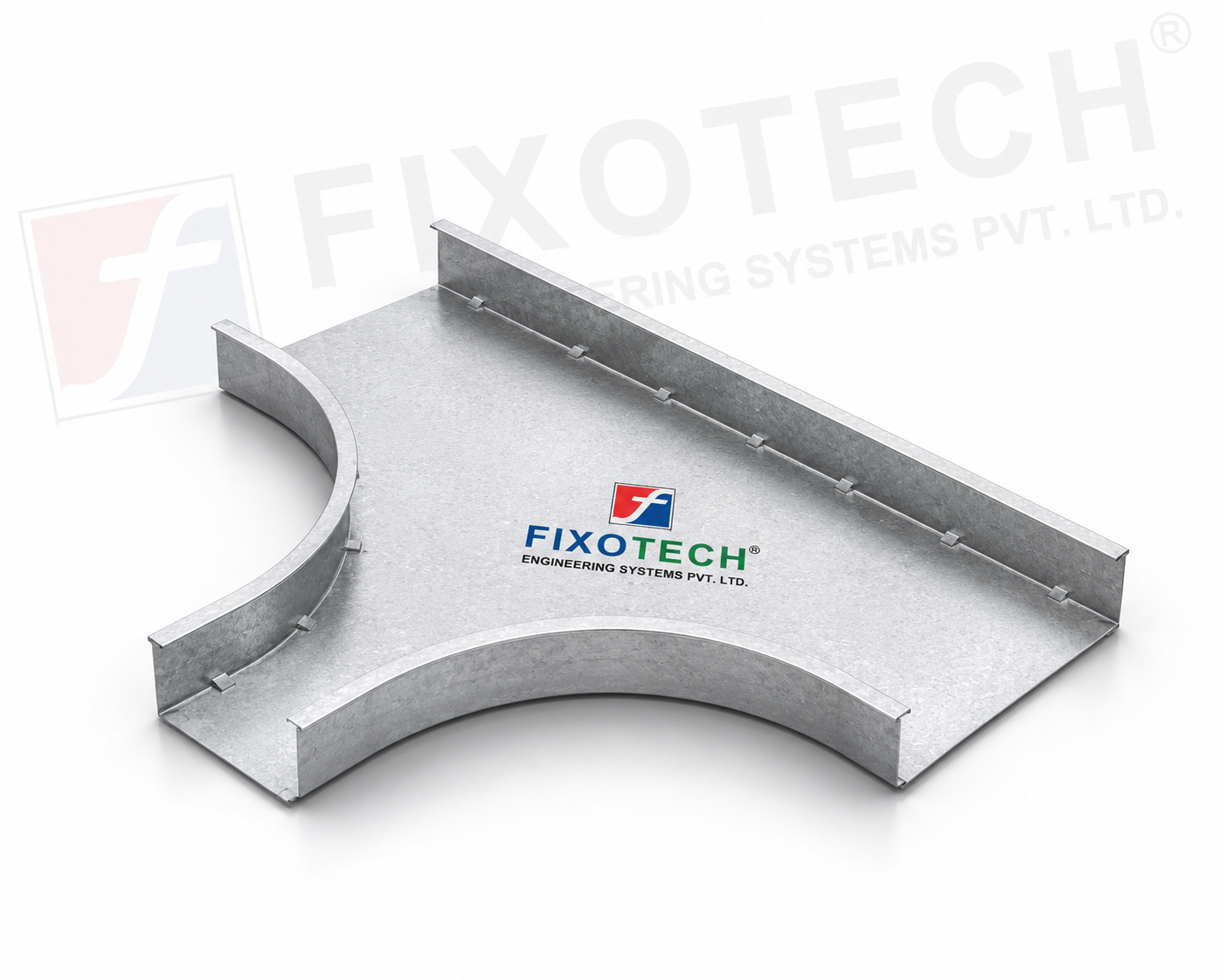
In the context of cable trays, a “Tee Perforated Bend“ most likely refers to a particular part that combines the characteristics of a horizontal bend and a tee fitting, all with holes or perforations all the way down its length.
Depending on the client's needs and the condition of the site, we will offer Tee bends in the following radiuses: 300, 600, and 900.
In cable tray systems, a tee fitting is an element that facilitates the routing of cables in three orientations: forward, left, and right, each perpendicular to the main cable run. With its three apertures or branches, it has a form similar to the letter “T“. Depends upon site condition equal /unequal tees can be provided.
All things considered, tee perforated bends are crucial parts of cable management systems, especially in situations where cables must change directions at tee junctions but still need to be properly supported, arranged, and ventilated. They offer a dependable and effective way to keep cable installations functional and intact in a range of commercial, industrial, and infrastructural contexts.
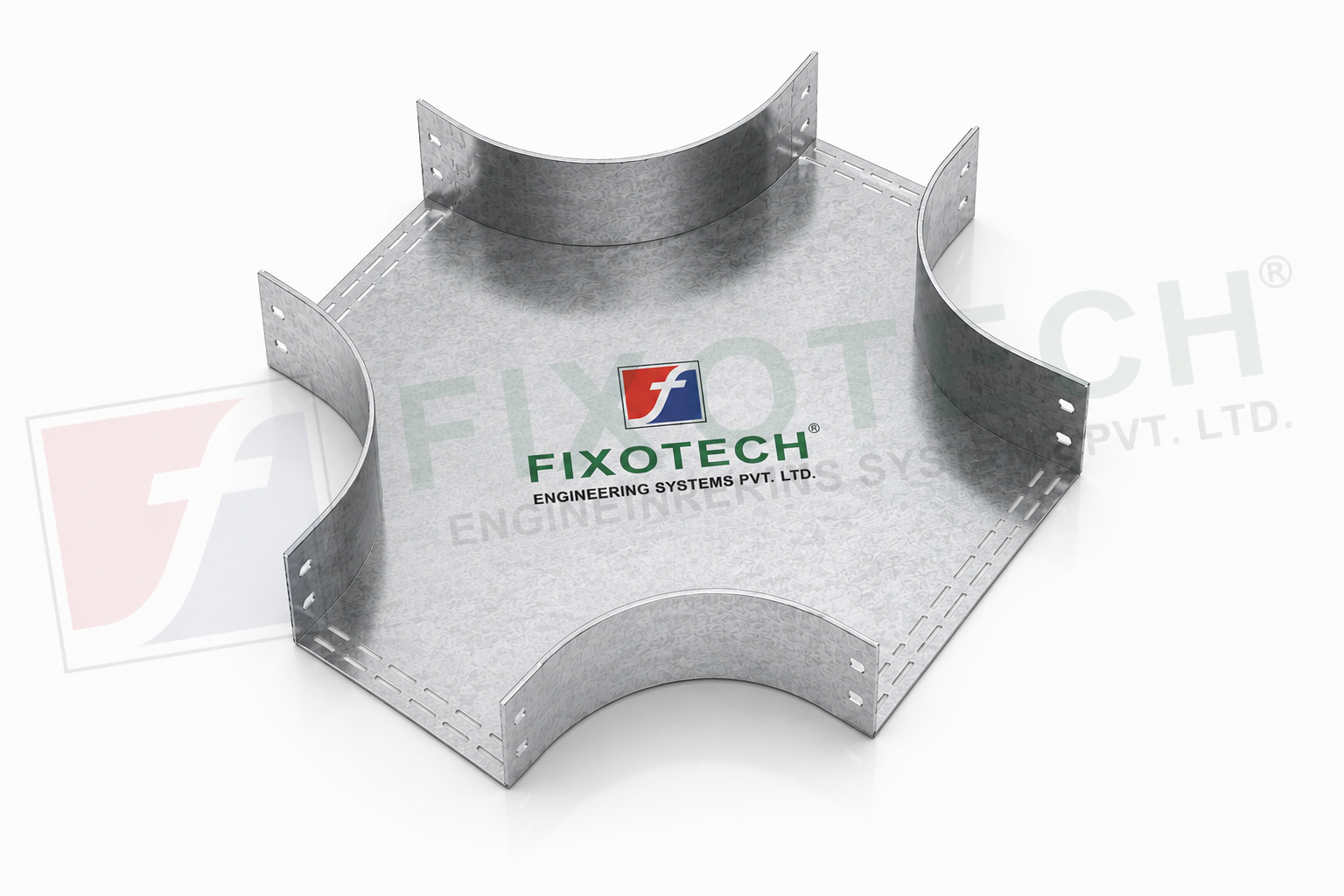
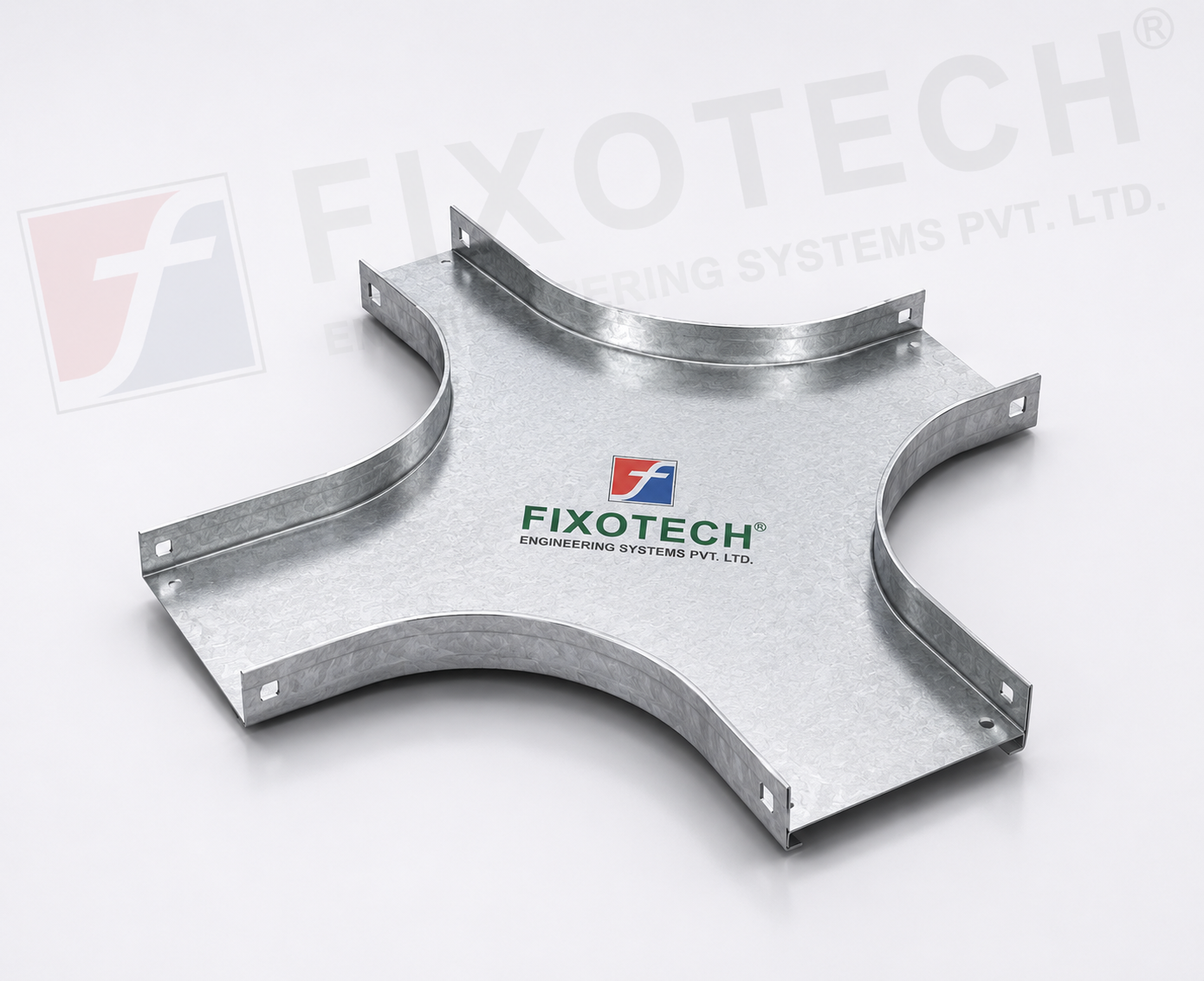
It's possible that a “cross bend perforated type cable tray“ refers to a specific part that cable management systems use.
We will provide Cross bends in the following radiuses: 300, 600, and 900, contingent on the requirements of the client and the state of the site.
In cable tray systems, a cross bend is a part that enables cables to change directions at a 90-degree angle. It has four branches or apertures that allow wires to be routed in four distinct directions, giving it the appearance of a cross-shaped fitting.
All things considered, cross bend perforated type cable trays offer a dependable and effective way to preserve the functionality and integrity of cable installations, especially when wires need to transition at right angles and still give the necessary amount of support, organization, and ventilation.
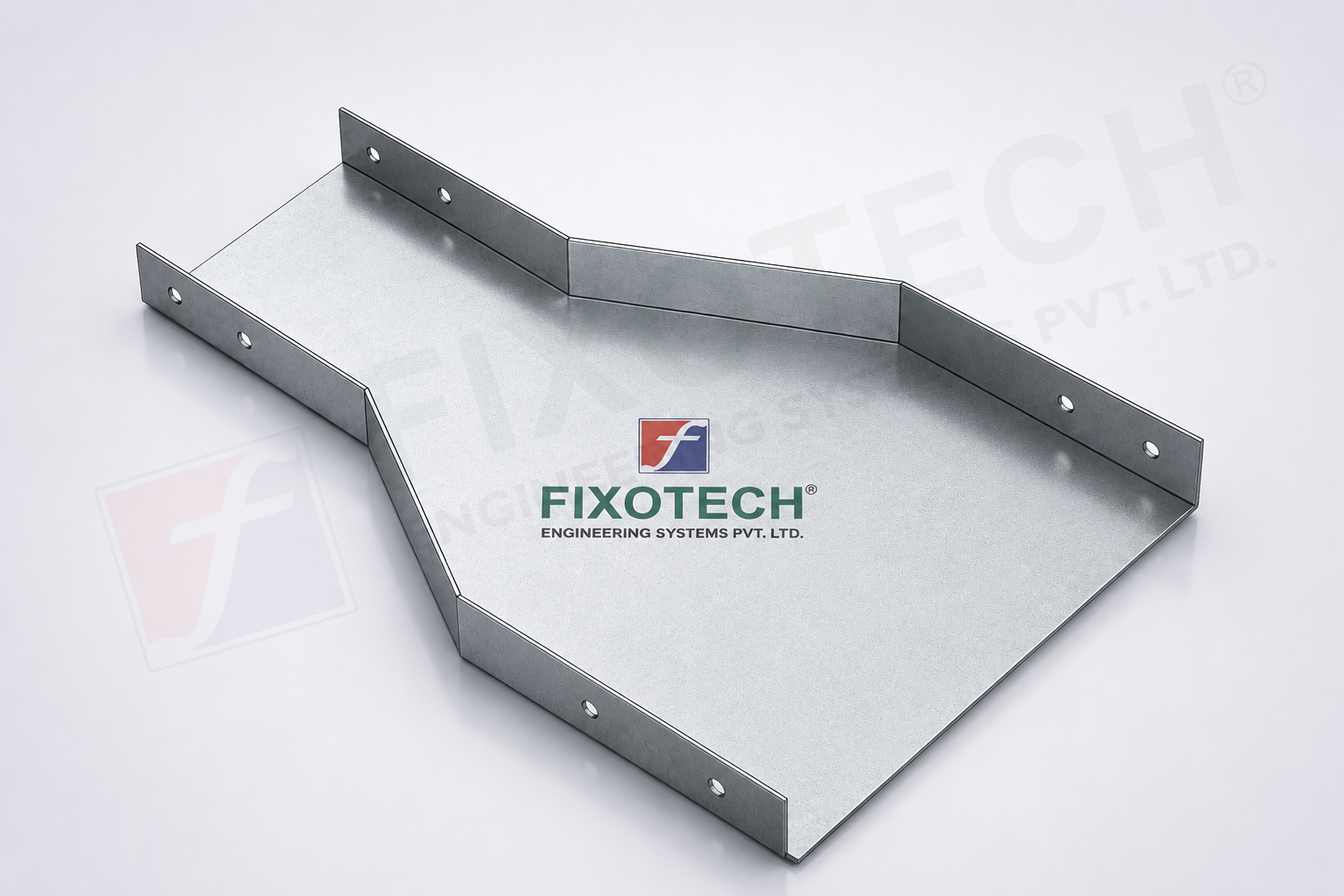
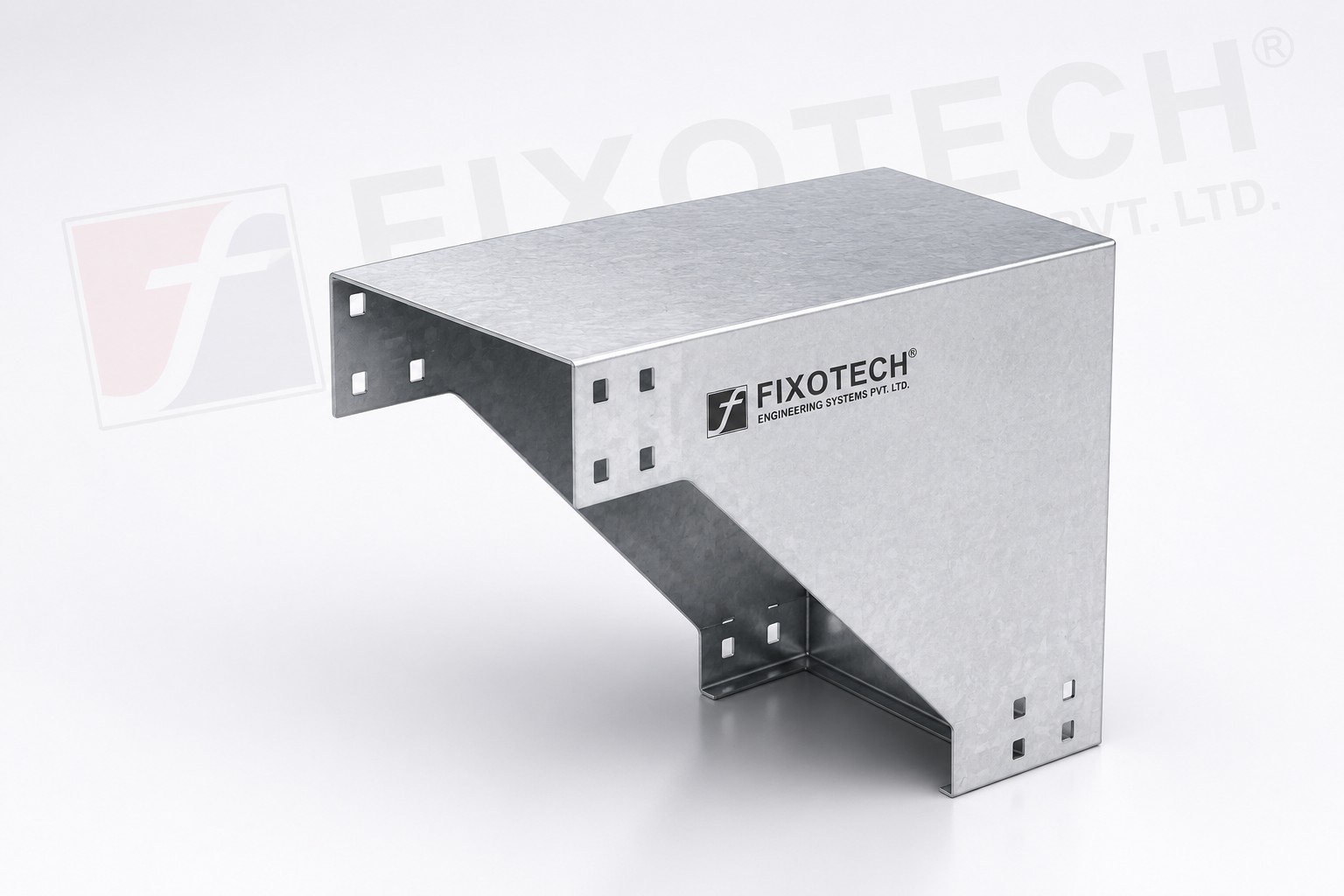
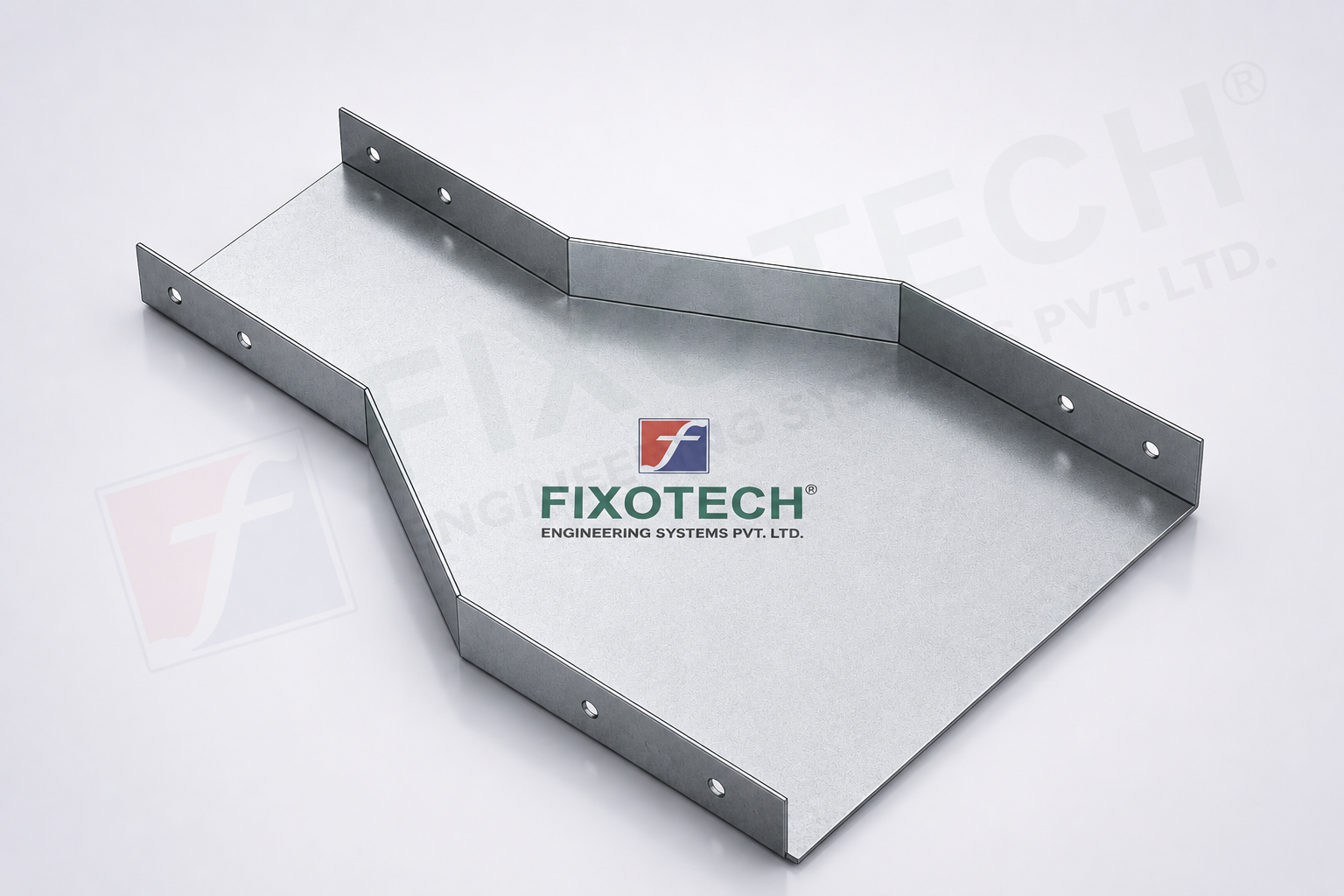
A specialized part called a reducer bend is used in perforated cable trays to preserve the length of the tray's perforations when transitioning between sections of varying diameters.
Reducer can be lowered to the center, left, and right.
1. Reducer Functionality: There are two main purposes for a reducer bend:
- Size Transition: It permits the cable tray's width or depth to alter, going from one size to another, from larger to smaller. This is helpful for joining cable tray parts of varying sizes.
- Bend: This bend preserves the perforated design while allowing for adjustments in the direction of wire routing, usually at a 90-degree angle.
Reducer bends in perforated cable trays, taken together, offer a dependable and effective way to move between sections of different sizes of cable trays while keeping adequate ventilation and cable management. They guarantee the functionality and integrity of wire installations in a range of settings.
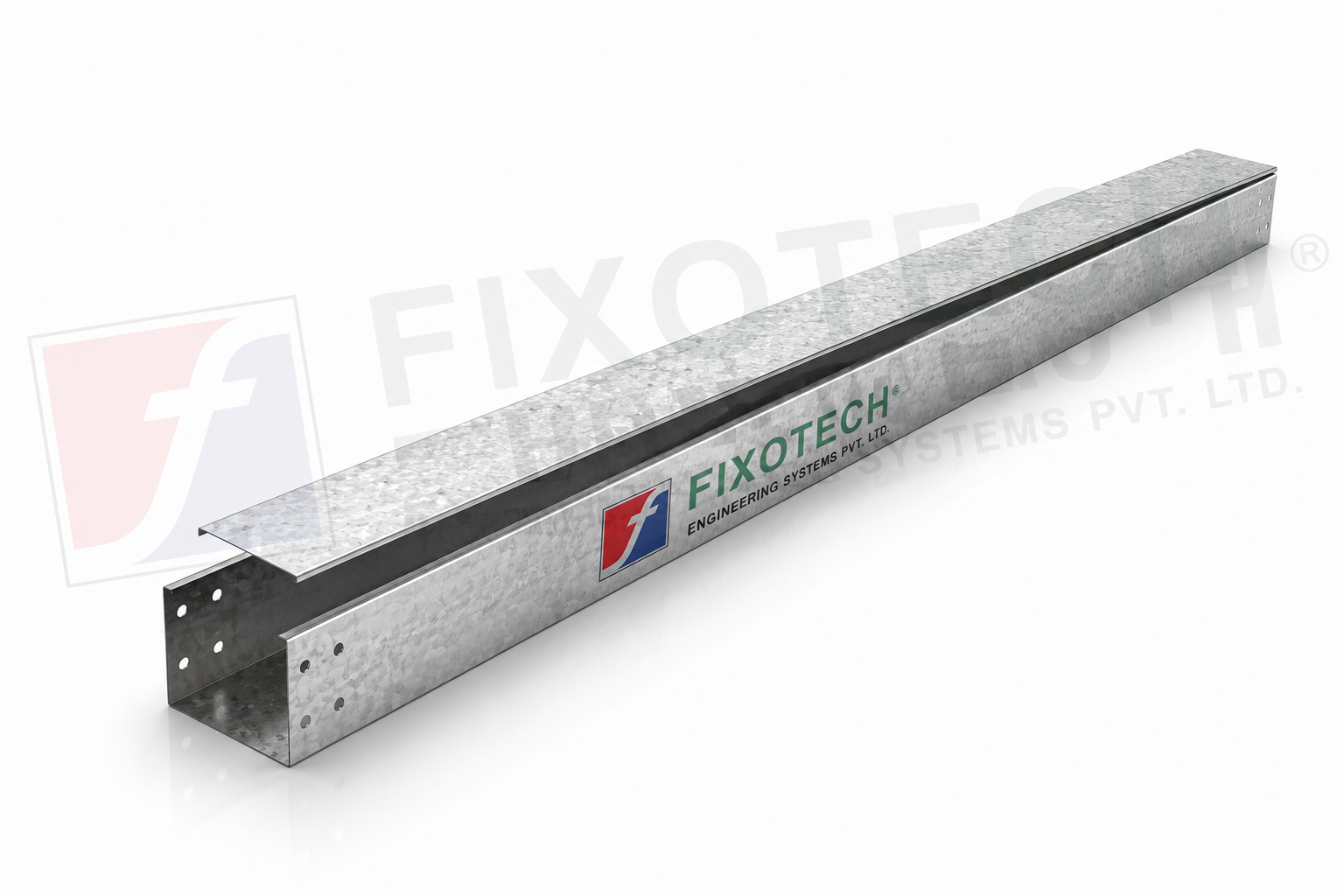
A cable management system called a floor raceway cable tray, or just a floor raceway, is used to route and safeguard wires between floors, especially in commercial buildings, offices, and other interior places. Here are some of its salient characteristics:
Design: Typically, floor raceway cable trays are made to resemble long, narrow troughs or channels that are flush with the floor. They are frequently made of durable materials that offer protection for the cables inside, such as steel, aluminum, or PVC.
Installation: Using glue, screws, or other fasteners, floor raceway trays can be put directly into the floor surface, flush-mounted or slightly recessed. For a more seamless appearance, they can also be included into the floor as it is being built.
Accessibility: A lot of floor raceway cable trays have detachable lids or coverings that make it simple to get to the cables for repairs, installation, or maintenance. The ability to add or remove cables as needed without damaging the surrounding infrastructure or the floor surface is made possible by this accessibility.
Protection: Floor raceways offer cables a safe path, keeping them away from furniture, foot traffic, and other possible dangers. They lessen the risk of tripping hazards, damage to cables, and disruption of regular activities.
Versatility: To meet diverse cable types, capacities, and installation needs, floor raceway trays are available in a range of sizes, forms, and combinations. To construct specialized cable routing solutions, they can incorporate elbows, tees, crosses, straight sections, and other fittings.
Integration: To construct a comprehensive cable management infrastructure throughout a building or facility, floor raceways can be combined with other cable management systems, such as wall-mounted raceways, ceiling raceways, and cable trays.
Aesthetics: Low-profile designs, muted hues, and finishes that complement their surroundings are some of the aesthetics-focused elements found in floor raceway trays.
All things considered, floor raceway cable trays offer a useful and effective way to manage wires across floors, guaranteeing a secure, well-organized, and visually beautiful cable management system in a variety of interior settings.
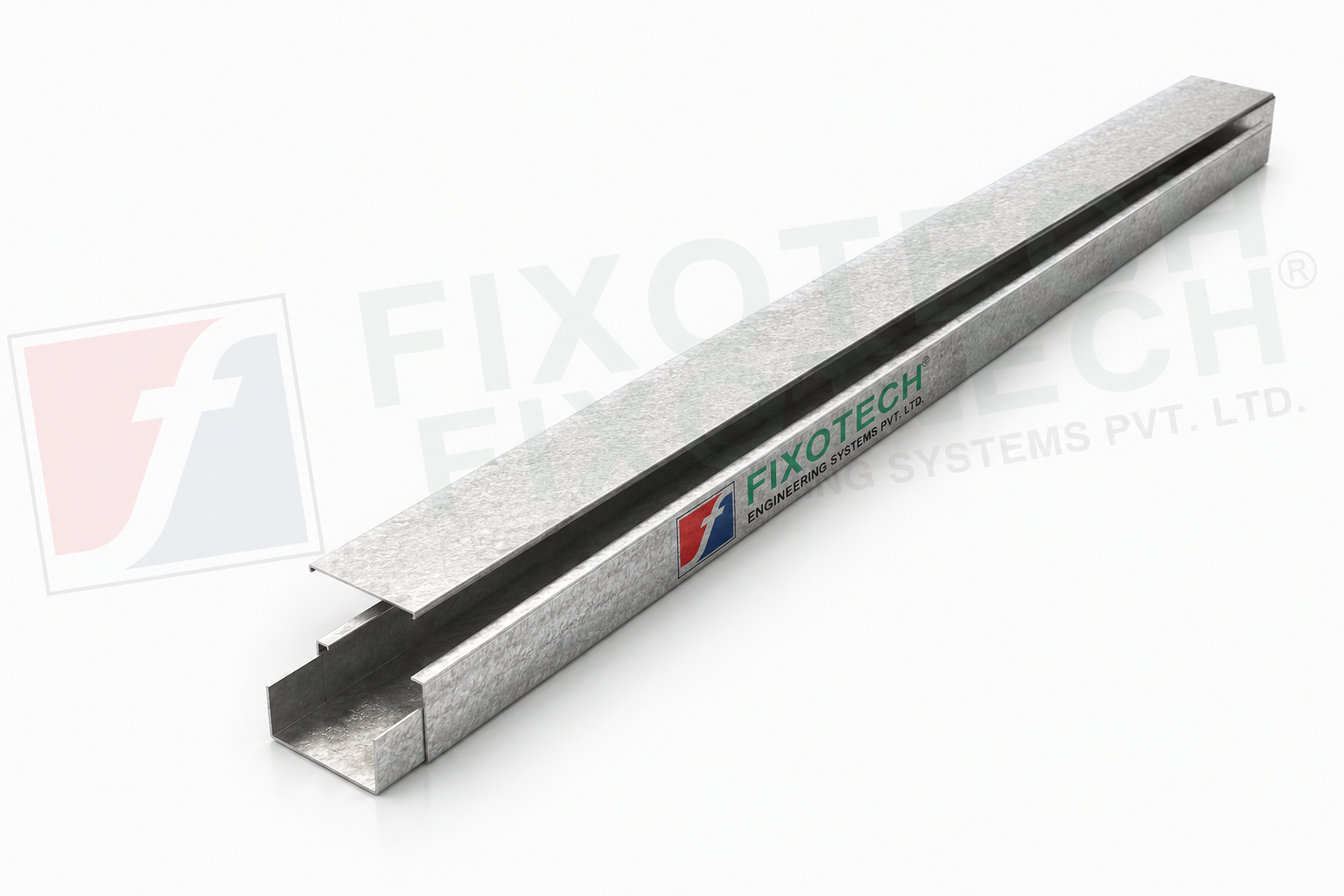
A cable management system made especially for routing and arranging cables over ceilings or overhead spaces is called a ceiling raceway cable tray. Below is a summary of its salient attributes:
Design: Flat, enclosed channels or troughs that attach straight onto the ceiling surface are the standard feature of ceiling raceway cable trays. They give cables a safe route to go over ceilings, keeping them arranged and safe from harm.
Enclosed Design: Ceiling raceway trays are enclosed to offer more protection and visual attractiveness than open cable trays, which expose cables from all sides. In addition to keeping cables hidden, the enclosure guards against manipulation and unintentional dislodgement.
Mounting: Brackets, clips, or other mounting gear are typically used to place ceiling raceway trays straight onto the ceiling surface. Depending on the exact installation needs, they can also be suspended from the ceiling using wire hangers or other suspension systems.
Accessibility: A lot of ceiling raceway trays have detachable covers or access panels that make it simple to get to the wires for maintenance, installation, or troubleshooting. In order to ensure that cables can be managed effectively without interfering with the overall cable system, accessibility is crucial.
Versatility: Ceiling raceway trays are adaptable and can be utilized in a range of locations, including workplaces, retail stores, medical facilities, educational institutions, and industrial facilities, where overhead wire management is necessary. To meet varying cable types and installation requirements, they come in a variety of diameters, materials, and configurations.
Integration: To establish a comprehensive cable management solution for the entire building or facility, ceiling raceway trays can be connected with other cable management systems, such as floor raceways, wall-mounted raceways, and cable trays.
All things considered, ceiling raceway cable trays offer a useful and effective way to manage cables along ceilings, keeping things looking neat and orderly while guaranteeing the secure and dependable operation of data, communication, and electrical systems.
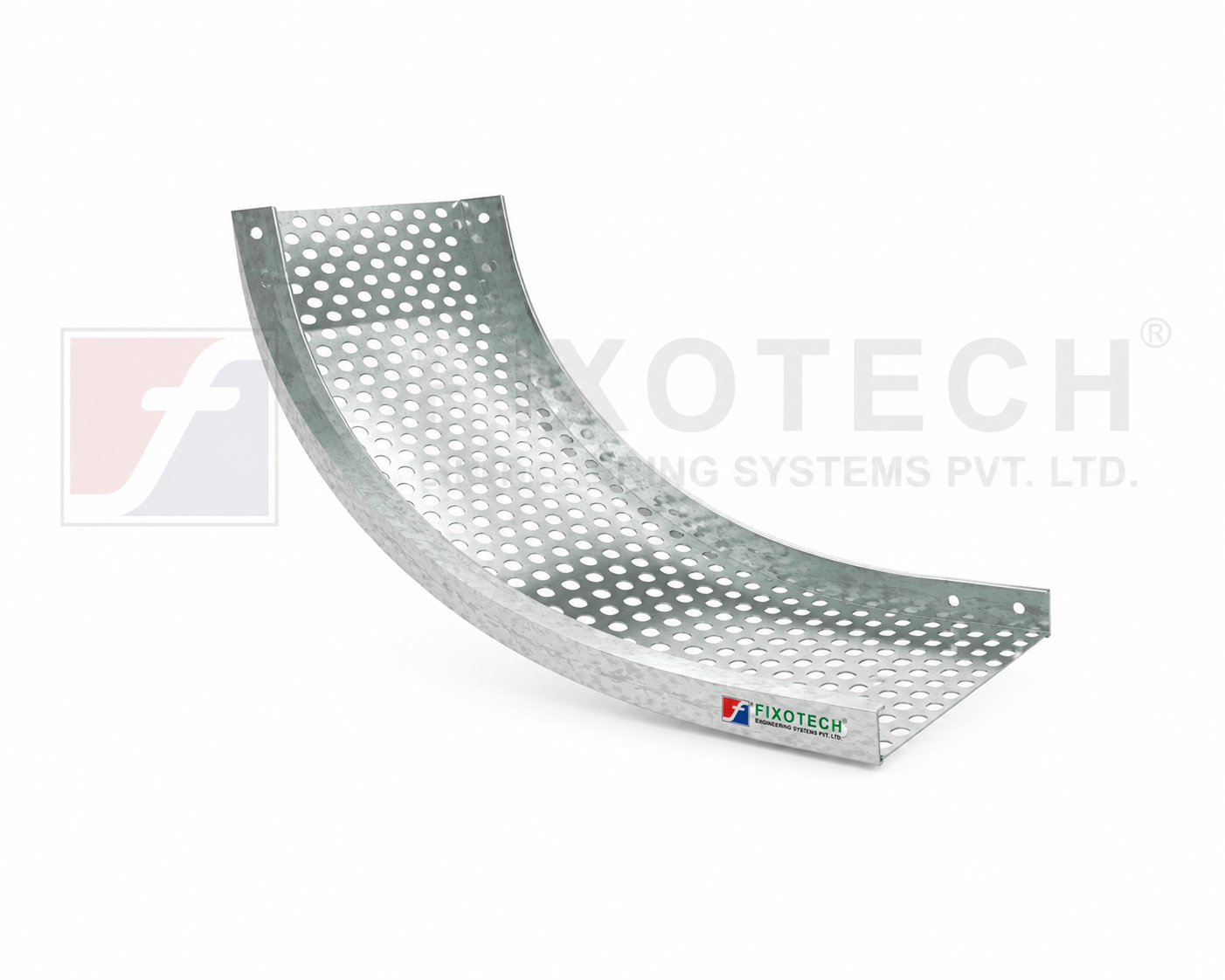
Specialized parts utilized in cable management systems are vertical bends in perforated cable trays, both inward and outward.
The following radiuses for Tee bends will be available from us: 300, 600, and 900, depending on the client's needs and the site's condition.
1. Vertical Bends: As the name implies, cable routing over a vertical plane can be reversed with the use of vertical bends. They make it possible for cables to change seamlessly from a vertical to a horizontal run or vice versa. These bends are made to accommodate changes in elevation while maintaining the cables' proper organization and support.
2. Outward and Inward: Vertical bends can be divided into two groups according to the way they bend in relation to the orientation of the cable tray.
- Outward Bend: This kind of bend directs wires outward from the vertical plane of the cable tray by curving away from the tray's midline.
- Inward Bend: On the other hand, inward bends direct cables inward toward the vertical plane of the cable tray by curving towards the tray's midline.
All things considered, vertical bends—whether inward or outward and perforated—are crucial parts of cable management systems, offering a dependable and effective way to preserve the functioning and integrity of cable installations in a range of applications.
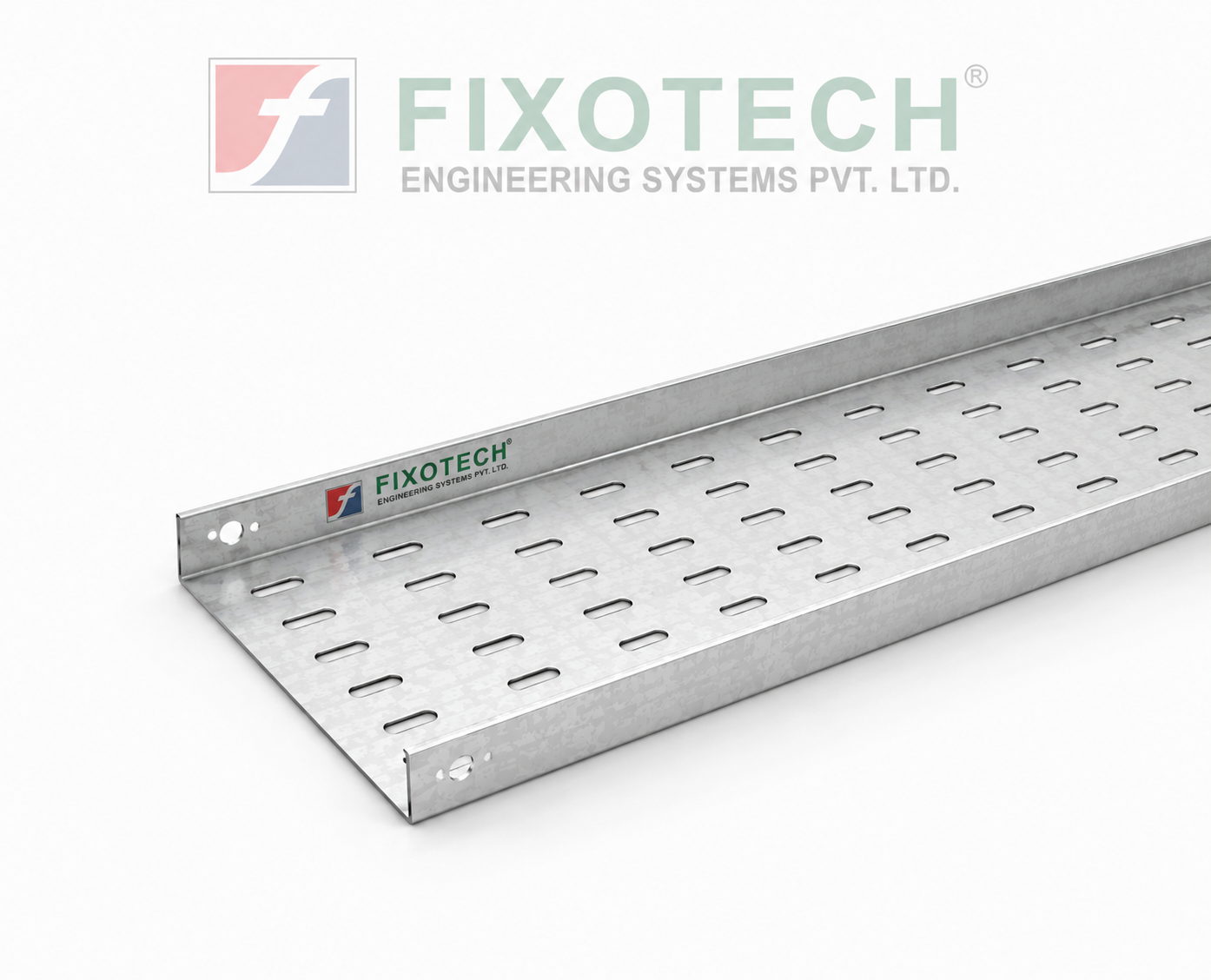
Perforated Tray
In electrical systems, a perforated cable trayeither with or without coversis a typical part used to support and arrange cables. Let's examine the distinctions:
1. Perforated cable tray without cover: This kind of cable tray has numerous holes or perforations on the sides and bottom of the tray. It facilitates heat dissipation and air circulation while supporting cables. The lack of coverings makes cables readily accessible for upkeep or adjustments. Less defence against environmental elements like dust, dirt, or unintentional touch results from this, though.
2. Perforated Cable Tray with Covers: This sort of tray has removable covers that may be placed over it, in contrast to an open design of a tray without covers. The coverings give the cables additional defence against the elements, physical harm, and unwanted access. Additionally, they aid in containing any possible fire threats. But the coverings could block airflow, which could raise the temperature within the tray—especially if the cables heat up a lot.
The following are some typical finishes for cable trays:
1. These type by cable trays are made from pre galvanized steel sheet where in a layer of zinc as applied at sheet manufactures end. These trays are most suitable for indoor application..
2. Powder Coating: To provide a strong and long-lasting finish, a dry powder is applied to the cable tray's surface and heated to cure it. Excellent resistance to abrasion, chemicals, corrosion, is provided by powder-coated cable trays. They offer versatility in terms of design and aesthetics because they come in an extensive array of hues and textures. In commercial and architectural settings where endurance and aesthetic appeal are crucial, powder-coated cable trays are frequently utilized.
3. Stainless Steel Finish: Because of the composition of the material, stainless steel cable trays naturally offer corrosion resistance. Stainless steel trays are appropriate for harsh settings where chemical or temperature resistance, hygienic conditions, and cleanliness are vital. They could have a brushed or polished surface for increased visual appeal and longevity. Pharmaceutical facilities, cleanrooms, and food processing plants all frequently use stainless steel cable trays.
4. Galvanization via Hot-Dip: By submerging the cable tray in molten zinc, a process known as “hot-dip galvanization,“ a thick, resilient layer that guards against corrosion on the steel is produced. This coating offers superior resistance to rust, abrasion, and other types of corrosion since it is metallurgically bound to the steel substrate. For exterior applications and locations subject to dampness, chemicals, marine, and inclement weather, hot-dip galvanized cable trays are perfect.
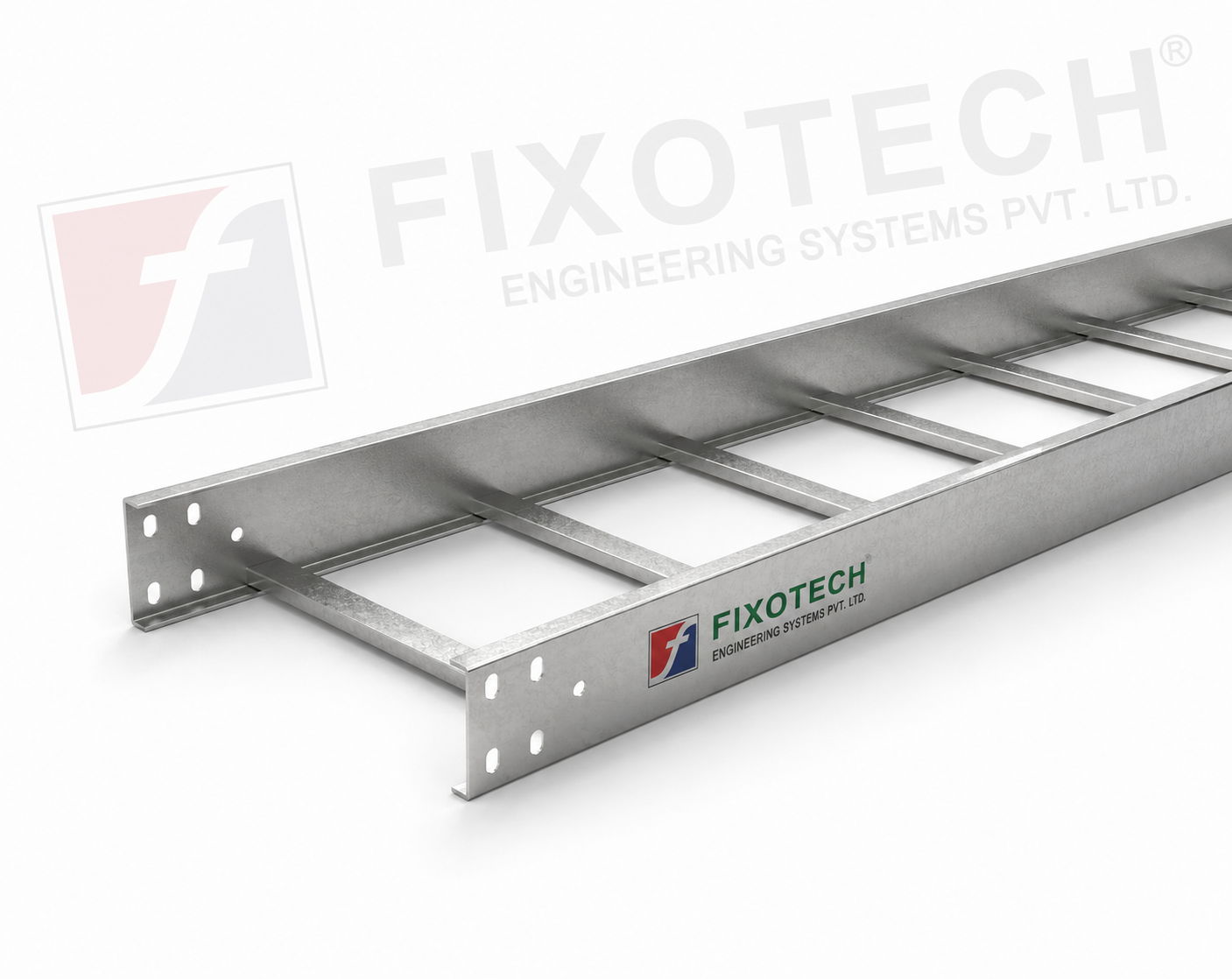
Other common name in Cable tray industry is ladder tray. Simple design consisting of side rails with rungs connected. The rungs are perforated, which makes it easy to fasten cable ties or cable cleats directly onto the ladder. Suited for electrical, instrumentation and telecommunications cables.
Ladder cable trays are made of either welded or bolted construction, depending on how the tray's constituent parts are fastened together.
Welded Ladder Cable Tray: Usually, the side rails and rungs of welded ladder cable trays are welded together at their junction places. This eliminates the need for additional fasteners or connectors and produces a strong, long-lasting framework. In heavy-duty industrial applications where additional strength and stability are needed, welded trays are frequently the favoured option.
Bolt able Ladder Cable Tray: In contrast, bolts, nuts, and washers are needed to assemble bolt able ladder cable trays. Every part of the tray, including the rungs, rails, and any extra fittings, is made with pre-drilled holes at key locations. These holes give installation flexibility and enable necessary alterations or modifications by facilitating the easy connection of the components utilizing bolts and screws. However, the accessories Eg. Bends etc., for bolt able type tray also will be welded.
Depends upon customer requirement number of cross rungs can be increased the most running specifications are with rungs spaced at 300 c/c at equal distance.
Each type of ladder cable tray—welded or bolt able—has advantages of its own and is selected according to project parameters, installer preferences, installation constraints, and the environment in which the trays will be utilized.
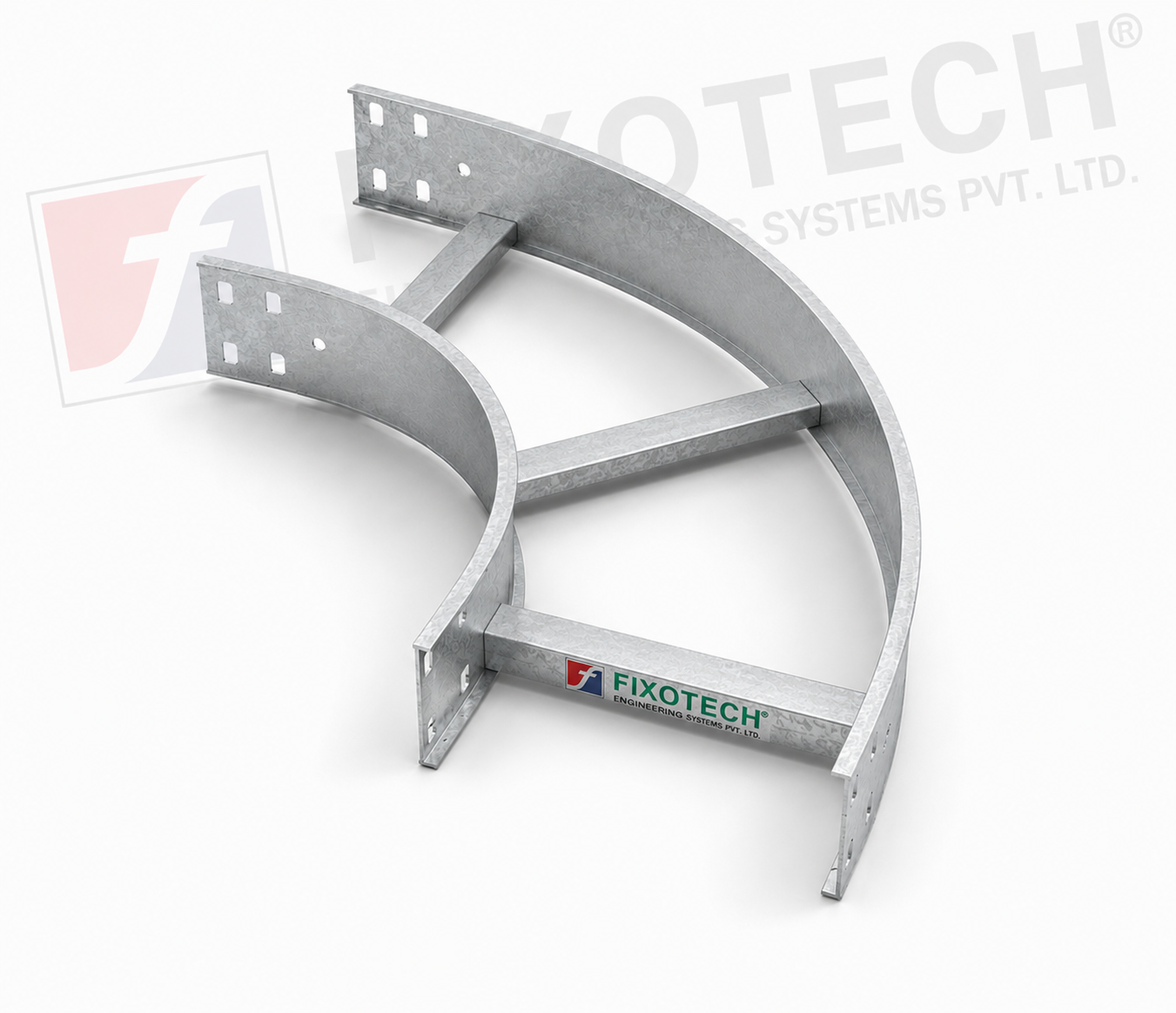
The purpose of a horizontal ladder bend cable tray is to make it easier for cables to be routed around bends or corners in horizontal cable management systems. The following are some of the main features and attributes of horizontal ladder bend cable trays:
Construction: Similar to other cable trays, horizontal ladder bend trays are usually made of metal, like steel or aluminum. They are made up of a number of parallel rails or bars connected by rungs, creating a structure resembling a ladder.
Bend Radius: Horizontal ladder bend cable trays are specifically designed to accommodate bends in the cable routing path. They feature a curved section that lets cables transition around bends without kinking or harm.
Flexibility Because of their adaptability, these trays can be employed in a variety of situations where wires need to be routed around obstructions and horizontally. They are often utilized in industrial settings, commercial buildings, data centres, and other locations where cable management is vital.
Installation : Brackets, supports, or other mounting hardware can be used to mount horizontal ladder bend cable trays, which are normally positioned along walls or ceilings. To guarantee appropriate cable support and routing, the bend radius needs to be carefully chosen depending on the particular requirements of the cable installation.
Compatibility : They can be used to create intricate cable routing configurations since they are frequently compatible with other components of cable trays, including straight sections, tees, crosses, and reducers.
In order to keep a neat and functioning cable management system, horizontal ladder bend cable trays are essential for the effective and structured routing of wires around corners and other obstacles.
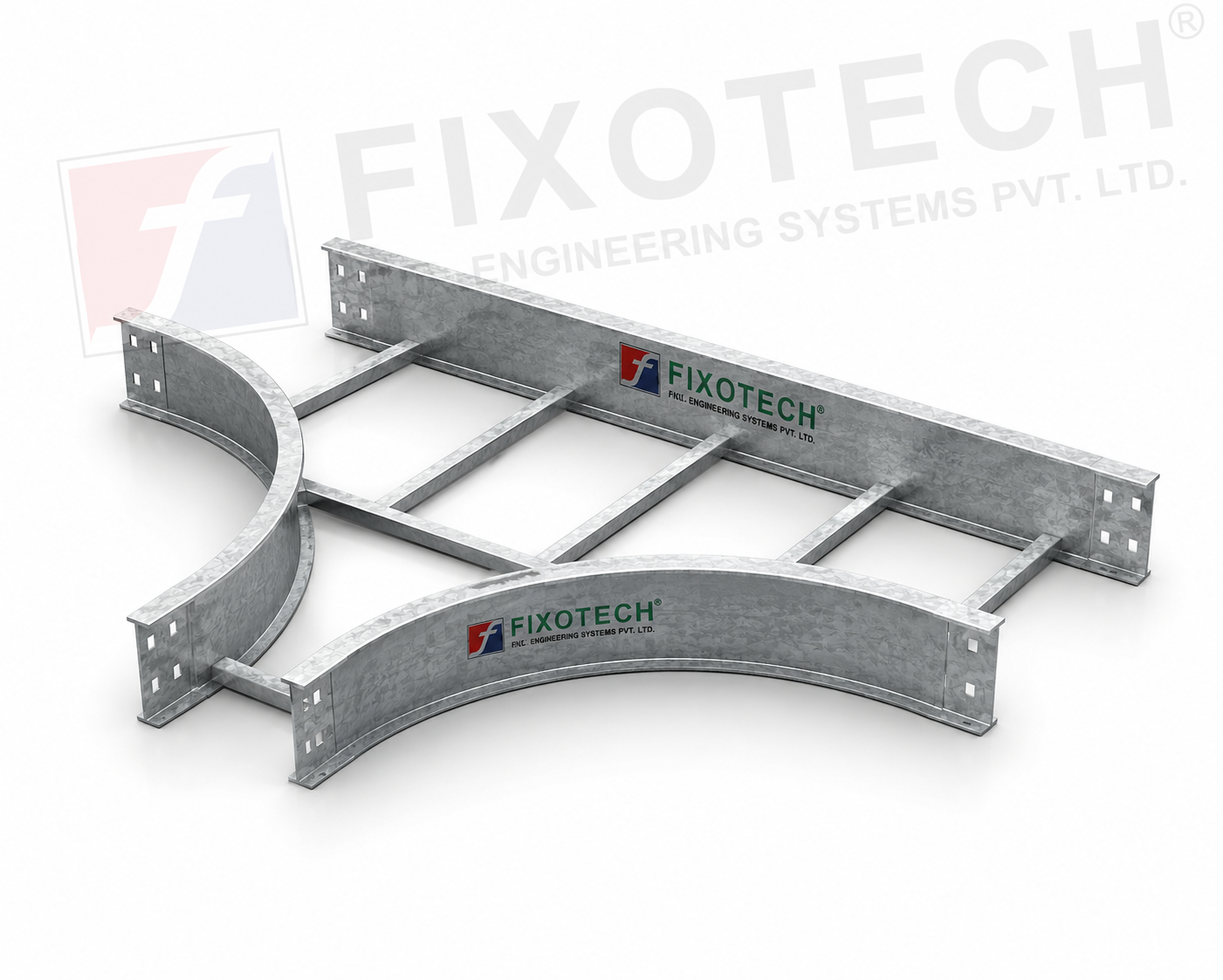
One particular kind of cable tray made to make it easier to route cables at T-junctions in horizontal cable management systems is the ladder tee bend cable tray. Here's a summary of its salient characteristics:
Design: Ladder tee bend trays are usually made of metal, like steel or aluminium, just like other cable trays. They are made up of several parallel rails or bars joined by rungs to form a structure resembling a ladder. They do, however, have a tee-shaped arrangement at T-junctions.
Tee Configuration: This arrangement enables cables to be routed horizontally along the main tray, with branches connecting to outlets, equipment, or other cable paths at the T-junction.
Bend Radius: The tray's tee bend part is made with an angled or curved portion that makes it easy for cables to move from the main tray to the branch section. This prevents the cables from kinking or being damaged and guarantees appropriate cable support and routing.
Versatility: When cables need to be routed horizontally and linked to equipment or other cable paths at T-junctions, ladder tee bend cable trays come in a variety of useful applications. They are frequently utilized in data centres, business buildings, industrial settings, and other establishments where cable management is crucial.
Installation: Brackets, supports, or other mounting hardware can be used to mount ladder tee bend cable trays, which are normally placed along walls or ceilings. The location and orientation of the tee bends need to be carefully considered in order to provide both accessibility and effective cable routing.
Compatibility : Similar to other cable tray parts, ladder tee bend trays can be used with additional tray sections, including reducers, straight sections, crosses, and other fittings, to create intricate cable routing arrangements.
In order to keep a clean and well-functioning cable management system, ladder tee bend cable trays are essential for effectively organizing and routing cables at T-junctions.
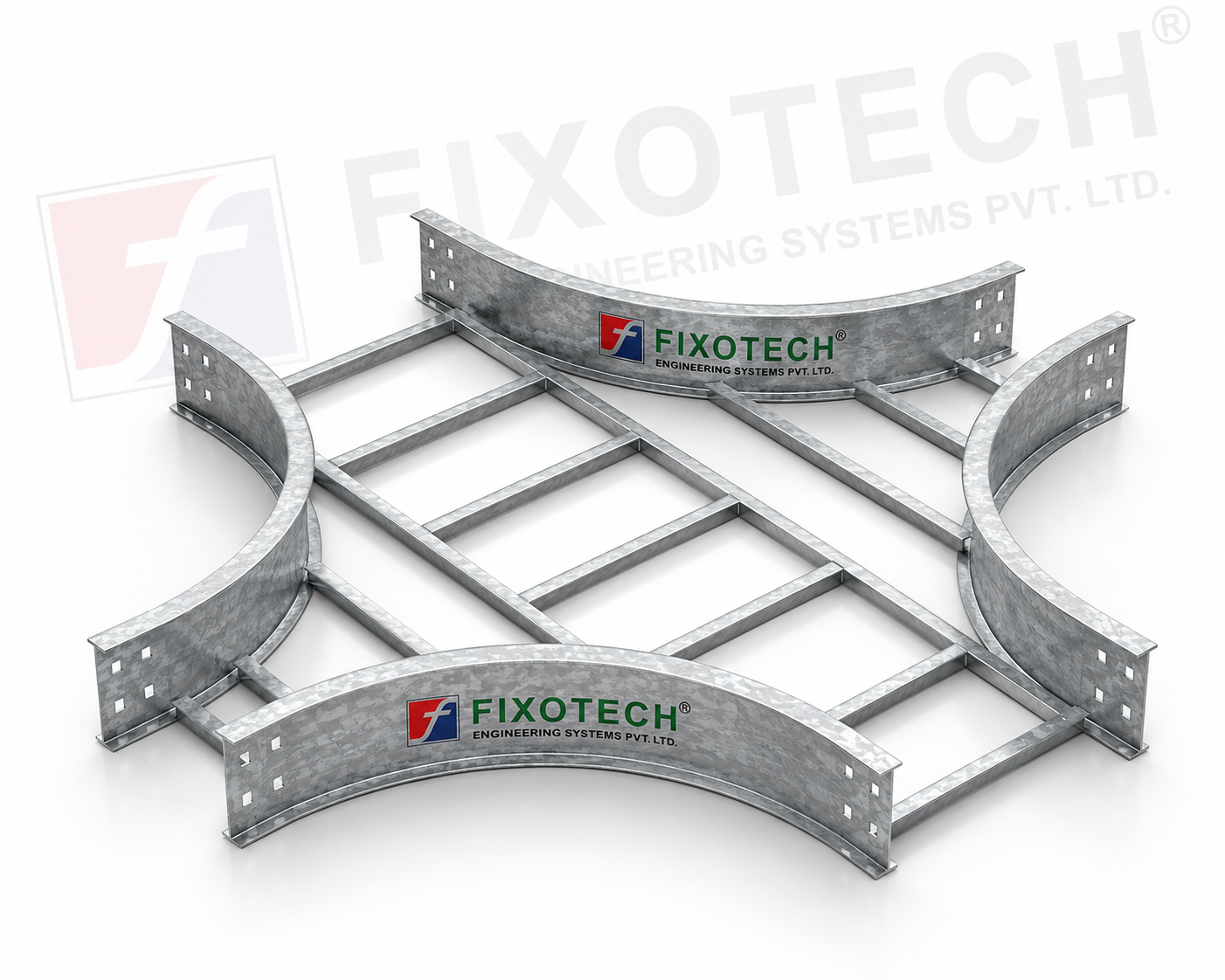
One particular kind of cable tray made to make it easier to route wires at cross junctions in horizontal cable management systems is the cross-bend ladder cable tray. Below is a summary of its salient features:
Design: Cross bend ladder cable trays are usually made of metal, like steel or aluminium, and have a structure like a ladder made up of parallel rails or bars joined by rungs. They have a design at cross crossings that permits wires to flow through or change direction effortlessly.
Cross Intersection Configuration: The tray's cross bend portion is made to accept wires that cross junctions and change directions. This portion frequently has curved or slanted parts that make it possible for cables to go smoothly between directions without kinking or breaking.
Versatility: Cross bend ladder cable trays are adaptable and can be utilized in a range of settings where cables must pass through other cables or cable trays and be routed horizontally. They are frequently utilized in data centres, business buildings, industrial settings, and other establishments where cable management is crucial.
Installation: Brackets, supports, or other mounting hardware can be used to mount these cable trays, which are normally positioned along walls or ceilings. In order to guarantee effective cable routing and accessibility, much thought should be given to the arrangement and orientation of the cross-bend sections.
Compatibility: Similar to other parts of cable trays, cross bend trays can be used with straight sections, tee bends, reducers, and other parts of the tray to create intricate cable routing arrangements.
In order to effectively organize and route wires at cross intersections, cross bend ladder cable trays are essential. They guarantee the correct support and protection of cables while also contributing to the upkeep of a neat and functioning cable management system.
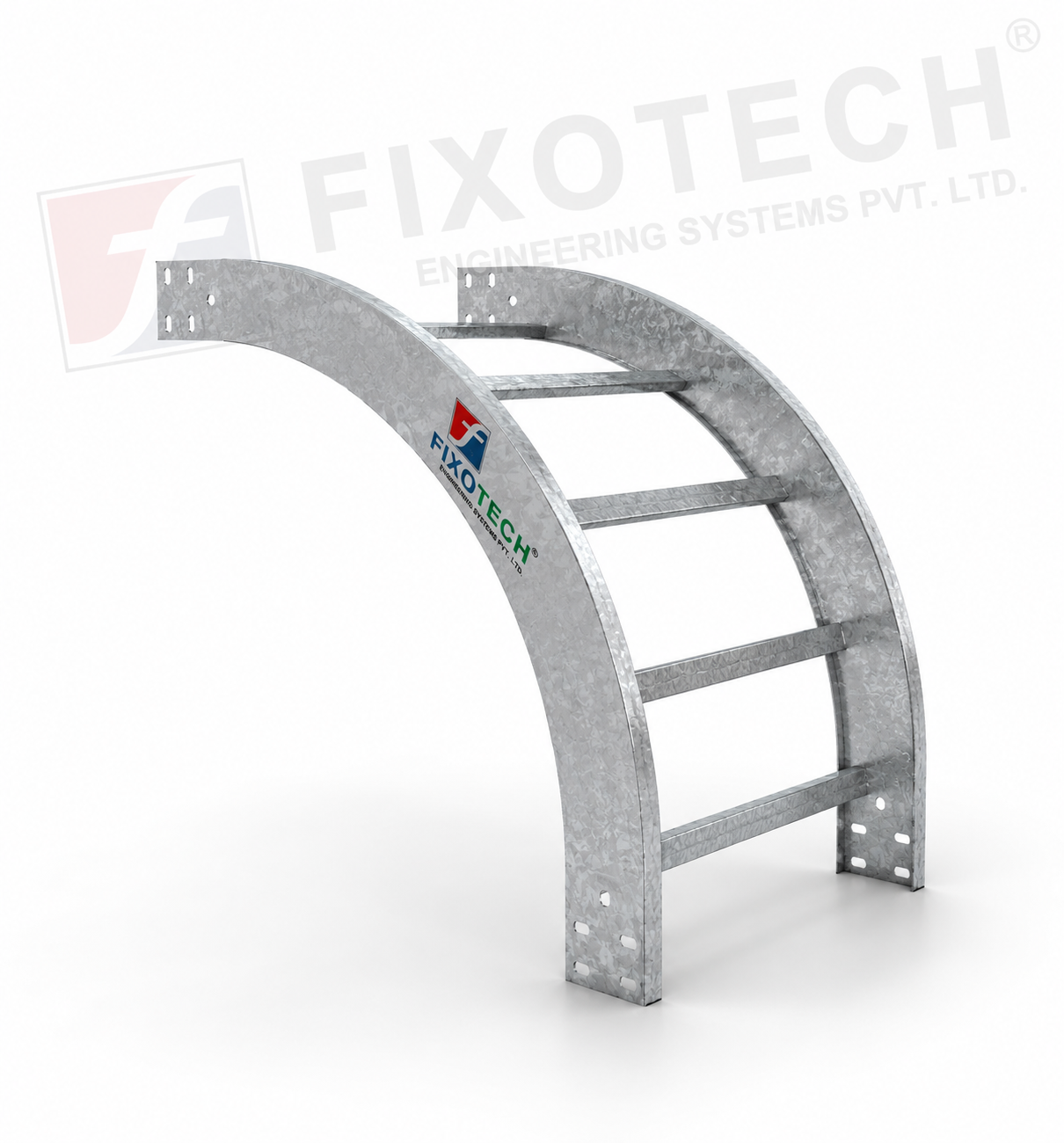
A particular kind of cable tray called a vertical bent ladder cable tray is made to make it easier to route wires in vertical cable management systems. This is usually the case when cables need to move between different vertical levels or floors. Here's a summary of its salient characteristics:
Design : Like other cable trays, vertical bent ladder cable trays are made of parallel rails or bars joined by rungs to create a structure like a ladder. But because of their unique construction, they can easily accept bends in the vertical plane, which makes it possible for cables to move between levels.
Bend Configuration: The tray's vertical bend portion is made to accommodate cables that switch from vertical to horizontal orientations or the other way around. In order to guide the wires around bends and corners without kinking or causing damage, this portion frequently has curved or angled sections.
Versatility: When cables need to be routed vertically between multiple levels or floors of a building or structure, vertical bent ladder cable trays come in handy. They can be employed in a variety of applications. They are frequently utilized in data centers, business buildings, industrial settings, and other establishments where cable management is crucial.
Installation: To make vertical cable routing easier, these cable trays are usually mounted along vertical surfaces like walls, columns, or support structures. Brackets, supports, or other mounting gear appropriate for vertical installations can be used to mount them.
Compatibility: Complex cable routing configurations in vertical cable management systems can be created with vertical bend trays because, like other cable tray components, they are frequently compatible with additional tray sections, such as straight sections, tee bends, crosses, reducers, and other fittings.
In order to effectively arrange and route cables between various vertical levels or floors, vertical bend ladder cable trays are essential. They not only contribute to the upkeep of a neat and efficient cable management system but also guarantee the appropriate support and protection of cables during their vertical journey.
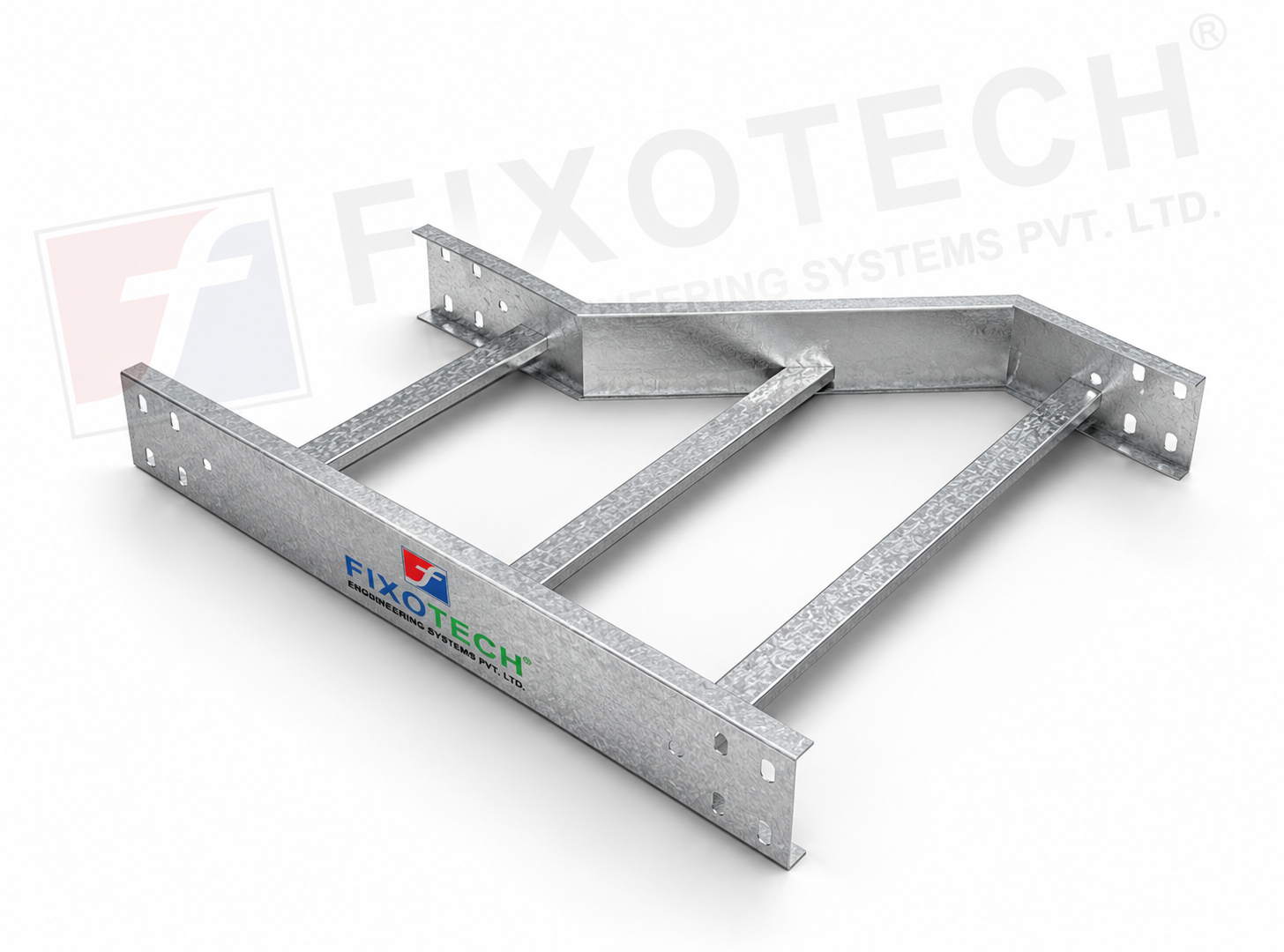
One particular kind of cable tray part made to make switching between cable trays of various widths or diameters easier is the reducer ladder cable tray. Here's a summary of its salient characteristics:
Function : In a ladder cable tray system, a reducer's main job is to facilitate the seamless transfer of cables between sections of cable trays that have varying widths or diameters. It could be used, for instance, to join a narrower branch cable tray to a wider main cable tray or the other way around.
Design : Sloped or tapered configurations that progressively alternate in width are common in reducer ladder cable trays. This eliminates the need for sudden changes that can damage cables or cause routing problems when guiding cables from the wider to the narrower part, or vice versa.
Construction : Reducer trays, like other cable tray parts, are frequently made of metal, like steel or aluminum, and have a ladder-like construction made up of parallel rails or bars joined by rungs. The intended reduction in width is accomplished by integrating the tapered design into the structure.
Versatility: Reducer ladder cable trays are adaptable and useful in a range of situations where cables must switch between different cable tray widths or diameters. They are frequently utilized in data centers, business buildings, industrial settings, and other establishments where cable management is crucial.
Installation: Reducer trays need to be fitted at junctions where various cable tray portions converge, necessitating a width adjustment. Brackets, supports, or other mounting gear appropriate for the particular installation requirements can be used to mount them.
Compatibility: Reducer trays are made to work with other cable tray parts and regular ladder cable trays. This makes it simple to integrate them into pre-existing cable management systems. For even more personalization, they might also work with add-ons like coverings, dividers, and fittings.
In conclusion, reducer ladder cable trays are crucial parts of cable management systems because they allow cables to be supported and protected appropriately along their routing path and transition between cable trays of various widths or diameters with ease
One part of a cable management system that helps with the seamless movement of cables around corners or horizontal bends is the Raceway Horizontal Bend cable tray. Here are some of this component's main characteristics:
Function: A Raceway Horizontal Bend cable tray's main purpose is to steer cables around curves and corners in a horizontal manner while providing the necessary structure and stability. This part makes sure that wires can be routed securely and effectively along the intended path without harming anything or interfering.
Design: In order to facilitate the seamless passage of cables around bends and corners, Raceway Horizontal Bend trays are usually constructed with an angled or curved section. The tray's curve is precisely designed to keep the cables' minimum bend radius intact, preventing kinking, tension, and other damage.
Construction: Raceway Horizontal Bend trays, like other cable tray parts, are frequently made of sturdy materials like steel, aluminum, or PVC. They are made to offer dependable support and protection even in the face of environmental stresses and cable weight.
Flexibility: When wires need to be routed horizontally around bends or corners, Raceway Horizontal Bend cable trays come in a variety of applications. They are frequently utilized in data centers, business buildings, industrial settings, and other establishments where cable management is crucial.
Installation: Depending on the exact routing needs, Raceway Horizontal Bend trays are normally put along walls, ceilings, or floors. Brackets, supports, or other horizontal installation-appropriate mounting gear can be used to mount them.
Compatibility: Raceway Horizontal Bend trays are made to work with other cable management components and typical cable tray systems, making it simple to integrate them into the current cable architecture. For even more personalization, they might also work with add-ons like coverings, dividers, and fittings.
In conclusion, Raceway Horizontal Bend cable trays are essential for effectively arranging and routing cables around bends and corners in horizontal cable management systems. This helps to keep the system tidy and operational while guaranteeing the right support and safeguarding of cables.
One particular part of a cable management system made to help with the seamless transition of cables at intersections or T-junctions in a raceway system is the Raceway Tee Bend cable tray. Here's a summary of its salient characteristics:
Provide a branching point at T-junctions in a cable raceway system is the main purpose of a Raceway Tee Bend cable tray. With appropriate support and structure, it enables wires to move seamlessly from the main racetrack to a branch raceway or the other way around.
construction: Raceway Tee Bend trays allow wires to change direction at T-junctions thanks to their tee-shaped construction. In order to direct cables around the intersection without generating stress, kinking, or damage, this design often includes angled or curved parts.
Construction: Raceway Tee Bend trays, like other raceway parts, are frequently made of sturdy materials like steel, aluminum, or PVC. They are made to endure the weight of the cables and the elements while offering dependable support and protection for wires.
Versatility: Raceway Tee Bend cable trays are adaptable and useful in a range of situations when cables in a raceway system need to transition at T-junctions. They are frequently utilized in data centers, business buildings, industrial settings, and other establishments where cable management is crucial.
Installation: Depending on the particular routing needs, Raceway Tee Bend trays are normally mounted at T-junctions along walls, ceilings, or floors. Brackets, supports, or other raceway installation-appropriate mounting gear can be used to mount them.
Compatibility: Raceway Tee Bend trays are made to work with other cable management components and standard raceway systems, making it simple to integrate them into the current wire architecture. For even more personalization, they might also work with add-ons like coverings, dividers, and fittings.
In conclusion, Raceway Tee Bend cable trays are essential for effectively routing and organizing wires at T-junctions in a raceway system. They also ensure that cables are properly supported and protected, contributing to the upkeep of a tidy and functional cable management system.
One part of a cable management system that helps with the seamless transfer of cables at cross intersections or junctions in a raceway system is the Cross Bend Raceway cable tray. Here's a summary of its salient characteristics:
Function: In a cable raceway system, a Cross Bend Raceway cable tray's main purpose is to act as a branching point at cross junctions. It permits cables to move across raceways with ease while keeping the necessary order and support.
Design: Cables can change direction at cross junctions thanks to the layout of Cross Bend Raceway trays. In order to direct cables around the intersection without generating stress, kinking, or damage, this design often includes angled or curved parts.
Construction: Cross Bend Raceway trays are frequently made of sturdy materials like PVC, aluminum, or steel, just like other raceway parts. They are made to endure the weight of the cables and the elements while offering dependable support and protection for wires.
Versatility: Cross Bend Raceway cable trays are adaptable and suitable for a range of applications in which cables in a raceway system must transition at cross crossings. They are frequently utilized in data centers, business buildings, industrial settings, and other establishments where cable management is crucial.
Installation: Depending on the exact routing needs, Cross Bend Raceway trays are normally mounted at cross crossings along walls, ceilings, or floors. Brackets, supports, or other raceway-appropriate mounting gear can be used to mount them.
Compatibility: Cross Bend Raceway trays are made to work with other cable management components and standard raceway systems, making it simple to integrate them into the current wire infrastructure. For even more personalization, they might also work with add-ons like coverings, dividers, and fittings.
In conclusion, Cross Bend Raceway cable trays are essential for effectively arranging and routing cables at cross intersections in a raceway system. They also guarantee the correct support and protection of cables, assisting in the upkeep of a tidy and functional cable management systems
Specific parts used in cable management systems to travel cables vertically, either inward towards a surface or outward from it, are called vertical inward and outward raceway cable tray bends. Below is a summary of each:
Vertical Inward Bend: This part is made to make it easier for cables to go from a horizontal to a vertical orientation, pointing them in the direction of a wall or column, for example. Usually, it has an angled or curved part that directs cables from a horizontal raceway to a vertical one safely and smoothly.
Vertical Outward Bend: On the other hand, this bend moves cables away from a surface like a wall or column by switching them from a vertical to a horizontal orientation. It has an angled or curved part that guarantees cables are directed safely and smoothly, just like the inward bend.
In cable management systems, these parts are essential, particularly when cables need to change directions vertically. They guarantee effective use of space, keep cables organized, and guard against damage. Usually composed of sturdy materials like steel, aluminum, or PVC, they can be combined with other raceway parts to provide a complete cable management system.
To move between raceway sections of various widths or capacities, cable management systems use reducer raceway cable trays. Below is a summary of its salient attributes:
The main purpose of a reducer raceway cable tray is to make it easier for cables to go smoothly from a bigger to a smaller raceway section (or vice versa). It guarantees that wires may be arranged and supported appropriately, all the while being routed safely and effectively.
Design: Reducer raceway trays are usually made in a sloping or tapered shape that progressively changes in size. Because of this design, wires may be led smoothly from the bigger to the smaller section—or vice versa—without having to make sudden shifts that could harm the cables.
Construction: Reducer trays, like other raceway parts, are frequently made of sturdy materials like steel, aluminum, or PVC. They are made to offer dependable support and protection even in the face of environmental stresses and cable weight.
Versatility: Reducer raceway cable trays are adaptable and useful in a range of situations where cables must switch between sections of raceways with varying capacity or diameters. They are frequently utilized in data centers, business buildings, industrial settings, and other establishments where cable management is crucial.
Installation: Reducer trays are usually placed where various raceway sections converge and a size adjustment is necessary. Brackets, supports, or other raceway installation-appropriate mounting gear can be used to mount them.
Compatibility: Reducer trays may be easily integrated into the current cable architecture because they are made to work with common raceway systems and other cable management components. For even more personalization, they might also work with add-ons like coverings, dividers, and fittings.
In conclusion, reducer raceway cable trays are essential for effectively arranging and managing wires between raceway sections with varying capacities or widths. They also ensure that cables are properly supported and protected, contributing to the upkeep of a tidy and efficient cable management system.
 Chat with us
 Chat with us