A ceiling raceway earns its extra enclosure and fitting cost only when protection, segregation, appearance, or controlled access solves a real installation problem. By comparing it with open tray, conduit, mesh tray, ladder, suspended supports, and an accessible ceiling void, you can decide whether the system fits your cables, building, environment, and maintenance plan.
Key takeaways
- Choose a raceway when protection, segregation, dust control, or appearance outweighs ventilation.
- Measure internal width, height, bend radius, cable fill, and spare capacity before ordering.
- Coordinate raceways with HVAC, sprinklers, lighting, fire stopping, and maintenance access.
- Compare supports, fittings, labour, access provisions, and future expansion—not just material prices.
When does a ceiling raceway justify choosing it over open tray or conduit?
An enclosed ceiling raceway justifies its extra installation effort when protection, segregation, dust control, or appearance matters more than ventilation and rapid access. It suits a visible ceiling cable routing system, a difficult-to-clean ceiling void, or exposed cables that would damage the finished appearance.
| Option | Strength | Limitation |
|---|---|---|
| Enclosed raceway | Protects against impact, accidental contact and dust; supports segregation | More heat retention; harder inspection, additions and replacement |
| Perforated or ladder tray | Ventilated, easy to inspect, add to and replace | Exposed cables; weaker dust and contact protection |
| Wire-mesh tray | Light, ventilated and accessible | Limited enclosure and impact protection |
| Conduit | Strong mechanical protection for smaller or individually protected routes | Slow pulling and expansion; poor visibility |
| Suspended service-support system | Separates services and preserves ceiling access | Needs coordinated supports and load checks |
| Accessible false-ceiling routing | Fast access when the void remains reachable | Dust, accidental damage and visual control depend on the ceiling |
Reject a raceway in high-temperature spaces, heavy bundles, low-clearance ceilings, wet or corrosive areas without suitable material and ingress strategy, routes needing direct visual inspection, or systems with frequent additions. Specify enclosure, ingress protection, cable-access method and cable type; “ceiling raceway cable tray in Kochi” is not a technical specification.
What measurements prove that the raceway will fit and carry the planned cables?
Before requesting quotations, record cable count, each outside diameter, type, route length, individual and combined weight, minimum bend radius, entry and exit direction, and planned spare capacity.
For a ceiling raceway cable tray in Kochi, size the ceiling cable routing system from internal clear width and height, not nominal width. Check divider space, cover clearance, cable arrangement, the applicable raceway-fill rule, heat dissipation, and ampacity adjustment for grouped current-carrying conductors.
Do not apply a conduit fill percentage to a cable-tray design. Name the governing electrical code and product standard; do not approve an enclosed raceway without its fill and thermal checks. Request the exact load-versus-span table for the selected series, including support type, orientation, splice configuration, allowable deflection, covers, dividers, drops, and planned spare-capacity allowance.
Measure ceiling height, structural soffit levels, beams, HVAC and sprinkler routes, lights, hot surfaces, water lines, ceiling tiles, access panels, fire dampers, and equipment maintenance zones. Check every bend against the largest cable’s minimum bend radius and reserve pull-through access at changes of direction.
| Check | Verify | Risk |
|---|---|---|
| Usable space | Internal clear width and height, dividers, cover clearance, arrangement | Nominal width overstates capacity |
| Structure | Exact series load-span table and support conditions | Width alone proves nothing |
How should cables, overhead services, and building safety requirements be coordinated?
A ceiling cable routing system is safe and buildable only after its route is coordinated with electrical, mechanical, structural, and fire plans. Separate power, control, instrumentation, data, and fire-alarm circuits where safety or electromagnetic compatibility requires dedicated routes, metallic dividers, compartments, prescribed crossings, or specified separation distances; never assume one wide raceway is sufficient.
- Check clearances around lights, HVAC ducts, sprinkler discharge patterns, beams, hot surfaces, water lines, fire dampers, removable ceiling tiles, access panels, and equipment maintenance zones.
- Do not attach the raceway to the suspended ceiling grid as structural support. Transfer loads to the building structure through approved anchors, threaded rods, brackets, or an engineered arrangement.
- Verify the load from cables, covers, dividers, fittings, and supports. Set support spacing from the manufacturer’s installation data or IEC 61537 where applicable, including the permitted span and deflection.
- Specify metallic bonding and earthing across joints, painted surfaces, covers, expansion joints, adjustable fittings, and dissimilar metals. State whether the raceway may serve as a protective conductor.
- Confirm environmental-air or plenum restrictions, fire-rated ceilings and compartments, and compatible tested firestop systems at every wall, floor, shaft, or ceiling penetration.
- Record all clearances and separations on the coordinated drawing. A route that blocks sprinkler coverage, tile removal, or service access is not buildable.
Will the raceway remain accessible, expandable, and serviceable after installation?
Judge it by the next cable, not the finished ceiling. Removable covers and reserved access zones let you pull cables through bends without exceeding pull tension or bend-radius limits. Install accessible junction boxes at branch points.
Use glands where cables enter enclosures, grommets at suitable openings, edge protection on cut-outs, continuous closures, and ties that hold cables without crushing insulation or creating sharp bends. Require the ceiling cable routing system layout to identify removable-cover sections, branch points, spare routes, future capacity, and reachable joints.
No joint should require dismantling lights, HVAC, ceiling panels, or other services.
| Option | Maintenance reality | Better choice |
|---|---|---|
| Enclosed raceway | Cleaner and better protected, but covers hide faults and slow additions | Visible, cleanable office or healthcare routes |
| Open tray | Fastest inspection, cable pulling, additions, and replacement | Frequent changes or direct visual inspection |
| Conduit | Strong protection, but pulling and expansion are harder | Small, individually protected routes |
An inaccessible ceiling void can make open tray or separate routes better value. An office or healthcare fit-out may accept enclosure cost when visible routing, dust control, circuit segregation, and cleanable surfaces reduce maintenance conflicts. A hot plant room with heavy, frequently changing bundles should favour a ventilated, structurally rated open system.
What should you ask a ceiling raceway supplier in Kochi before ordering?
Qualify a ceiling raceway supplier in Kochi by evidence, not by metre rate. Require a site survey covering monsoon wetting, condensation, coastal salt, humidity, dust, chemicals, semi-exposed areas, delivery access, installation sequence, ceiling coordination, and lifting or storage space.
Ask for:
- Material designation; surface preparation; coating; cut-edge and fastener treatment; site-suitable corrosion evidence; UV and temperature limits; ingress rating where applicable; and an environment-specific written warranty. “Powder coated” alone proves little.
- Verified dimensions, internal clearances, bend-radius data, load-versus-span tables, allowable deflection, splice and bonding details, divider and cover compatibility, installation instructions, inspection documents, and evidence against the project’s governing raceway or cable-tray standard.
- Compatible sections, fittings, covers, supports, replacement parts, and coordinated drawings based on the cable schedule. Fixotech Engineering Systems Pvt Ltd: Manufacturer of Cable Management Systems is useful when it can produce this route-specific package rather than only straight lengths.
| Supplier evidence | Accept | Reject |
|---|---|---|
| Environment | Rated for the surveyed exposure | Generic indoor finish |
| Structure | Exact series, span, supports, covers, and spare load shown | Width-only rating |
| Installation | Written sequence and accessories | Unpriced assumptions |
Inspect a sample before approval: check lid fit, edge finish, joint alignment, and coating damage. A ceiling raceway supplier in Kochi should also identify how power, data, and control routes remain separated.
Related products
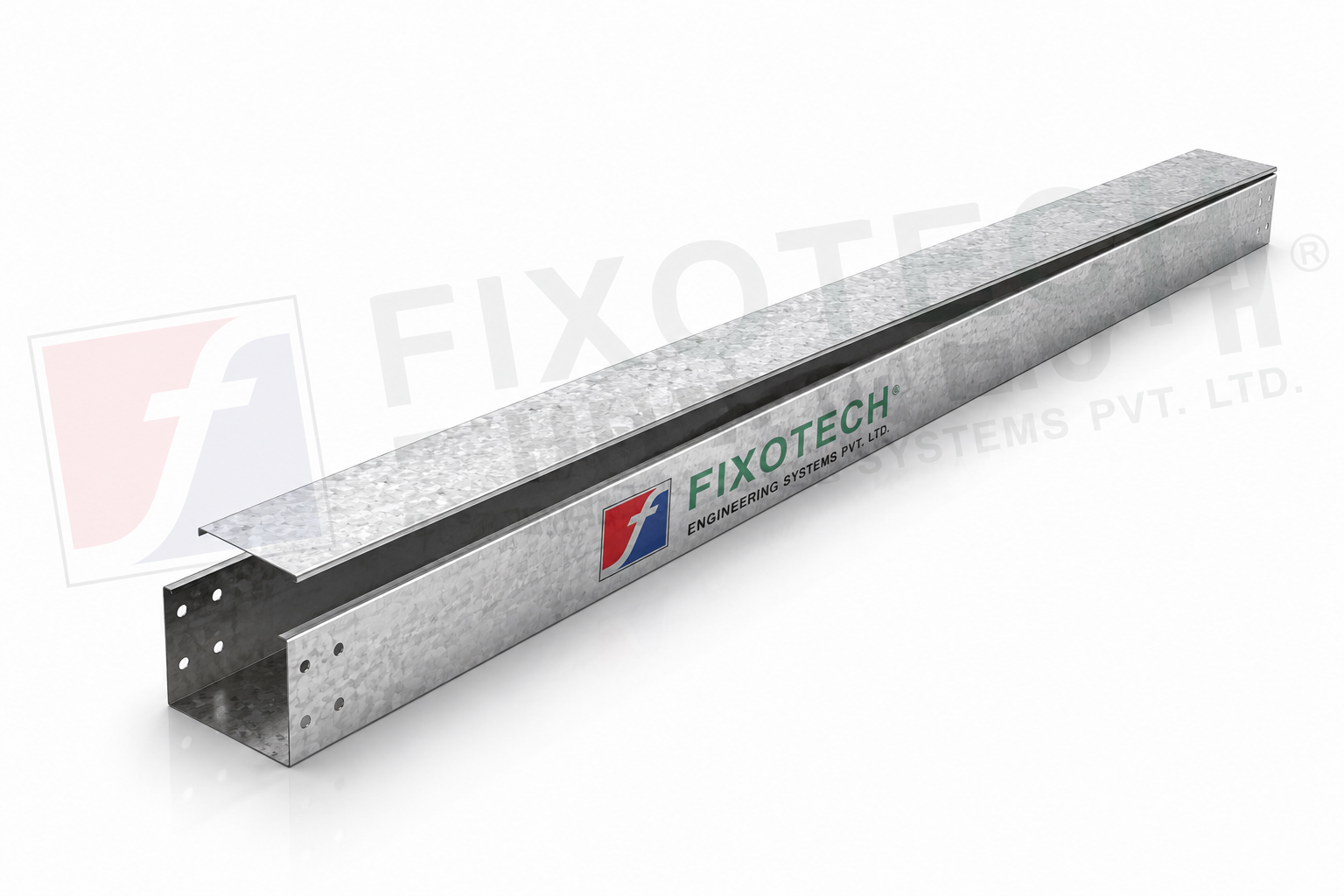 | RACEWAY CABLE TRAY - CEILING RACEWAY RACEWAY CABLE TRAY - CEILING RACEWAY A cable management system made especially for routing and arranging cables over ceilings or overhead spaces is called a ceiling raceway cable tray. View product → |
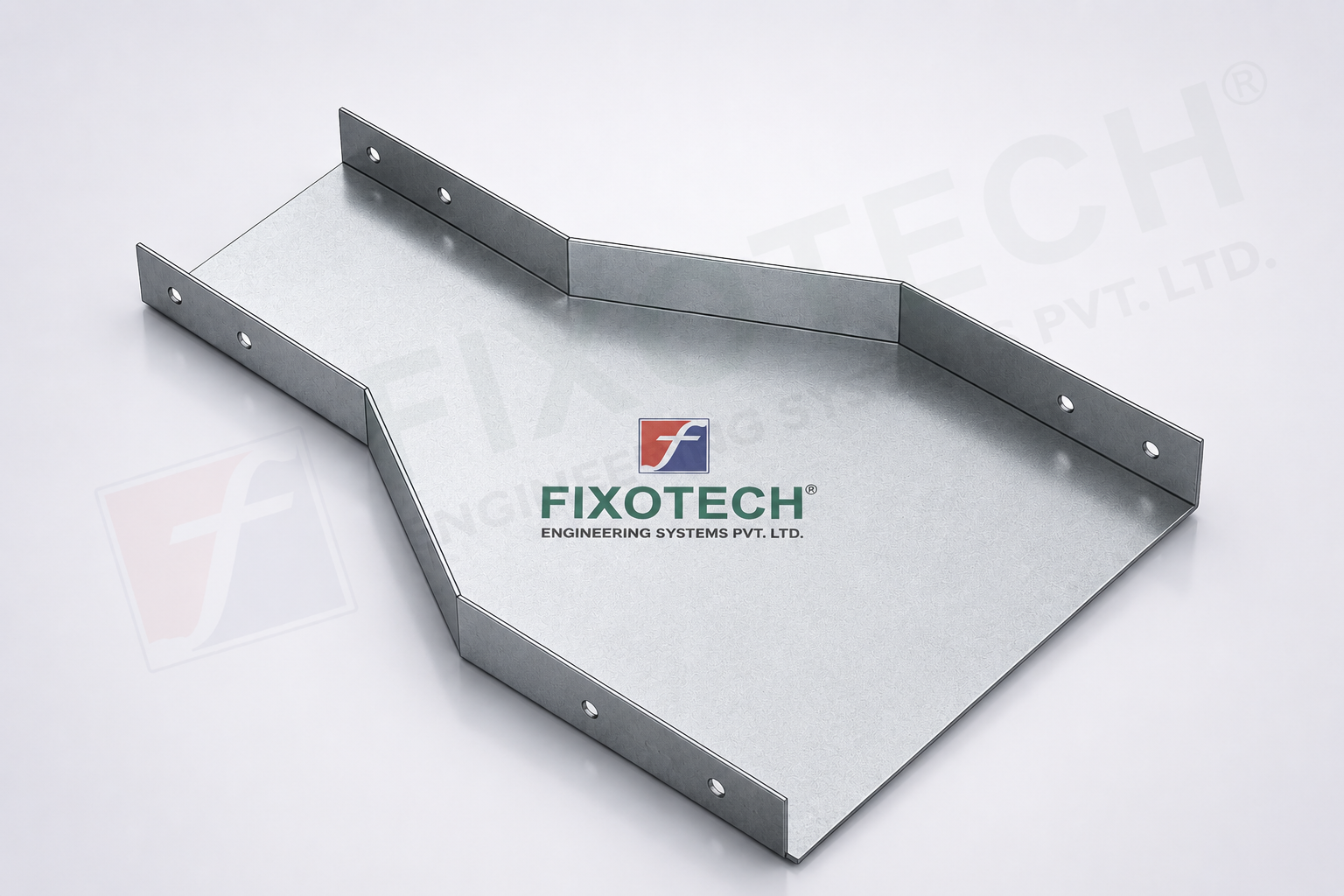 | RACEWAY CABLE TRAY - CEILING RACEWAY REDUCER To move between raceway sections of various widths or capacities, cable management systems use reducer raceway cable trays. |
How do you compare the full installed cost before deciding?
Compare the installed route, not the base price per metre. For a cable management systems manufacturer ceiling raceway in Kochi, require a measured bill of materials and serviceability plan; use the same brief when comparing a ceiling raceway supplier in Kochi.
- Check coordinated drawings, surveyed route length, internal section sizes, covers, bends, reducers, tees, crosses, junction boxes, partitions, supports, anchors, threaded rods or brackets, fasteners, bonding jumpers, earthing accessories, finish, firestop interfaces, delivery, labour, testing, inspection records, replacement sections, and expansion provisions.
- Add fitting counts, support quantities, cover and divider costs, transport, lead time, drawing revisions, site coordination, access equipment, and future replacement availability.
- Require written exclusions for structural verification, firestopping, cable pulling, painting repairs, and HVAC or lighting coordination.
| Option | Cost and serviceability comparison | Check before choosing |
|---|---|---|
| Enclosed raceway | Higher fittings, cover, access, and heat-management costs; cleaner and more protected | Confirm removable access and future pulling routes |
| Open tray, ladder, or mesh | Lower enclosure cost; easier inspection, ventilation, additions, and replacement | Confirm protection, segregation, and appearance |
| Conduit or suspended support | Strong protection or flexible overhead support, but pulling and expansion can be harder | Confirm bend access, load, and route changes |
| Decision rule | Choose enclosure when protection, segregation, appearance, cleanliness, or managed access outweigh reduced ventilation and harder additions | Otherwise choose open tray, ladder, mesh, conduit, or suspended support for heat, load, inspection, or expansion demands |
Frequently asked questions
When is a ceiling raceway better than open tray or conduit?
Choose an enclosed ceiling raceway when cables need protection, segregation, dust control, or a cleaner visible finish. Open tray offers better ventilation and faster access, while conduit provides stronger individual cable protection but makes additions and maintenance slower.
What measurements are needed before ordering a ceiling raceway?
Measure the cable bundle diameter or cross-sectional area, required internal width and height, largest cable bend radius, route length, bend locations, entry points, and spare capacity for future cables. Confirm the raceway’s usable internal dimensions rather than its outside dimensions.
How should a ceiling raceway be coordinated with other services?
Map the raceway against HVAC ducts, sprinkler pipes, lighting, structural members, access panels, and fire-rated barriers. Keep equipment service zones clear, avoid loading unsupported ceilings, and specify fire stopping where the route crosses a fire-rated wall or floor.
How can you keep a ceiling raceway accessible and expandable?
Use removable covers, accessible junction points, labelled circuits, planned inspection openings, and spare internal capacity. Preserve cable bend radius at corners and leave room to remove the cover without disturbing adjacent services.
What should you ask a ceiling raceway supplier in Kochi before ordering?
Ask for usable dimensions, material and finish, load capacity, support spacing, cover type, bend and tee details, corrosion resistance, fire and earthing provisions, drawings, installation guidance, delivery scope, and replacement-part availability. Request a route-specific layout rather than relying on a catalogue size.
Related products
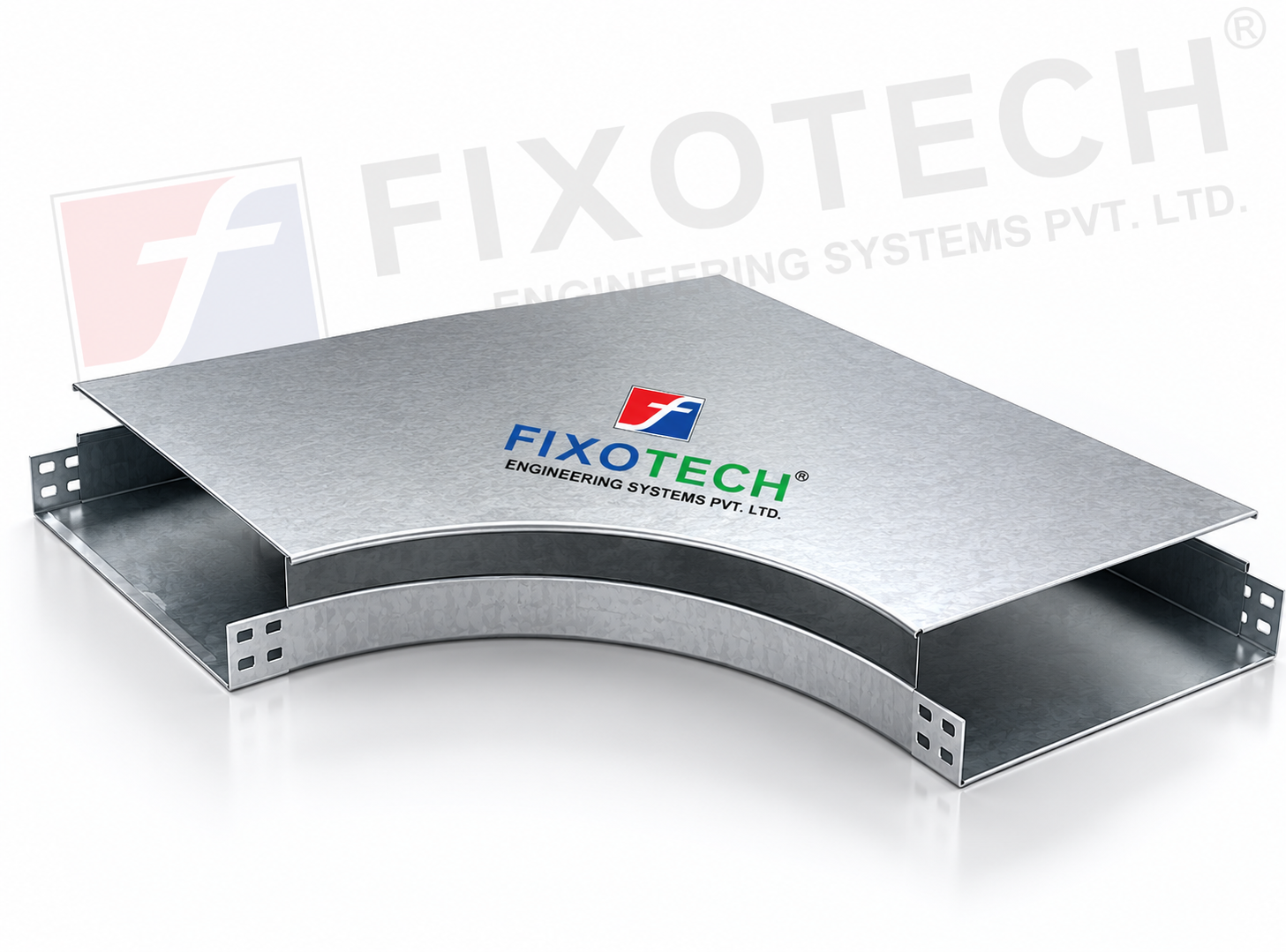 | RACEWAY CABLE TRAY - CEILING RACEWAY One part of a cable management system that helps with the seamless movement of cables around corners or horizontal bends is the Raceway Horizontal... View product → |
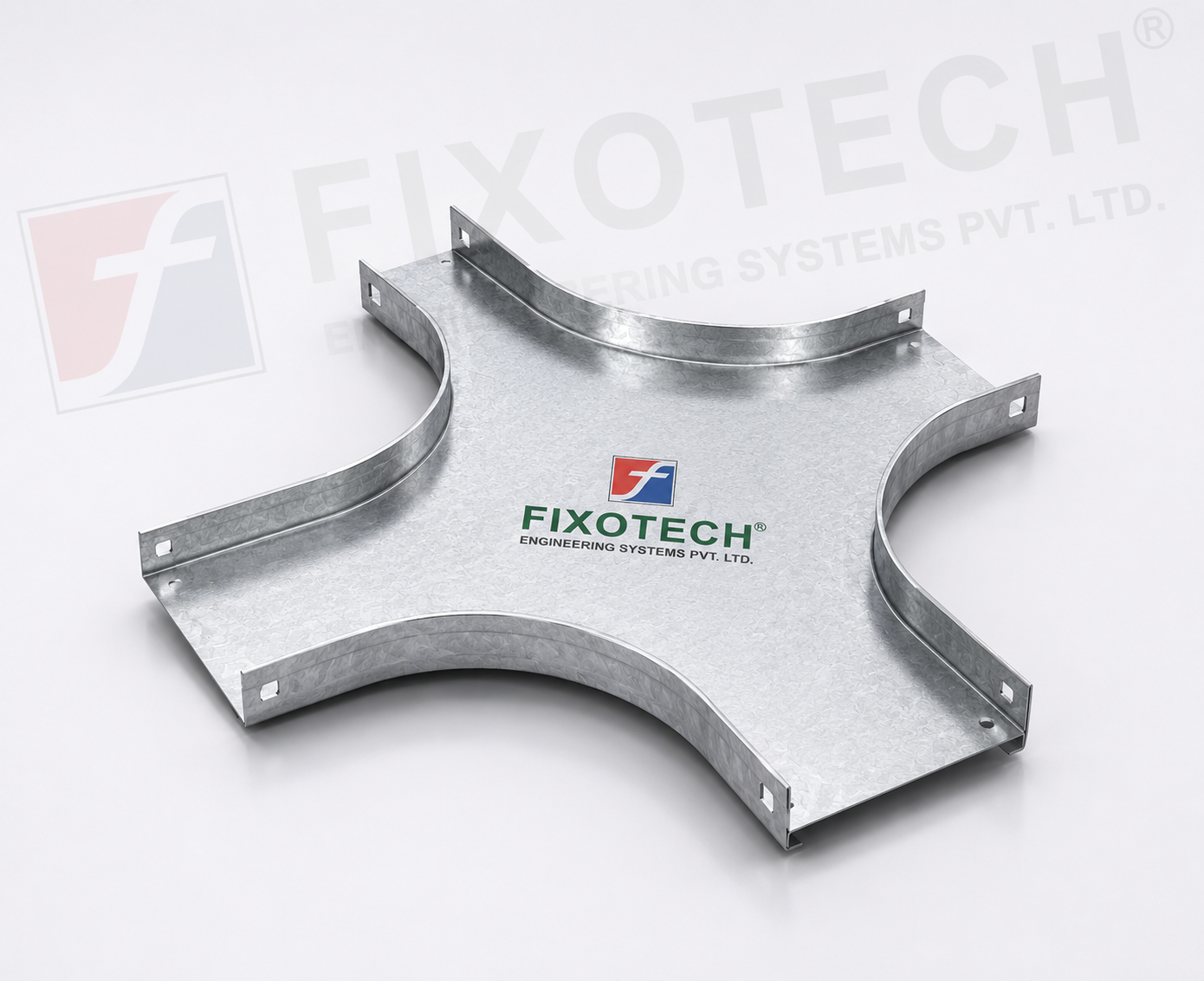 | RACEWAY CABLE TRAY - CEILING RACEWAY One part of a cable management system that helps with the seamless transfer of cables at cross intersections or junctions in a raceway system is the... View product → |
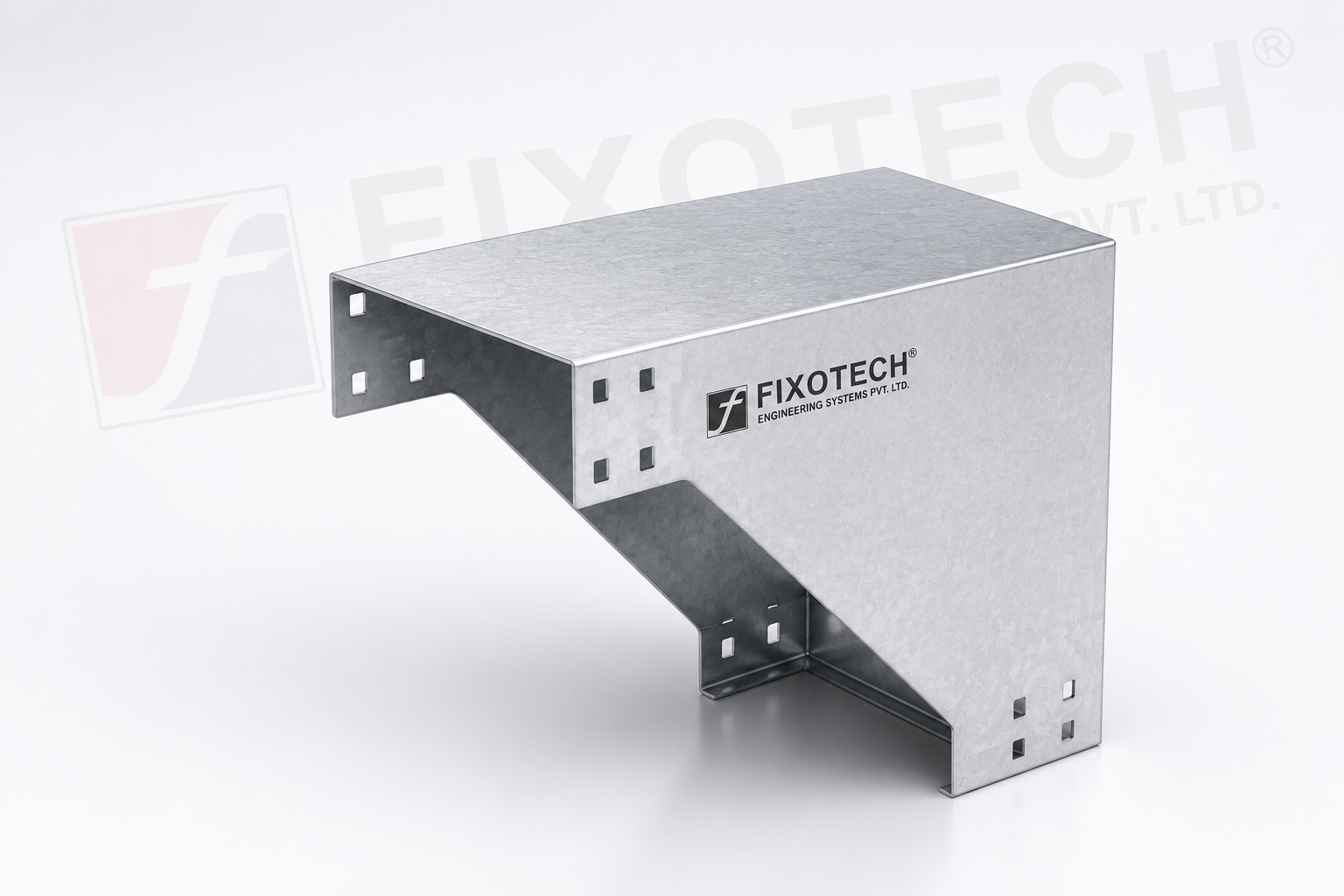 | RACEWAY CABLE TRAY - CEILING RACEWAY Specific parts used in cable management systems to travel cables vertically, either inward towards a surface or outward from it, are called vertical... View product → |
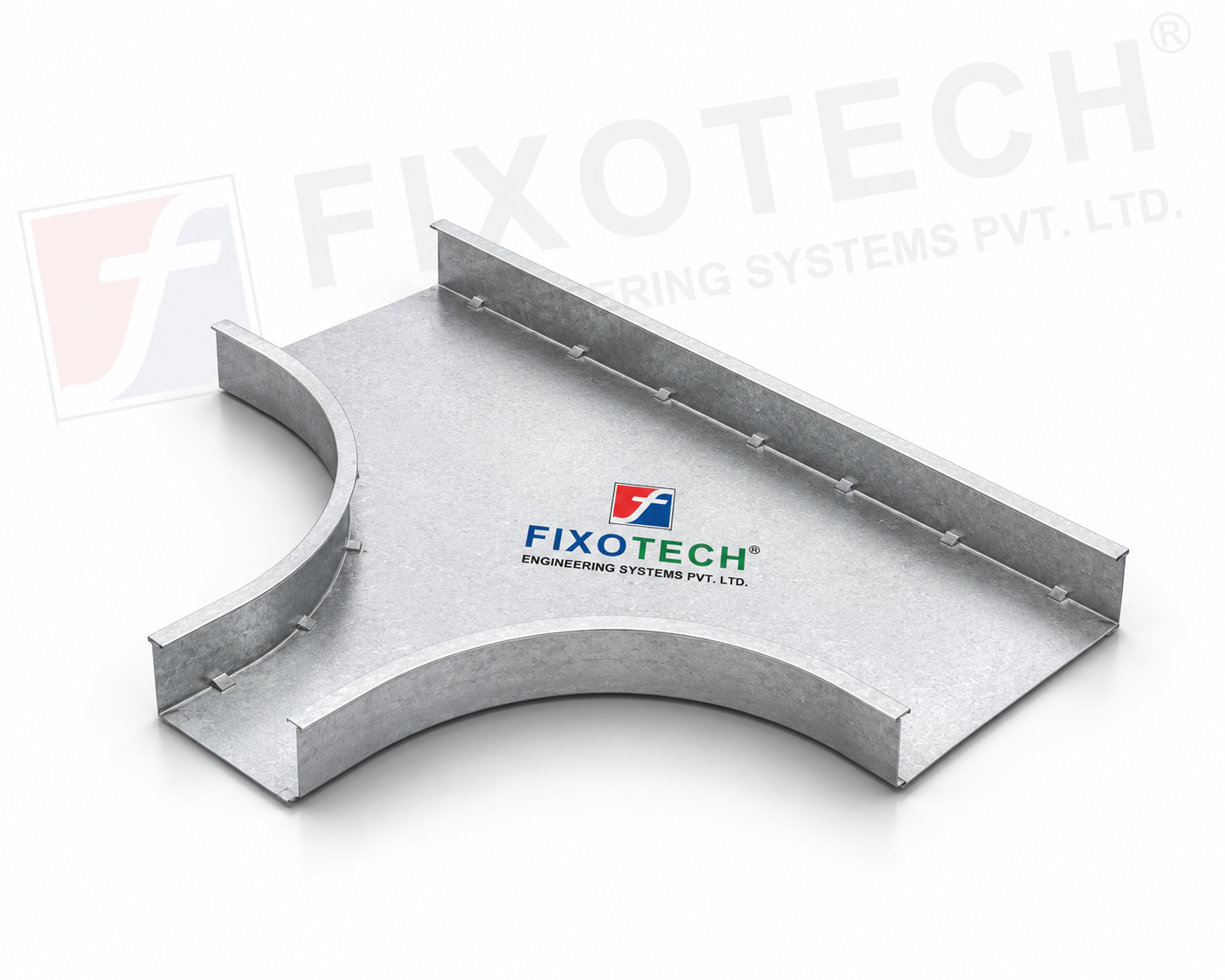 | RACEWAY CABLE TRAY - CEILING RACEWAY One particular part of a cable management system made to help with the seamless transition of cables at intersections or T-junctions in a raceway... View product → |