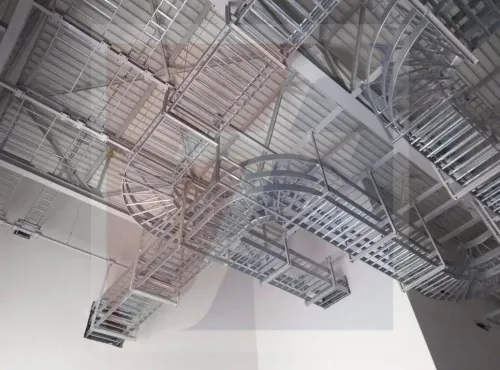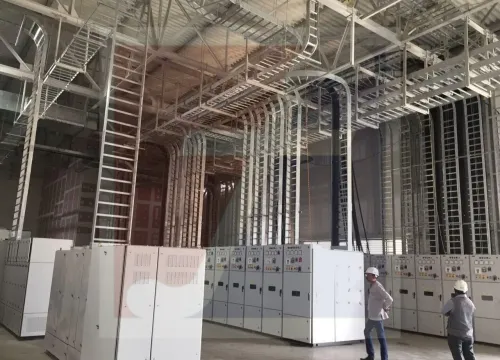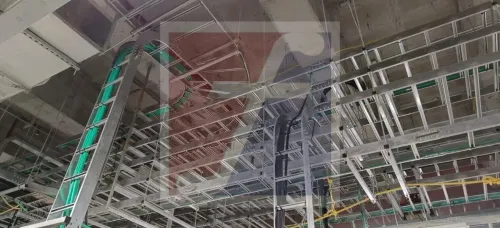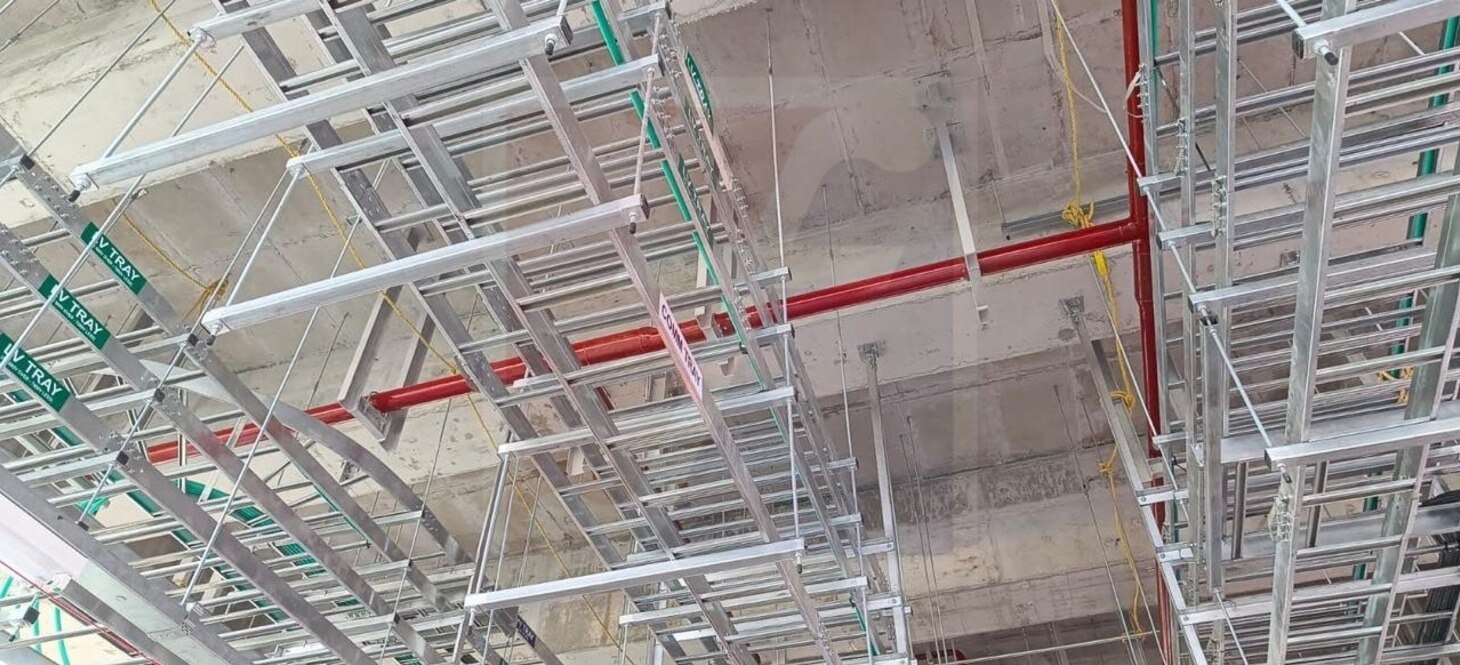
A ladder tray purchase starts with engineering information, not a cable count. You will be able to prepare a complete enquiry, evaluate the quotation, verify how the tray was made, and accept the delivered system against the approved design.
Key takeaways
- Send scaled routes, cable loads, fittings, finishes, and delivery details with your enquiry.
- Confirm tray width, support spans, deflection limits, and process-plant exposure before approval.
- Check the quotation for quantities, materials, finishes, accessories, drawings, and exclusions.
- Request inspection records and match dispatched tray sections and fittings to the approved schedule.
What to send with your first ladder tray enquiry
Send the cable trays manufacturer a scaled route layout before requesting a price. Include straight-run lengths, tray width, side-rail height, support spans, cable outside diameters, cable mass per metre, fill allowance, bend locations, vertical risers, covers, tees, elbows, reducers, splice plates, bonding hardware, support steel, delivery location, required finish, and project documents.
1. Separate power, control, instrumentation, and communication routes on the drawing. Mark hazardous-area interfaces, washdown zones, outdoor sections, high-temperature areas, and corrosive atmospheres; these conditions affect material, finish, covers, bonding, and installation details.
2. List every accessory separately from straight sections. A ladder cable tray order must identify tees, elbows, reducers, covers, splice plates, bonding hardware, and supports rather than hiding them inside a straight-tray quantity. State whether each dimension is preliminary or approved for fabrication; late changes create revisions, exclusions, incorrect quantities, extra cost, and delivery delays.
3. After submission, expect enquiry review, drawing examination, and technical clarification. Answer questions about missing routes, loads, fittings, support interfaces, and environmental exposure before approval.
4. Require a quotation that separates engineering, tooling or nonstandard fittings, straight tray, fittings, supports, covers, finish, testing, packing, and freight. This breakdown shows whether a low initial price simply excludes items you will need later.
How the manufacturer checks fit, load, and process-plant conditions
A tray that fits the cable count can still fail a process-plant design. For each cable, multiply outside diameter and mass per metre by planned quantity, then add tray, cover, accessory, and environmental loads such as wind, ice, seismic, snow, or maintenance loading. Check usable width against governing cable-fill, separation, spare-capacity, and ampacity rules.
The manufacturer checks side-rail depth, support spacing, deflection limits, concentrated loads, adjacent-pipe clearance, and vertical-riser attachments. A NEMA VE 1 load rating normally describes a uniformly distributed load over a stated support span; it does not cover a person, temporary platform, or heavy cable bundle without a separate check. Specify that span behind the rating.
- Separate power, control, instrumentation, and communication cables. Provide chloride, chemical-vapour, moisture, washdown, outdoor, high-temperature, and hazardous-area conditions, including classification, bonding, cable, gland, and equipment interfaces.
- Treat open ladder tray as unsealed: covers, barriers, greater separation, shielding, fire protection, or another wiring method is necessary where liquids, dust, corrosive deposits, fire, or electromagnetic coupling threaten the cables.
ladder cable tray for process plants competes with other methods:
| Option | Ventilation and access | Protection and installation |
|---|---|---|
| Ladder tray | Best ventilation, cleating, and maintenance access | Lowest obstruction, but limited ingress, fire, shielding, and mechanical protection |
| Perforated or solid-bottom tray | Less ventilation; solid bottom supports small cables | Better debris and fire control; heavier and less accessible |
| Conduit or enclosed raceway | Strong shielding, ingress, and mechanical protection | Harder cable pulling, heat dissipation, and maintenance access |
What appears in the quotation and approval package
Do not authorise fabrication until the ladder cable tray supplier’s quotation matches an approved general-arrangement drawing. The drawing must show straight-section length, nominal and usable width, side-rail height, rung spacing, fitting radius and angle, reducer geometry, splice locations, hole patterns, cover retention, and support attachments.
Two trays with the same nominal width can still fail to connect if their fitting or splice geometry differs.
Request these approval documents:
- A bill of materials counting straight tray, bends, tees, crosses, reducers, covers, splice plates, bolts, bonding jumpers, clamps, and support steel.
- A technical specification stating material grade, coating process and thickness, weld or fastener details, dimensional tolerances, loading table, support-span assumptions, inspection report format, and marking method.
- A deviation list identifying every departure from your enquiry, drawing, or purchase specification.
- Splice-plate material, bolt compatibility, specified torque requirements, and electrical-continuity provisions.
Compare the proposed finish against the service environment before accepting “galvanized” as a complete description.
| Option | What to verify | When it applies |
|---|---|---|
| Pre-galvanized steel | Sheet coating; cut, drilled, and welded edges can expose steel | Controlled indoor exposure |
| Post-fabrication hot-dip galvanized steel | Completed assembly receives galvanizing, including fabricated edges | Outdoor, wet, or harsher exposure |
| Stainless steel or aluminium | Alloy grade and compatibility with chlorides, chemicals, and temperature | Corrosive or weight-sensitive areas |
| Paint system | Surface preparation, coating build, and chemical-temperature resistance | Specified indoor or process environments |
State that fabrication starts only after the drawing and deviations are signed off.
What happens during ladder tray manufacturing and inspection
Manufacturing starts with verification, not fabrication: the manufacturer checks the coil or sheet against the specified material grade, thickness, and purchase documents. Side rails and rungs are then cut or roll-formed, and punching or perforation creates the approved hole pattern.
Straight sections are cut to the required length before rungs are welded to the rails or mechanically fastened. Fittings are press-formed or fabricated to the approved angle, radius, width transition, hole pattern, and splice arrangement. A fitting that looks correct but misses the splice holes will not install correctly.
The finish depends on the material and process:
| Option | Manufacturing control | Inspection focus |
|---|---|---|
| Pre-galvanized steel | Protect cut, drilled, and welded edges after fabrication | Exposed steel and repair treatment |
| Hot-dip galvanized steel | Galvanize the completed steel assembly | Coating thickness and coverage |
| Stainless steel or aluminium | Use compatible forming, joining, and cleaning methods | Surface contamination, damage, and finish |
| Painted system | Prepare the surface before applying the specified coating | Adhesion, coverage, colour, and damage |
Inspection compares each batch with the approved drawing and specification. Check width, side-rail height, rung spacing, straight-section length, fitting geometry, hole alignment, welds or fasteners, coating thickness, visible damage, and marking.
Load verification must name the support span and loading condition; one universal capacity figure proves little. When reviewing Fixotech Engineering Systems Pvt Ltd: Manufacturer of Cable Management Systems or another offer, ask which stages are in-house, which are subcontracted, and which material, dimensional, coating, and load records accompany each batch.
Related products
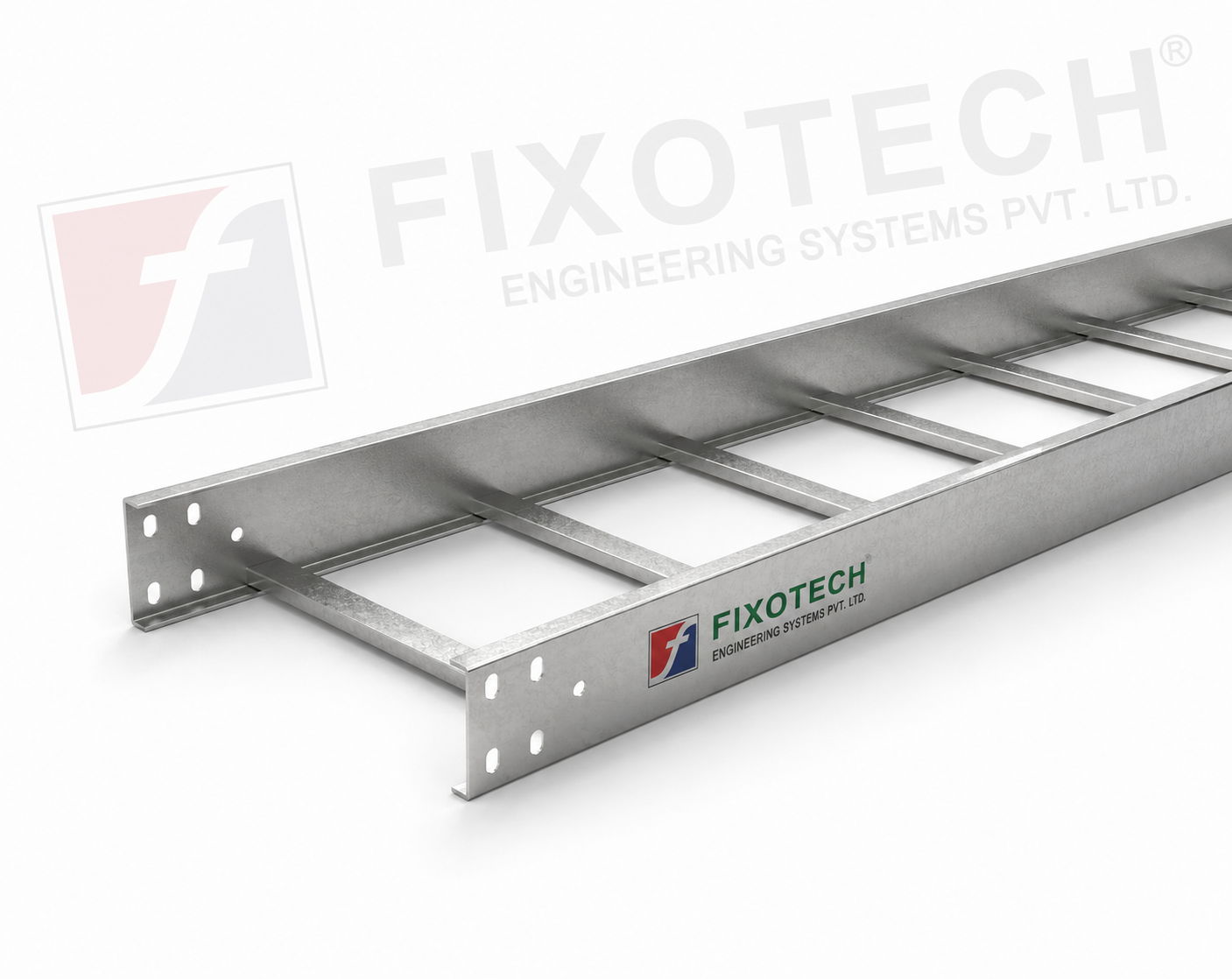 | LADDER CABLE TRAY Other common name in Cable tray industry is ladder tray. Simple design consisting of side rails with rungs connected. View product → |
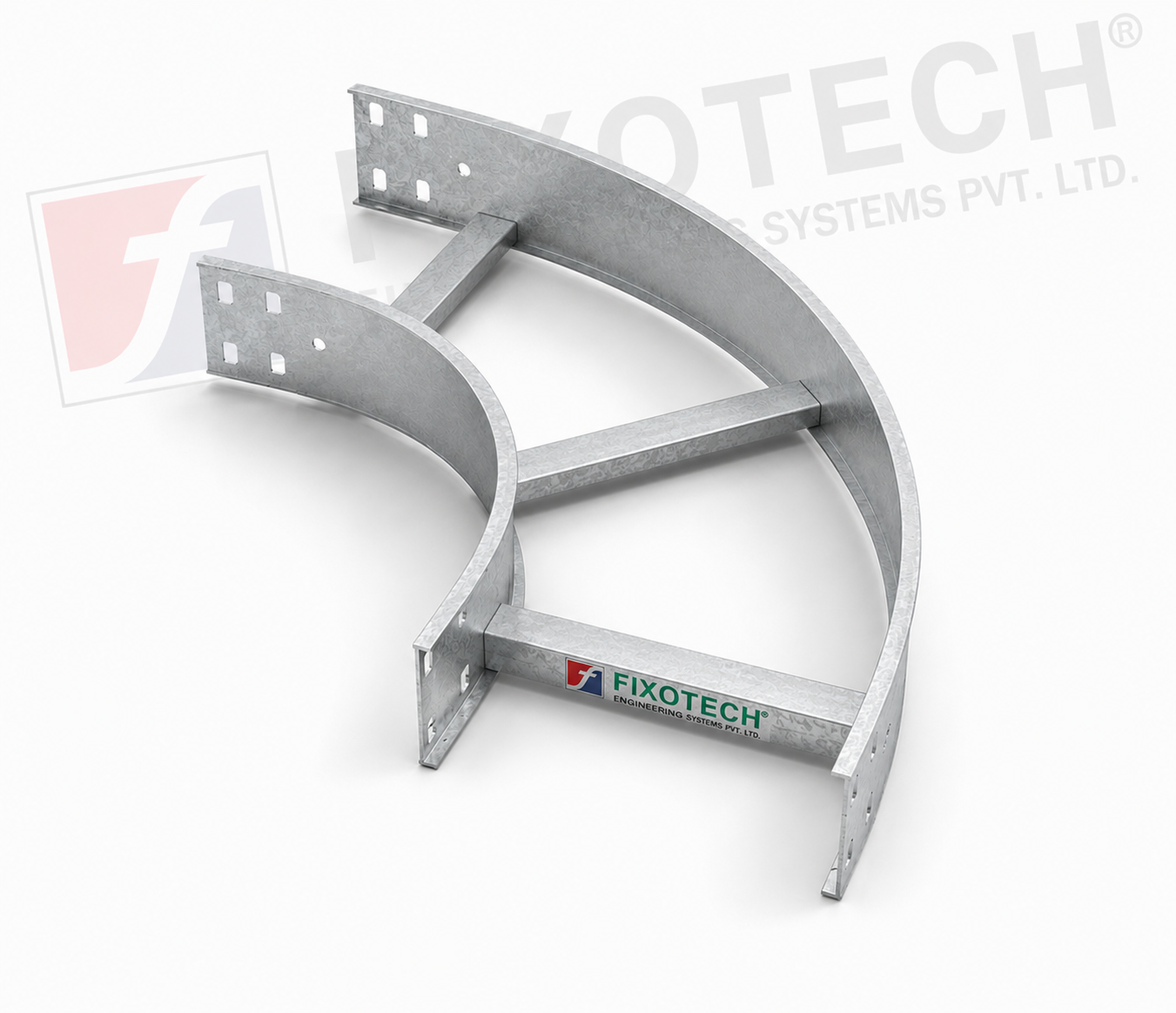 | LADDER CABLE TRAY The purpose of a horizontal ladder bend cable tray is to make it easier for cables to be routed around bends or corners in horizontal cable... View product → |
How dispatch and installation handover are completed
Dispatch is complete only when every package can be traced to the approved drawing and bill of materials. Pack straight sections, fittings, covers, splice hardware, and supports separately, with drawing or item numbers visible; use spacers and edge protection to prevent damage to galvanizing, paint, stainless surfaces, and fitting edges.
At receipt, compare quantities and markings before unloading everything into mixed stacks. Record shortages, wrong items, and transport damage immediately.
- Measure tray width, side-rail height, straight-section length, rung spacing, fitting radius and angle, and splice-hole alignment.
- Inspect the coating or material, exposed steel, dents, distorted edges, missing bolts, splice plates, bonding jumpers, and cover fit.
- Reject a visually sound straight section when its bends, reducers, tees, or splice plates do not match the approved system.
Use the following comparison to separate receipt checks from installation handover:
| Stage | Check | Evidence |
|---|---|---|
| Receipt | Quantity, marking, dimensions, finish, hardware | Approved bill of materials and inspection record |
| Installation | Support locations, span, riser attachments, bolts, bonding, segregation, covers, service clearances | Approved drawings and installation guidance |
| Close-out | Loading assumptions, deviations, material and coating records | Final inspection report and certificates where specified |
Obtain the final inspection report, material certificates where specified, coating records, approved drawings, deviation list, loading assumptions, and installation guidance before work starts. Confirm clearances from piping and other services.
Do not cut or drill until mismatches are recorded and resolved; site changes can reduce structural capacity, damage corrosion protection, interrupt electrical continuity, void warranty, and alter the agreed delivery scope.
Frequently asked questions
What should you send with a first ladder tray enquiry?
Send a scaled route layout with straight lengths, tray dimensions, support spans, cable outside diameters and mass, fill allowance, fittings, covers, bonding hardware, support steel, finish, delivery location, and project documents.
How does a manufacturer check a ladder tray for process-plant use?
The manufacturer checks route geometry, cable load, support spacing, fittings, clearances, environmental exposure, corrosion risk, finish, and installation conditions before finalising the design.
What should appear in a ladder cable tray quotation?
Review the tray schedule, quantities, dimensions, material, finish, fittings, covers, splice plates, supports, bonding provisions, drawings, inspection documents, delivery scope, exclusions, and approval requirements.
What happens during ladder tray manufacturing and inspection?
The approved schedule is converted into production documents, tray sections and fittings are fabricated, dimensions and finish are checked, and inspection records are assembled before release.
How are dispatch and installation handover completed?
The supplier identifies and packs tray sections and fittings against the approved schedule, shares dispatch documentation, and provides the drawings, installation information, and inspection records needed for site handover.
Related products
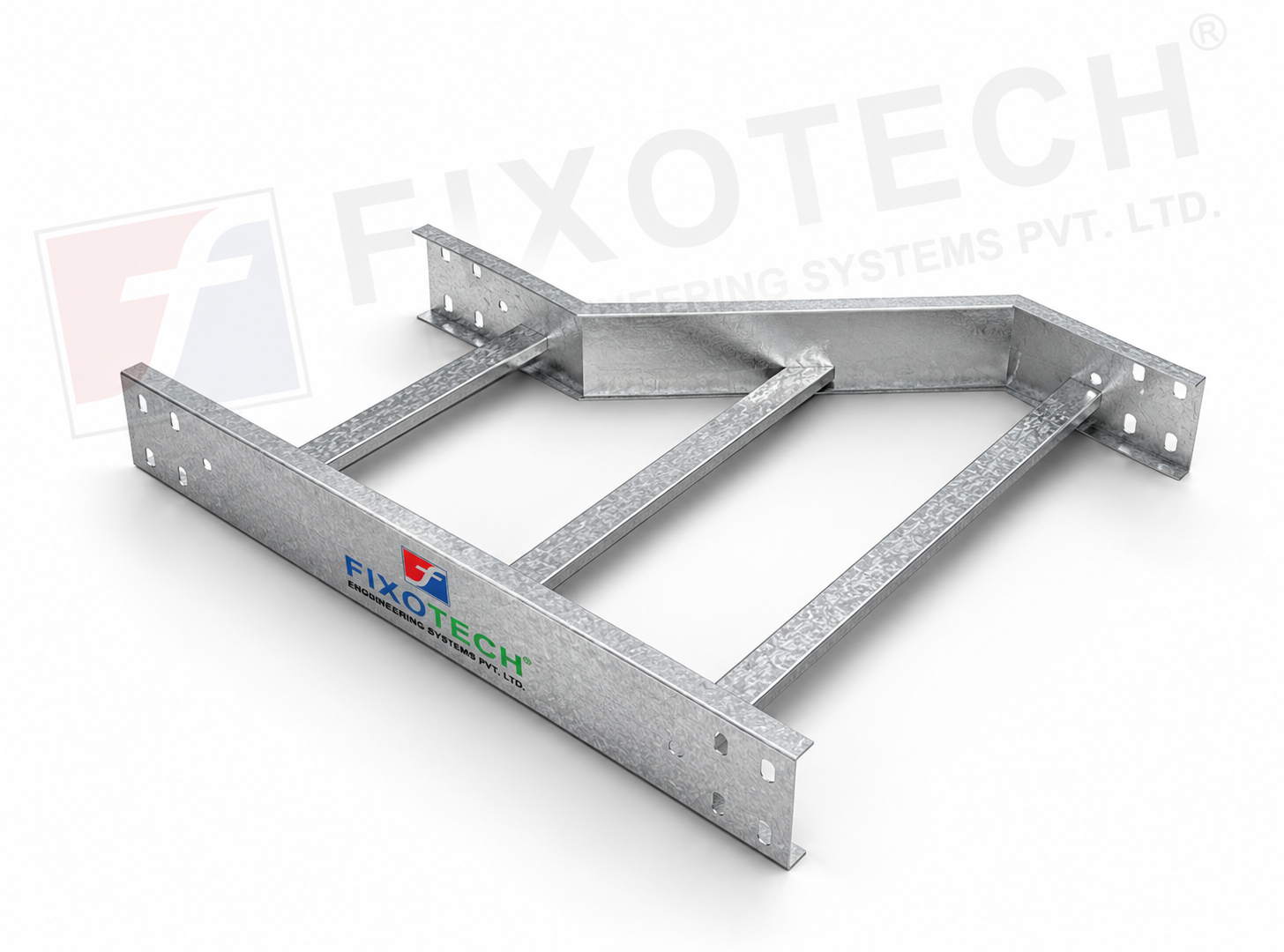 | LADDER CABLE TRAY REDUCER One particular kind of cable tray part made to make switching between cable trays of various widths or diameters easier is the reducer ladder cable... |
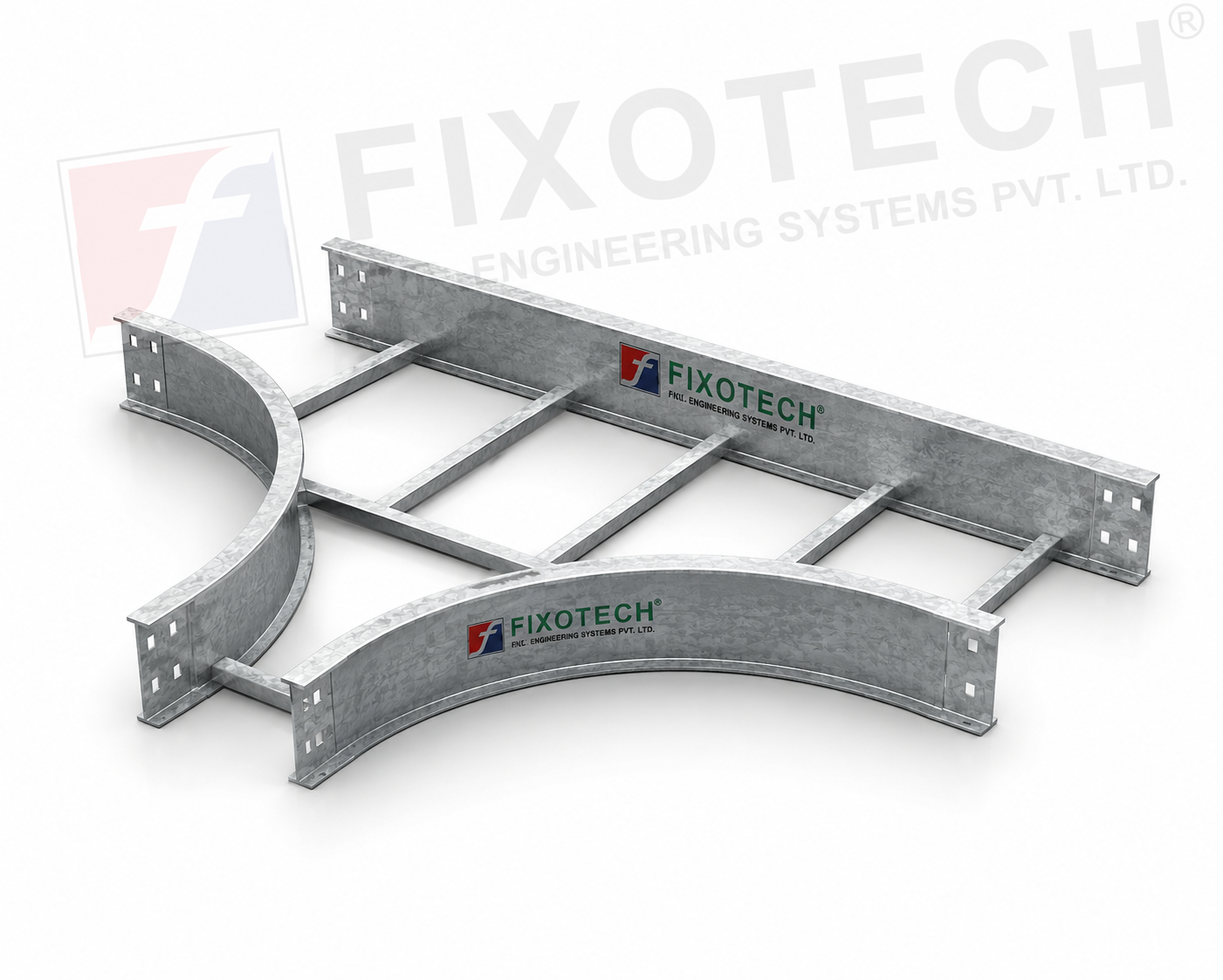 | LADDER CABLE TRAY One particular kind of cable tray made to make it easier to route cables at T-junctions in horizontal cable management systems is the ladder tee bend... View product → |
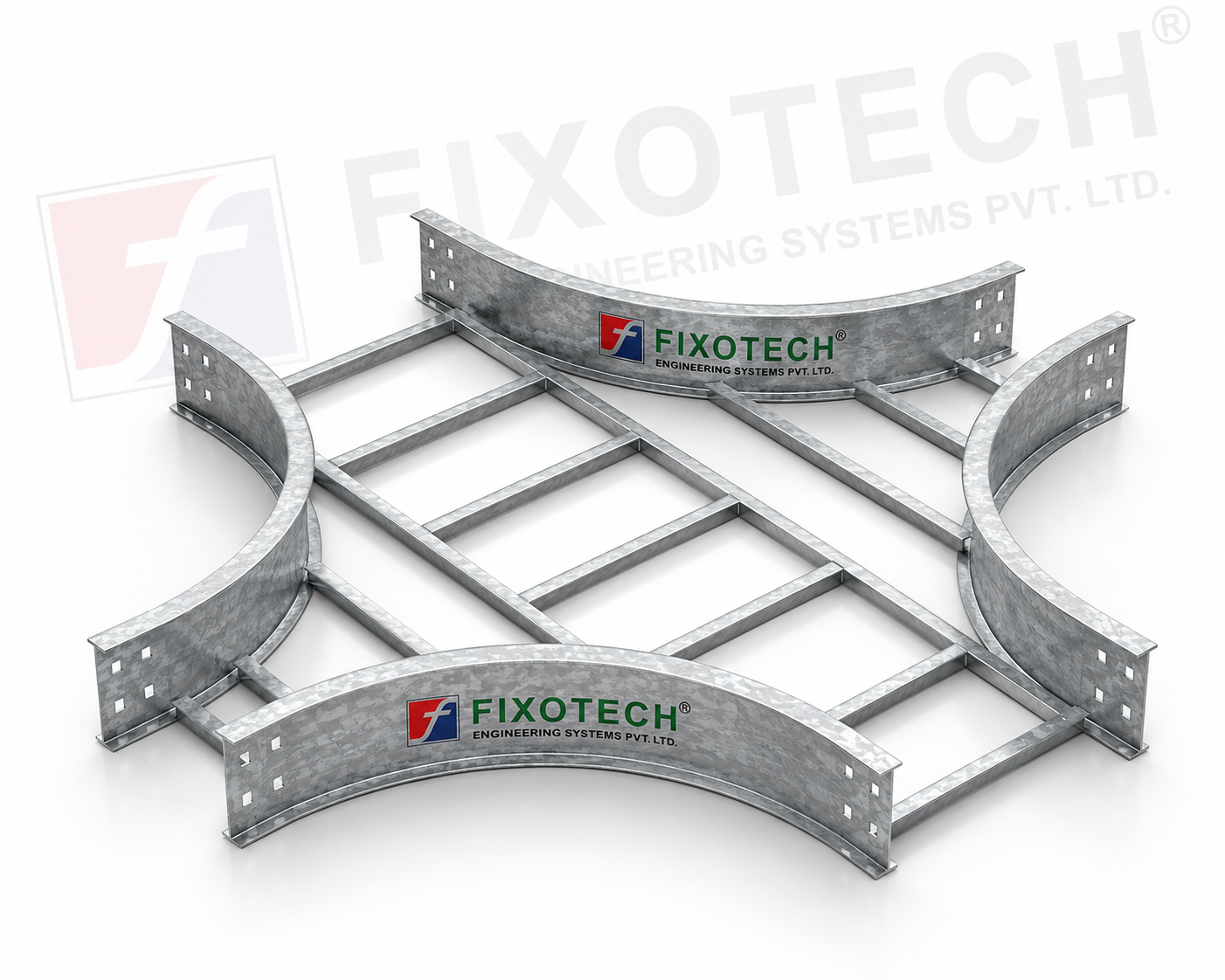 | LADDER CABLE TRAY One particular kind of cable tray made to make it easier to route wires at cross junctions in horizontal cable management systems is the cross-bend... View product → |
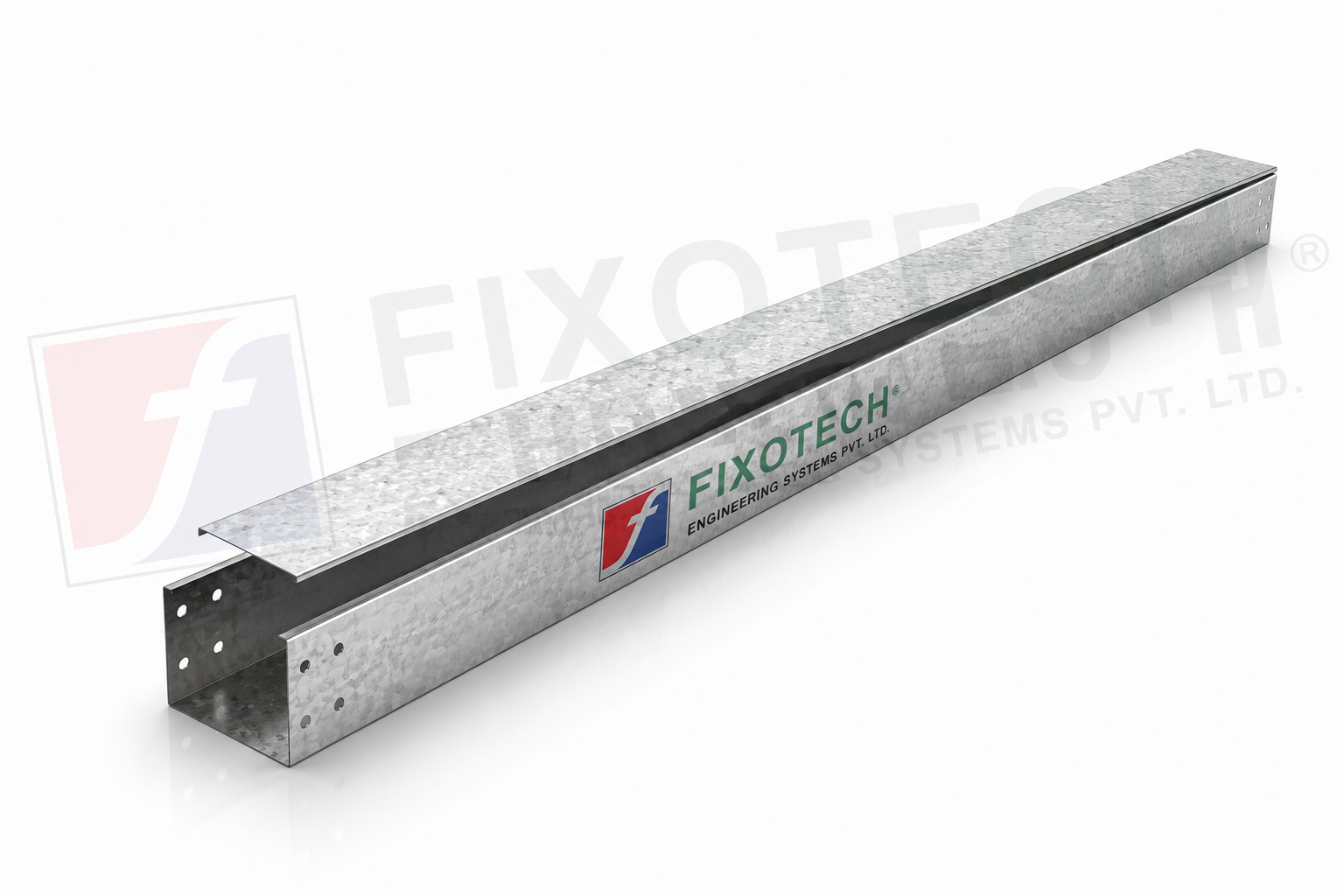 | RACEWAY CABLE TRAY - CEILING RACEWAY RACEWAY CABLE TRAY - CEILING RACEWAY A cable management system made especially for routing and arranging cables over ceilings or overhead spaces is called a ceiling raceway cable tray. View product → |