Thank you for writing to us. One of our executive will reach back to you through your submitted medium. In case there’s an urgency, feel free to connect over WhatsApp for faster response.
Prefer calling? Dial +919341960055 (International callers) or +919341960055 (Indian callers).
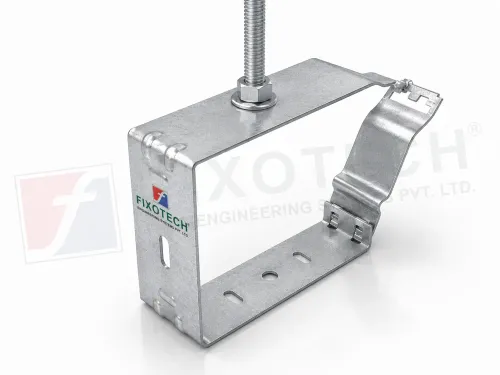
A Raceway Hanger (Openable Type) is a support accessory used to suspend a raceway from the ceiling or structure while allowing it to be opened easily for installation or maintenance of cables.
Typical specification:
Material: GI / MS / SS (as required)
Finish: Pre-Galvanized, Hot-Dip Galvanized (HDG), Powder Coated, or Stainless Steel
Design: Hinged/openable with locking bolt or latch
Mounting: Suspended using threaded rods (M8, M10, or M12)
Applications: Electrical raceways, data cable raceways, instrumentation cable routing
Advantages:
Easy installation and cable additions
Quick maintenance without removing the raceway
Secure support with reusable locking mechanism
Suitable for data centers, commercial buildings, factories, and industrial plants
A Raceway Hanger (Openable Type) is a support accessory used to suspend a raceway from the ceiling or structure while allowing it to be opened easily for installation or maintenance of cables.
Typical specification:
Material: GI / MS / SS (as required)
Finish: Pre-Galvanized, Hot-Dip Galvanized (HDG), Powder Coated, or Stainless Steel
Design: Hinged/openable with locking bolt or latch
Mounting: Suspended using threaded rods (M8, M10, or M12)
Applications: Electrical raceways, data cable raceways, instrumentation cable routing
Advantages:
Easy installation and cable additions
Quick maintenance without removing the raceway
Secure support with reusable locking mechanism
Suitable for data centers, commercial buildings, factories, and industrial plants
Within a cable management system, a junction box for a raceway cable tray is a specialized enclosure that makes it easier to branch or terminate wires. Here's a summary of its salient characteristics:
Function: In a raceway cable tray system, a junction box's main purpose is to offer a safe, well-organized place for cables to be terminated, branched, or spliced. It makes it possible to distribute wires to various locations across the system effectively.
Design: Raceway cable tray junction boxes are usually made as enclosed enclosures with several cable entry and exit points. They might have mounting holes for attachment to the raceway system, as well as detachable coverings or access panels for simple access to the inside.
Construction: Sturdy materials like steel, aluminum, or PVC are frequently used to build these junction boxes, guaranteeing strength and safety for the cables inside. They are made to offer dependable support and organization while withstanding the weight of cables and the elements.
Versatility: Raceway cable trays junction boxes are adaptable and can be utilized in a variety of settings where cables need to be terminated, branched, or spliced inside a raceway system. They are frequently utilized in data centers, business buildings, industrial settings, and other establishments where cable management is crucial.
Installation: Junction boxes are usually put in place at key sites in the raceway system, like corners, intersections, and terminations. They can be fixed to the raceway itself, or installed on supports, mounting brackets, or other gear meant for raceway installations.
Compatibility: Raceway cable trays' junction boxes are made to work with other cable management parts and common raceway systems, making it simple to integrate them into the current cable infrastructure. For even more personalization, they might also work with add-ons like coverings, dividers, and fittings.
In conclusion, raceway cable trays junction boxes are essential for effectively managing and arranging cables inside a cable management system. They offer a safe and well-organized means to splice, terminate, or branch cables as needed.
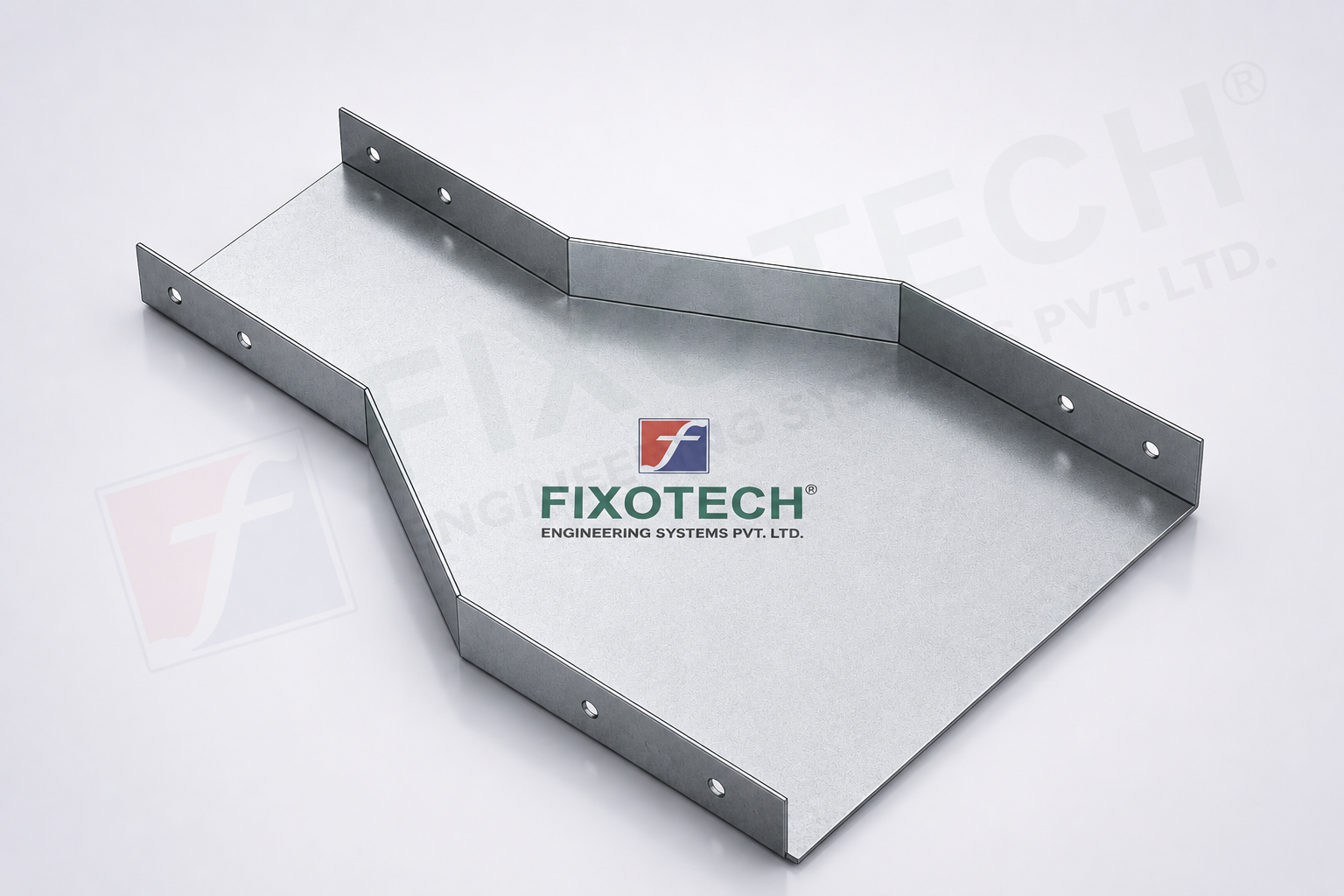
To move between raceway sections of various widths or capacities, cable management systems use reducer raceway cable trays. Below is a summary of its salient attributes:
The main purpose of a reducer raceway cable tray is to make it easier for cables to go smoothly from a bigger to a smaller raceway section (or vice versa). It guarantees that wires may be arranged and supported appropriately, all the while being routed safely and effectively.
Design: Reducer raceway trays are usually made in a sloping or tapered shape that progressively changes in size. Because of this design, wires may be led smoothly from the bigger to the smaller section—or vice versa—without having to make sudden shifts that could harm the cables.
Construction: Reducer trays, like other raceway parts, are frequently made of sturdy materials like steel, aluminum, or PVC. They are made to offer dependable support and protection even in the face of environmental stresses and cable weight.
Versatility: Reducer raceway cable trays are adaptable and useful in a range of situations where cables must switch between sections of raceways with varying capacity or diameters. They are frequently utilized in data centers, business buildings, industrial settings, and other establishments where cable management is crucial.
Installation: Reducer trays are usually placed where various raceway sections converge and a size adjustment is necessary. Brackets, supports, or other raceway installation-appropriate mounting gear can be used to mount them.
Compatibility: Reducer trays may be easily integrated into the current cable architecture because they are made to work with common raceway systems and other cable management components. For even more personalization, they might also work with add-ons like coverings, dividers, and fittings.
In conclusion, reducer raceway cable trays are essential for effectively arranging and managing wires between raceway sections with varying capacities or widths. They also ensure that cables are properly supported and protected, contributing to the upkeep of a tidy and efficient cable management system.