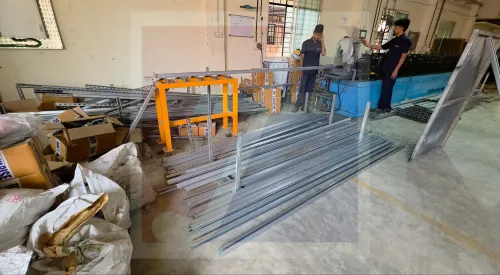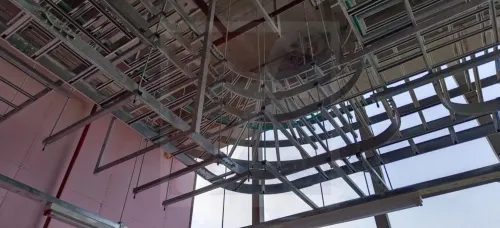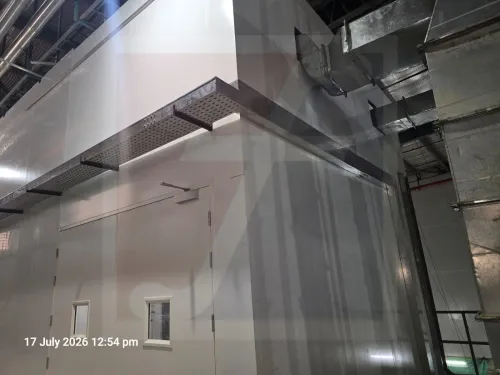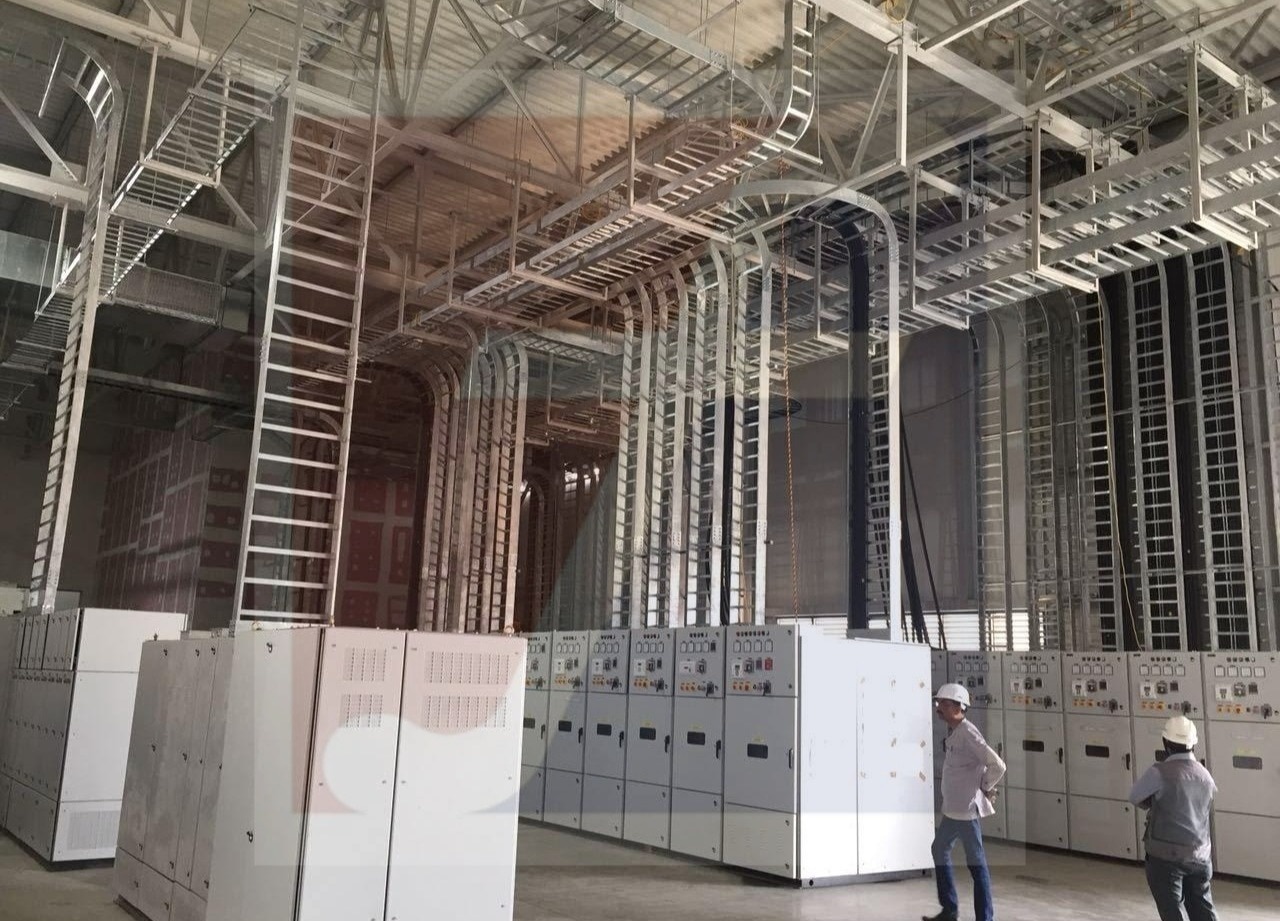
A floor raceway is a defined wiring pathway installed across, within, or beneath a floor, but its construction and rating determine whether it is suitable for office cables, industrial power, pedestrian traffic, or maintenance access. By the end, you will be able to distinguish it from a cable tray, conduit, trunking, and underfloor system, then specify the route, capacity, segregation, materials, and tests a supplier must provide.
Key takeaways
- Use a covered channel when floor access, protection or appearance matters.
- Size the raceway from cable fill, bend radius and future capacity.
- Separate power, data, control and fibre cables to limit interference.
- Check load rating, finish, corrosion resistance and maintenance access before installation.
What physically makes a floor raceway different from a cable tray or conduit?
A floor cable raceway is a channel that routes conductors through, across, or beneath a floor. It may be surface-mounted, recessed flush with the finished floor, or installed below it. Unlike an automatically open tray, its channel is covered or enclosed, so access, floor loading, trip risk, heat dissipation, and maintenance depend on its construction.
| Option | Physical construction | Typical position |
|---|---|---|
| Cable tray | Usually an open ladder, perforated, or solid-bottom support system | Above or beside the floor |
| Floor duct or trunking | Enclosed channel with a removable lid | On or within the floor |
| Underfloor raceway | Raceway placed below the finished surface, with access panels or floor outlets | Beneath a raised or finished floor |
| Conduit | Tube surrounding the conductors | Any route, including embedded or exposed |
| Ceiling raceway | Covered or enclosed pathway following an overhead route | Above the occupied space |
“Raceway cable tray” is a procurement phrase, not proof that both products share construction, approval, or loading limits. Specify IEC 61084 for cable trunking and ducting, IEC 61537 for cable tray and cable ladder systems, and UL 884 when an underfloor raceway listing is required.
A cable management systems manufacturer floor raceway should identify the actual product category and listing.
Before approval, ask:
- Is the channel open, covered, or enclosed?
- Does the cover lift, slide, or unclip, and can you remove it without disturbing cables?
- Is the cover rated for walking only, or also for trolleys, maintenance equipment, or vehicles?
How is a floor raceway installed without creating access or floor-finish problems?
Installation starts with the floor condition, not the raceway: choose a surface-mounted, recessed, or below-floor route, then design access, load transfer, anchoring, and the finished surface together. The cable-support rating and traffic rating are separate checks.
1. On concrete, mark the route, scan for embedded services, and drill only for approved anchors. Fix supports at the spacing stated in the manufacturer’s structural calculation; do not rely on the slab or adhesive without documentation.
2. For a recessed system, form the channel, install a level frame and edge protection, then coordinate screed, tiles, vinyl, or epoxy with the cover. The cover must finish flush and remain removable without damaging the floor.
3. Under a raised floor, coordinate pedestal spacing, panel cut-outs, cable bend space, load transfer, and access panels. Never let a loaded raceway simply rest on removable floor panels.
4. On carpet, mark the cut line, edging, cover profile, and carpet-replacement method before cutting. In offices, use a low-profile cover, secure end transitions, and a route clear of door swings and walking paths; every opening needs a frame or cover that will not shift under specified traffic.
5. At a fire-rated floor or wall, use a tested, listed firestop system around the penetration and cable opening; the raceway listing alone does not approve that assembly. Bond metallic sections, couplings, fittings, removable covers, expansion joints, and painted joints through a designed path connected to the facility grounding system.
A procurement search for floor raceway cable tray in Chennai is incomplete unless it states the floor type, cover loading, access method, and firestop and grounding requirements.
How do you size the channel and route cables inside it?
Size the channel from the cables and route constraints, not its nominal outside width.
1. Measure the route and count cables by service. Record each cable’s outside diameter, then mark every bend, tee, cross, junction box, termination, and access point on the plan.
2. Calculate usable internal area after subtracting dividers, fittings, and other obstructions. Apply the permitted fill for the selected wiring method; the manufacturer’s outside width is not usable cable space.
3. Check the largest cable’s minimum bend radius at every horizontal and vertical direction change. Confirm that pulling access remains adequate and that covers can be removed without disturbing installed cables.
4. Specify spare capacity for the next installation phase as a percentage or physical reserve, such as an empty compartment or stated unused area. Do not leave “future expansion” undefined.
5. Separate cable-support load from traffic rating. The raceway body and supports carry cable weight; the cover and frame carry pedestrian, trolley, maintenance-equipment, or vehicle loads.
6. Review deflection, impact, vibration, water entry, dust, and drainage for the actual location. A wet or dusty route needs details beyond a width measurement.
Ask a cable management systems manufacturer for a floor raceway drawing showing internal dimensions, usable-fill calculation, support spacing, maximum cable load, cover rating, bend details, and installation instructions. Fixotech Engineering Systems Pvt Ltd: Manufacturer of Cable Management Systems should provide these details before approval, not after delivery.
Related product
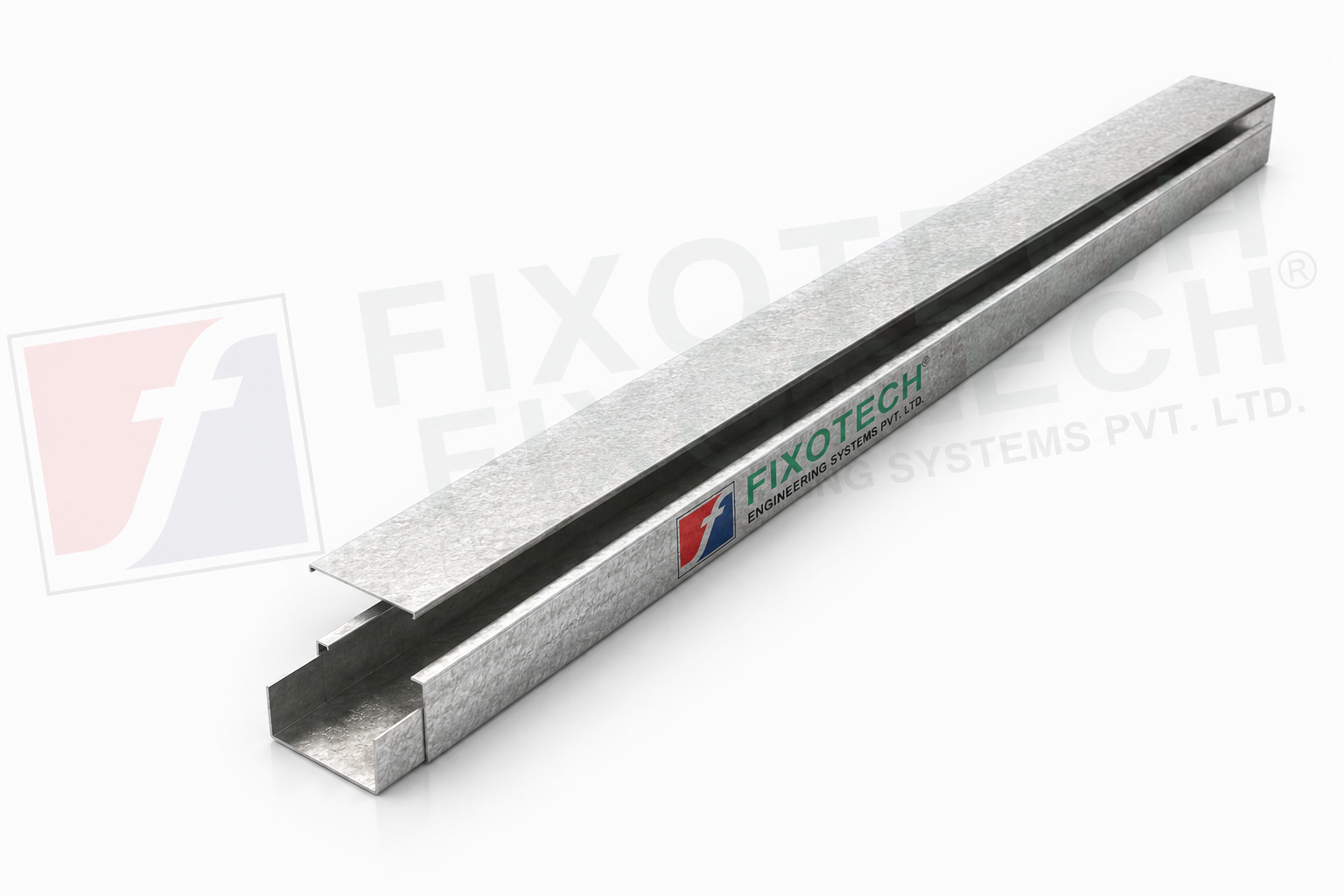 | RACEWAY CABLE TRAY - FLOOR RACEWAY RACEWAY CABLE TRAY - FLOOR RACEWAY A cable management system called a floor raceway cable tray, or just a floor raceway, is used to route and safeguard wires between floors, especially... View product → |
When do power, data, control, and fibre cables need separation?
Separate circuits when the governing electrical, machine-installation, or communications standard requires it, or when voltage, current, switching noise, or fault energy creates a credible interference or damage risk.
List these services separately before selecting a floor cable raceway:
- Power
- Motor
- Control
- Instrumentation
- Telephone
- Ethernet
- Coaxial
- Fibre-optic
| Arrangement | Use it when | Check before approval |
|---|---|---|
| Shared channel | Circuits have compatible voltage and interference characteristics | Standard permissions, fault energy, spacing, and cable ratings |
| Dedicated compartments | Several services share one enclosure | Divider height, material, bonding continuity, and bend spacing |
| Separate raceways | Noise, voltage difference, or fault consequences are significant | Route, supports, transitions, and grounding for each raceway |
Do not assume a divider makes every combination acceptable. Verify its height and material, cable voltage class, bonding continuity, and the required spacing at bends, junction boxes, access openings, and terminations.
Keep fibre-optic cable in a compartment that preserves its specified bend radius. Protect connectors from sharp edges; otherwise a crowded enclosure can cause attenuation or physical damage.
Do not place a high-current motor feeder beside sensitive instrumentation merely because both cables fit the available width. Continue segregation through junction boxes and branch points, where a congested box can defeat the straight-run arrangement.
The final drawing should identify every compartment, cable service, divider position, spare space, grounding connection, and transition to conduit, tray, or equipment. Metallic sections, covers, couplings, and fittings need an engineered bonding path; touching metal does not prove continuity.
Which material, finish, and performance checks suit the installation?
For Chennai, humid interiors, industrial floors, and corrosive service, choose material and finish from the exposure—not from a supplier’s word “painted.” Painted steel suits protected indoor areas when you specify coating system, surface preparation, touch-up method, abrasion resistance, moisture exposure, and corrosion-test evidence.
| Material | Strength | Checks before approval |
|---|---|---|
| Painted steel | Strong, economical indoor option | Coating build, surface preparation, touch-up method, abrasion and corrosion evidence |
| Galvanised steel | Zinc protection for indoor and utility areas | Cut-edge treatment, wet-cleaning exposure, and compatibility with adjoining metals |
| Stainless steel | Best candidate for persistent humidity, salt air, food chemicals, or aggressive washdown | Stainless grade, surface finish, chemical compatibility, and washdown limits |
| Aluminium | Lightweight and corrosion-resistant | Galvanic contact with steel supports, fasteners, and equipment |
| PVC | No metal corrosion or bonding requirement | Impact, temperature, smoke, flame, UV, cover loading, and chemical performance |
In wet or dusty areas, request the ingress-protection rating, gasket details, drainage arrangement, chemical compatibility, and permitted washdown conditions. Separate the cable-support rating from the cover-and-frame traffic rating; a raceway that carries cables is not automatically safe for trolleys or vehicles.
When comparing a raceway cable tray manufacturer with a local supplier, request:
- A drawing naming the product category, internal dimensions, compartments, material, finish, and cover rating.
- Load and deflection limits for the body, supports, cover, and frame.
- Firestop interface, grounding method, and bonding details.
- Test certificates identifying IEC 61084, IEC 61537, UL 884, or another applicable standard.
A request for “floor raceway cable tray in Chennai” is incomplete without these details.
Frequently asked questions
What physically makes a floor raceway different from a cable tray or conduit?
A floor raceway is a covered or enclosed channel routed through, across or beneath a floor. Cable tray is generally an open support system, while conduit is a closed tube that provides stronger mechanical protection but less accessible cable space.
How do you install a floor raceway without creating access or floor-finish problems?
Choose surface-mounted, flush-recessed or below-floor installation based on traffic and finish requirements. Set the cover level with adjacent flooring, protect cable entry points, provide service access, and verify the cover’s load rating before commissioning.
How do you size a floor raceway and route cables inside it?
Calculate cable cross-sectional area, apply the manufacturer’s fill limit, reserve space for future cables, and check every cable’s minimum bend radius. Route cables without crushing, sharp bends or blocked access points.
When do power, data, control and fibre cables need separation?
Separate power from data and sensitive control circuits when voltage, current or switching noise could cause interference. Use divided channels, separate compartments or the specified clearance, and keep fibre away from crushing and tight bends.
Which material, finish and performance checks suit a floor raceway installation?
Match the raceway material and finish to corrosion, moisture, chemical exposure, traffic and cleaning conditions. Confirm load rating, impact resistance, temperature range, fire performance, earthing continuity and access-cover security.