A process plant cannot rely on a supplier saying that perforated tray is available: the required widths, finishes, fittings, supports and documents must be ready for the project schedule. You will be able to test availability, size the tray correctly and compare Chennai suppliers against the conditions at your plant site.
Key takeaways
- Request stock, fabrication dates and dispatch details for the complete routing system.
- Select material and finish against corrosion, temperature and plant-area conditions.
- Size tray width, loading and support spans from the cable schedule.
- Verify standards, segregation, hardware and supplier documents before issuing the purchase order.
What Perforated Tray Availability Really Means in Chennai
A process plant can treat perforated tray availability as real only when the supplier has the specified tray and its complete routing system ready for dispatch, or has a documented fabrication date that meets the project schedule. A few standard straight lengths in a Chennai warehouse do not prove availability.
- Send the cable schedule, tray take-off and fabrication drawings for review. The supplier must confirm outside dimensions, usable width, side-rail height, perforation pitch, tray thickness, finish, bend radius, splice orientation and support spacing.
- Request an itemised stock or production check for every width, height, standard length and material grade. Separate stocked sections from made-to-order heavy-duty rails, unusual radii, stainless steel, special coatings and nonstandard widths.
- Confirm the complete fitting list: bends, tees, reducers, crosses, vertical offsets, covers, splice plates, supports, clamps, fasteners and earthing or bonding hardware. Missing fittings can delay installation even when straight tray is ready.
- Obtain a written inspection, packing and dispatch plan with quantities and dates. Check that the proposed routing keeps power, control, instrumentation, communication and intrinsically safe circuits appropriately segregated.
For a process plant, perforated tray availability means the specified system can leave the supplier’s facility on an agreed date, with drawings, quantities and accessories reconciled. When assessing a perforated tray supplier in Chennai, verify local fabrication and accessory capacity rather than accepting a Chennai sales address as proof of immediate supply.
Choose the Material, Finish and Standard for the Plant Environment
Material selection follows the exposure, not the fact that the project is in Chennai. Specify process plant cable trays to IS/IEC 61537, including the declared load class, support span, dimensions, electrical continuity and bonding method. Require material certificates, dimensional inspection and finish records.
| Environment | Material and finish | Specification decision |
|---|---|---|
| Indoor, dry | Pre-galvanized steel | Use for clean, low-humidity rooms; protect cut edges and specify corrosion-compatible fasteners. |
| Coastal or high humidity | Hot-dip galvanized steel | Specify galvanizing after fabrication, coating thickness or mass, drainage, covers and stainless or galvanized fixings. |
| Chemical area | HDG, 304 or 316 stainless steel, or a tested coating system | Name the chemical, concentration, temperature and cleaning regime; do not assume stainless steel resists every chemical. |
| Washdown area | 316 stainless steel, or a coating proven for the wash chemicals | Provide open drainage, sloped routes where practical, covers and sealed or compatible hardware. |
| Outdoor process area | Hot-dip galvanized steel or 316 stainless steel | Add covers, drain paths, thermal-movement allowance and extra supports at bends, risers and equipment entries. |
An industrial perforated tray manufacturer should state the selected grade, finish standard, coating test records and fitting material in the quotation. A generic “heavy duty” description is not enough.
Put the environment, chemical exposure and maintenance interval on the purchase specification. Confirm that bends, tees, reducers, covers, splice plates and supports use the same corrosion strategy; a galvanized tray paired with incompatible hardware can become the failure point.
Calculate Tray Width, Loading and Support Span from the Cable Schedule
Start with the cable schedule, not the tray’s nominal width. Select usable internal width by summing each cable’s outside diameter, adding the specified separation and spare allowance, then checking the largest cable’s minimum bend radius at every horizontal and vertical change. A tray that fits straight runs can still fail at a bend.
- Record cable outside diameter, quantity, weight per metre, minimum bend radius, installation temperature limits and the project’s spare-capacity requirement.
- Group cables by the required power, control, instrumentation, communication or intrinsically safe separation before calculating each route.
- Check cable fill against the plant specification and cable manufacturer’s installation limits; open perforations do not justify packing cables until the tray appears full.
- Calculate route load as cable weight per metre plus tray and accessory weight. Include the actual loading pattern, not an average that hides a concentrated bundle.
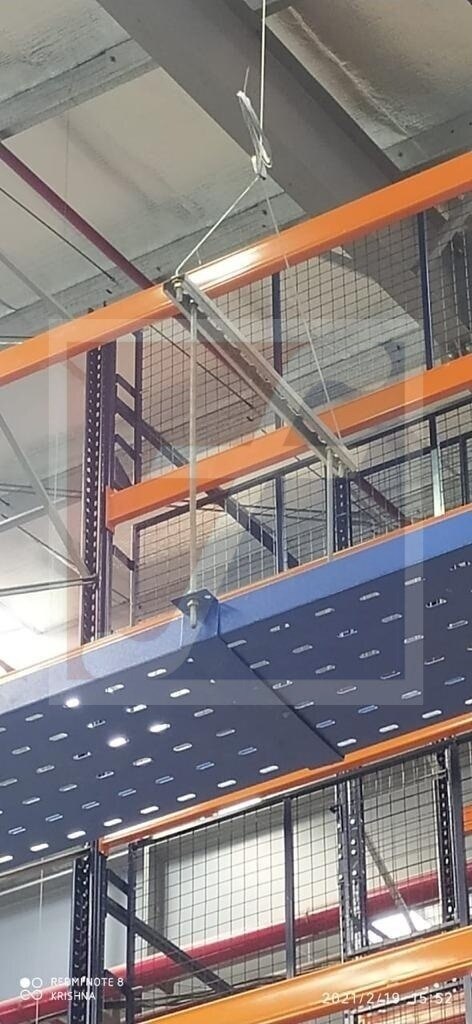
- Select support spacing from the manufacturer’s load table for that load, span, splice arrangement and installation orientation. Confirm deflection and fixing details at bends, risers and heavy entries.
Heat dissipation is part of the fill decision. If grouped cables exceed their permitted ampacity or derating basis, increase separation, use a wider route or divide the circuit group rather than simply choosing a deeper tray.
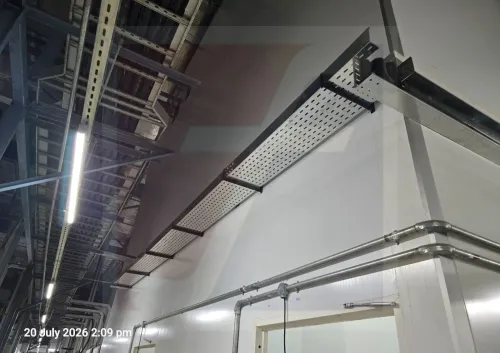
For process plant cable trays, request a take-off and fabrication drawing showing usable width, side-rail height, perforation pitch, bend radius, splice direction and support span. Confirm straight lengths, bends, tees, reducers, covers, splice plates and bonding hardware match the calculated routes before accepting availability.
Match Tray Type, Segregation and Hardware to Each Cable Group
Use perforated tray for general power, control and instrumentation routes when cable-tie access, ventilation and drainage matter more than maximum bottom strength. Its perforations also reduce metal area, so verify the load and deflection for the actual pattern, especially at bends, risers and long spans.
| Tray type | Best use | Main check |
|---|---|---|
| Perforated tray | Ordinary indoor or outdoor routes | Load rating, drainage and cable segregation |
| Ladder tray | Heavy power cables, long spans and high heat dissipation | Cleat spacing, cable support and bend loading |
| Solid-bottom tray | Small cables needing continuous support or extra protection | Water drainage, weight and heat accumulation |
| Enclosed raceway | Fire, impact, contamination or unauthorised-access protection | Ventilation, fill, access and hazardous-area rules |
A perforated tray is not a substitute for circuit separation. Route power, control, instrumentation, communication and intrinsically safe circuits according to the cable schedule, electromagnetic-compatibility requirements and hazardous-area design. Add dividers only where the specification permits a shared tray; a divider does not remove every segregation requirement.
For process plant cable trays, treat perforated tray availability as a complete-system check, not a straight-length claim. Request the take-off and fabrication drawings showing usable width, side-rail height, perforation pitch, bend radius, splice orientation and each fitting quantity.
- Match bends, tees, reducers, crosses, offsets and covers to the tray dimensions.
- Confirm cleats and clamps suit the cable diameter, fault forces and support spacing.
- Verify divider material, height and fixing method.
- Obtain bonding details: electrically rated splice plates, required jumpers and connection to the plant earthing network.
Verify a Chennai Manufacturer Before You Release the Purchase Order
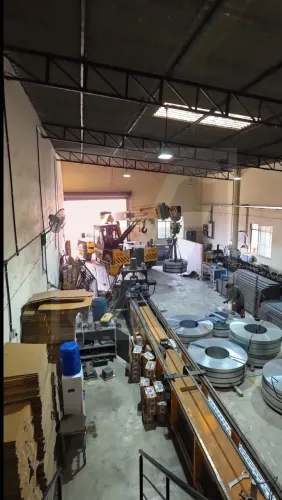
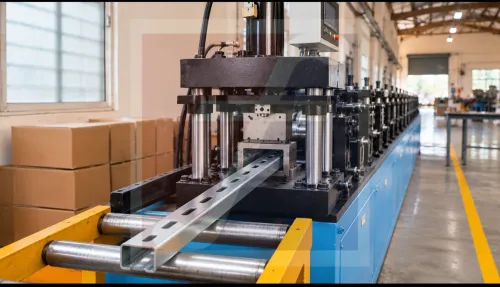
To verify a perforated cable trays manufacturer for process plant availability in Chennai, demand evidence of local fabrication before release. A sales office can repeat an “immediate” availability claim while holding only brochures; ask for a component-level commitment and dated delivery plan to the plant gate.
1. Send the cable-route take-off, material grade, finish, thickness, widths, side-rail height, straight lengths, covers and support spans. Require separate quantities for bends, tees, reducers, crosses, vertical offsets, splice plates, clamps, supports, fasteners and bonding hardware. A perforated tray supplier in Chennai that cannot price the complete system has not established project availability.
2. Request a fabrication drawing before issuing the purchase order. Check outside dimensions, usable width, perforation pitch, bend radius, splice orientation, hole alignment, support spacing and finish. Treat nonstandard widths, heavy-duty rails, stainless steel, special coatings and unusual radii as made-to-order.
3. Tie release to material traceability, dimensional inspection records, load/span data, and galvanizing or coating records. Fixotech Engineering Systems Pvt Ltd: Manufacturer of Cable Management Systems should be assessed by the same evidence you demand from any industrial perforated tray manufacturer.
4. Match the packing list to the take-off before loading. Verify tagged bundles, fittings, hardware, surface protection, vehicle details and dispatch date; straight tray alone does not make a route installable. Record shortages at site receipt.
Related products
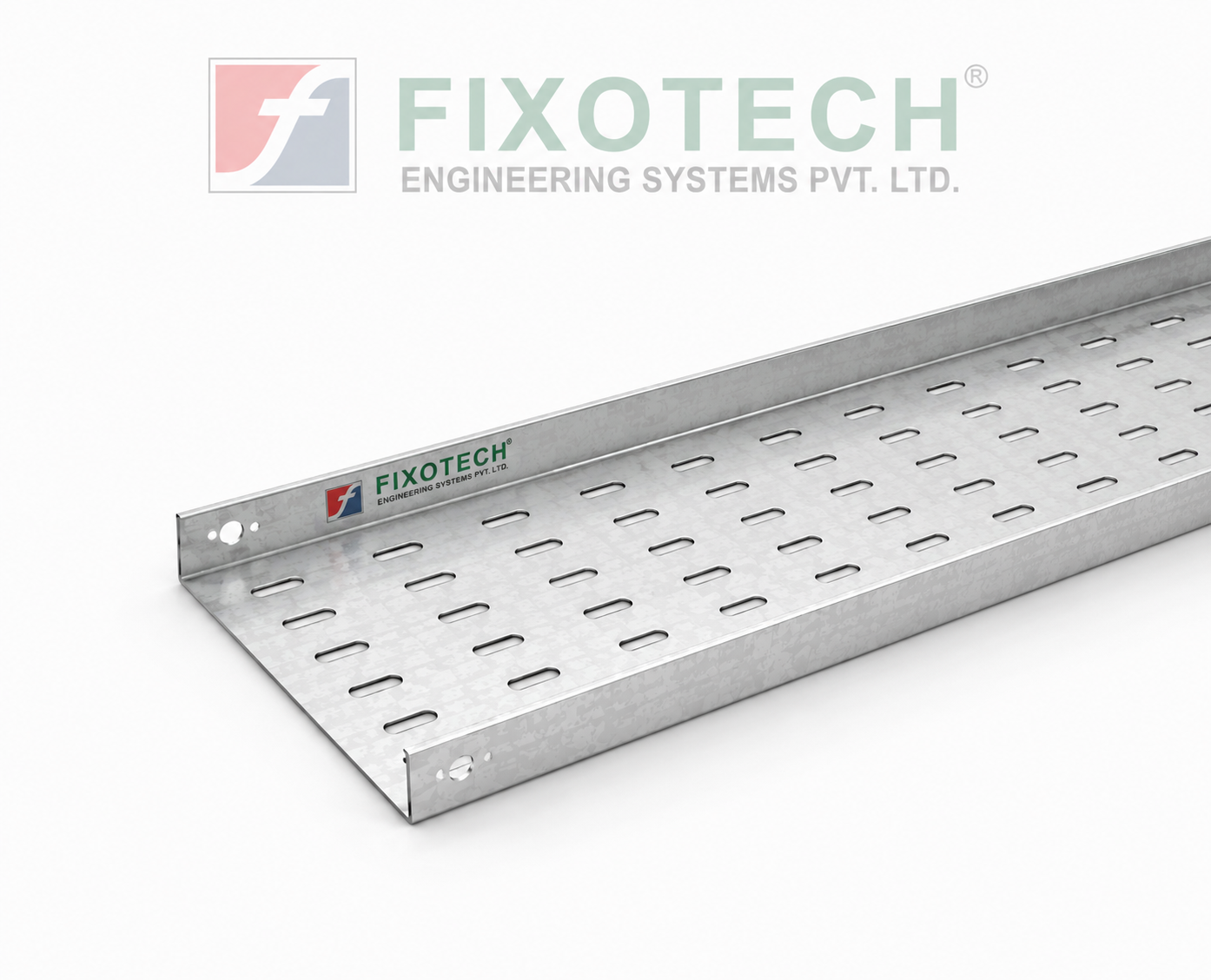 | PERFORATED CABLE TRAY Perforated Tray In electrical systems, a perforated cable trayeither with or without coversis a typical part used to support and arrange cables. View product → |
 | PERFORATED CABLE TRAY TRAY Fixotech |
Frequently asked questions
What does perforated tray availability mean for a Chennai process plant?
Availability means the specified tray, fittings, supports and hardware are ready for dispatch, or the supplier has given a documented fabrication date that meets the project schedule.
How do you choose perforated cable tray material and finish for a process plant?
Match the tray material and finish to the plant environment, including corrosion exposure, temperature, washdown conditions and the applicable project standard.
How should you calculate tray width and support span?
Use the cable schedule to total cable diameters, apply the required separation and spare capacity, then check the resulting load against the tray rating and support span.
What should you verify before placing an order with a perforated tray supplier in Chennai?
Verify the manufacturer’s drawings, material and finish, standards, stock or fabrication date, accessory list, quality documents and delivery commitment.
Related products
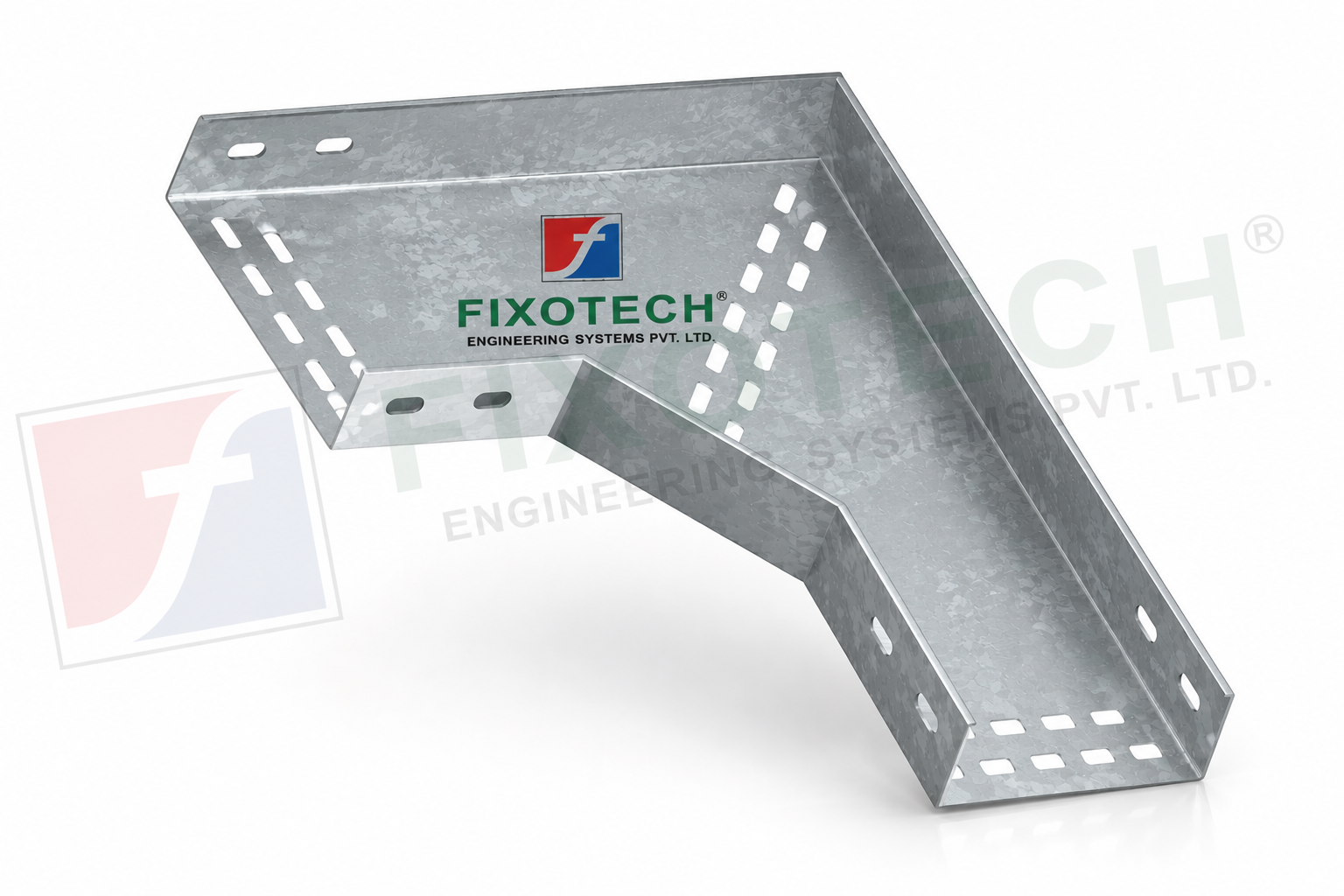 | PERFORATED CABLE TRAY One particular part of cable management systems that is employed when directional adjustments in cable routing along a horizontal plane are required... View product → |
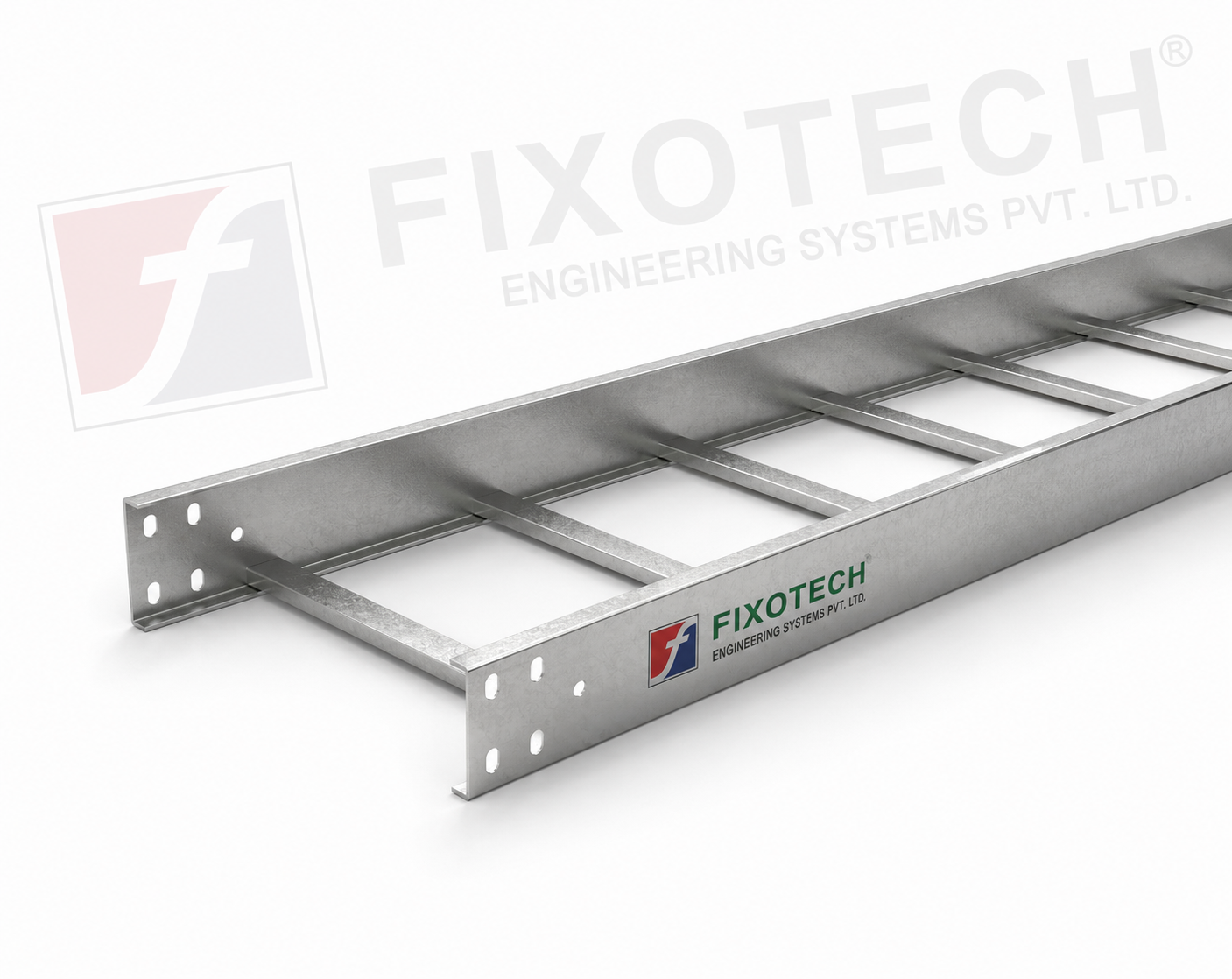 | LADDER CABLE TRAY Other common name in Cable tray industry is ladder tray. Simple design consisting of side rails with rungs connected. View product → |
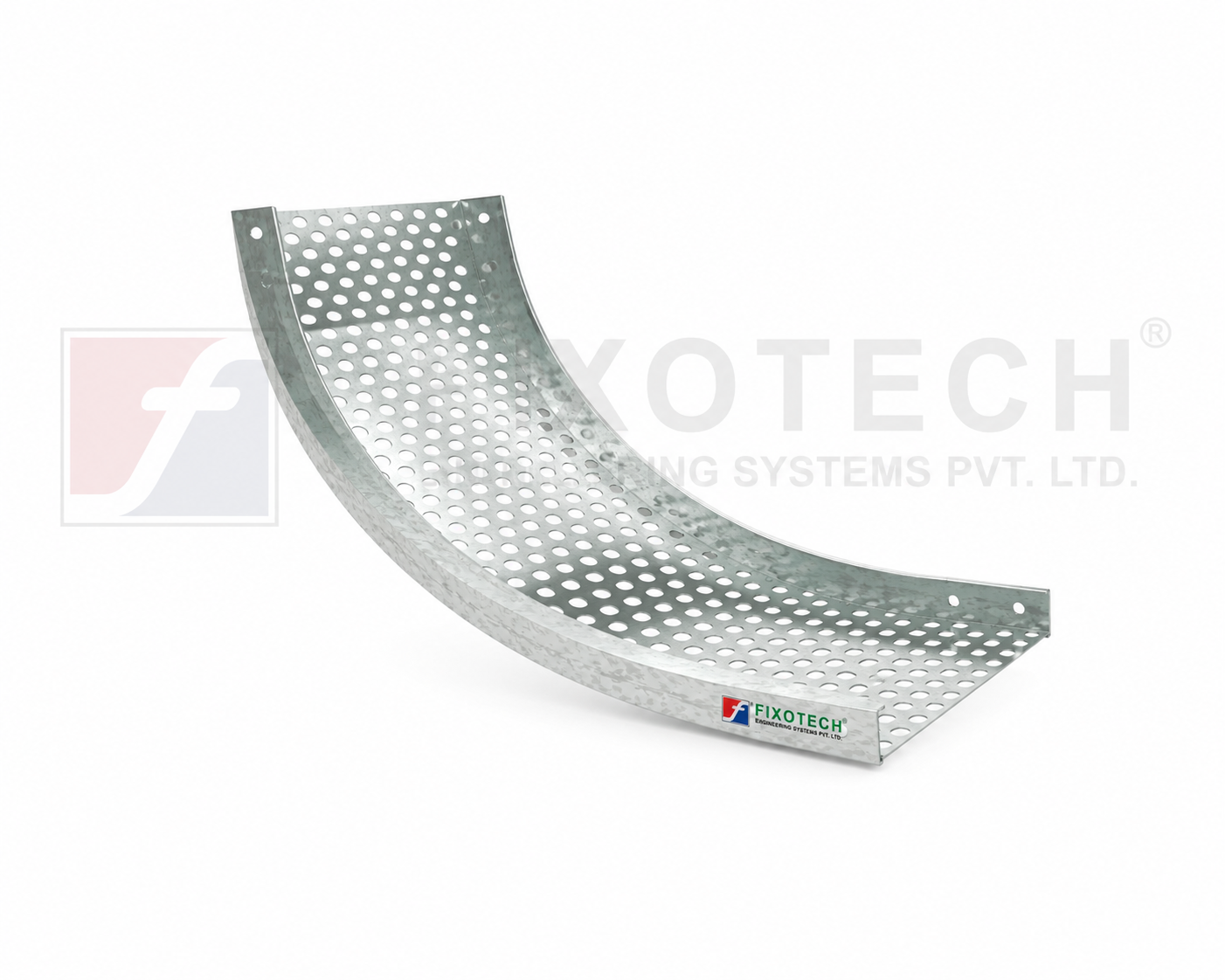 | PERFORATED CABLE TRAY Specialized parts utilized in cable management systems are vertical bends in perforated cable trays, both inward and outward. View product → |
 | PERFORATED CABLE TRAY It's possible that a “cross bend perforated type cable tray“ refers to a specific part that cable management systems use. View product → |