A credible quotation depends on more than tray price or a catalogue photograph. By the end, you will be able to define the technical brief, verify capacity and corrosion protection, distinguish a fabricator from a trader, and compare complete installed-system costs.
Key takeaways
- Give every supplier the same cable schedule, route drawings and performance requirements.
- Check tray width, cable weight, support spacing and future capacity together.
- Match material and coating to corrosion, temperature and installation conditions.
- Compare testing, standards, delivery scope and installed cost—not quotation totals alone.
Give Every Manufacturer the Same Technical Brief
Comparable quotations start with an identical technical brief, not a product name or an estimated tray width. Give every cable trays manufacturer in Chennai the same cable schedule, route information and performance requirements so price differences reflect real scope.
1. State the cable type, quantity, outside diameter, total cable weight per metre, ampacity data, circuit separation, required spare capacity and applicable installation standard. Identify single-core power, multicore, control, instrumentation and fire-survival circuits separately; they do not all share the same spacing or derating rules.
2. Specify the governing product standard, such as IEC 61537 or NEMA VE 1, plus the exact load and span classification. Require capacity at your actual support spacing, installation elevation and conditions. “Heavy duty” or “kg per metre” alone cannot be checked.
3. Provide route length, straight-run dimensions, bend locations, risers, equipment entries, vertical offsets, covers, water or debris exposure and the preferred ladder, perforated-bottom or solid-bottom construction. Include material and corrosion-protection requirements.
4. For custom cable trays in chennai, attach a coordinated accessory schedule covering bends, tees, reducers, splice plates, support brackets, hole patterns, bend radius and dimensional tolerances. Otherwise, straight sections may fit while risers do not.
5. Ask for a layout showing internal clear width, cable outside diameters, separation between power and control circuits, minimum bend radii and reserved future space. Tray width is not the same as usable cable area.
Send the same drawings, cable schedule and revision number to each bidder. Reject quotations that omit tested load data, support spacing, accessories or assumptions; those omissions make “comparable” prices misleading.
Check Tray Width, Load Capacity and Support Spacing
A tray rated at 100 kg per metre on a 1.5 m span is not automatically safe at a 2.4 m span. Ask for the load table showing the proposed tray width, material, tray type and the exact support spacing, rather than accepting “heavy duty” or a single kg-per-metre figure.
Confirm width from the cable schedule: add the outside diameters of cables sharing the tray, provide the specified spacing between circuits, and include the project’s future spare allowance. Check tray depth against cable diameter, bending requirements and cover clearance.
A narrow tray causes crowding and overheating; an unnecessarily wide tray increases cost and may require stronger supports.
Require the quotation to name IEC 61537 or NEMA VE 1 and state its load/span classification. NEMA VE 1 ratings apply to uniformly distributed load, not point loads from cleats, junction boxes, transformers or people. Get separate design confirmation for those loads.
Use this checklist before approving the layout:
- Compare the manufacturer’s load-test report with your actual cable weight per metre and support span.
- Check that supports, splice plates, brackets and anchors carry the same design load.
- Add an intermediate support if the span reduces capacity; a wider or thicker tray is not always the best fix.
- Verify bends, tees, reducers, risers and equipment entries, not only straight lengths.
- For custom industrial cable trays in Chennai, require dimensional tolerances and an accessory schedule so every component fits.
Compare Materials, Coatings and Fabrication Quality for the Site
A dry indoor electrical room in Chennai does not need the same corrosion system as an exposed roof, coastal site or chemical-processing area. Select the material and coating from humidity, salt deposition, wash-down water and chemical fumes—not from the city name alone.
| Material and protection option | What it means | When it applies |
|---|---|---|
| Pre-galvanized steel | Zinc coating is applied before cutting and forming; cut edges require attention | Clean, sheltered indoor areas with limited moisture |
| Hot-dip galvanized after fabrication | The completed tray and fittings receive zinc protection; coating damage from later cutting must be repaired | Outdoor, humid or marine-influenced routes |
| Stainless steel or aluminium | Higher material cost with different strength, joining and compatibility considerations | Severe corrosion exposure or where the project specification demands it |
| Duplex system | Zinc protection combined with a specified paint or powder coating | Aggressive chemical exposure or extended protection requirements |
Require the quotation to name IEC 61537 or NEMA VE 1, the load/span classification and every coating grade. ISO 1461 does not set one universal zinc thickness for every tray; request the applicable requirement and galvanizing inspection records instead of accepting “85 microns” for all components.
Inspect straight sections and accessories, including splice plates, brackets, covers and weld repairs. Ask for dimensional inspection records, material certificates, coating records and traceability from raw material to dispatch. Check weld penetration, burr removal, hole alignment, accessory fit and the stated repair method for cut or damaged coating.
Compare a normalised bill of materials, not only the straight-tray price per metre. Include bends, tees, reducers, covers, supports, splice hardware, bonding jumpers, coating upgrades, packing and damaged-component replacement.
Prove the Supplier Can Manufacture, Test and Support the System
A trader can quote a convincing metre rate without owning fabrication equipment, controlling tolerances or supporting failures after delivery. Inspect the factory, request its process flow from coil or sheet receipt through cutting, forming, welding, coating, inspection and dispatch, and verify equipment such as roll-forming, punching, bending and welding machines.
Ask the supplier for these records before placing an order:
- A quotation stating IEC 61537 or NEMA VE 1, the tray type, exact load and support-span classification, and allowable dimensional tolerances. “Heavy duty” is not a testable rating.
- A representative load-test report, material test certificates, galvanizing or coating records, and dimensional inspection records.
- A coordinated accessory schedule covering straight lengths, bends, tees, reducers, vertical offsets, covers, splice plates, brackets, hole pattern and bend radius.
- Traceability linking raw-material certificates, drawings, inspection reports, packing lists and invoices to the same legal company name.
- A production schedule showing inspection points, packing protection, dispatch dates and the process for replacing damaged or short-supplied parts.
- Named site and after-sales contacts, response times, spare-part responsibility and written handling of nonconforming trays.
Do not accept a steel tray or covered tray as fire-rated without a report for the complete tested arrangement: specified cables, tray or ladder, supports, joints and mounting configuration.
Fixotech Engineering Systems Pvt Ltd: Manufacturer of Cable Management Systems should be assessed by the same evidence, including whether its load data matches your actual support spacing rather than a catalogue maximum.
Related products
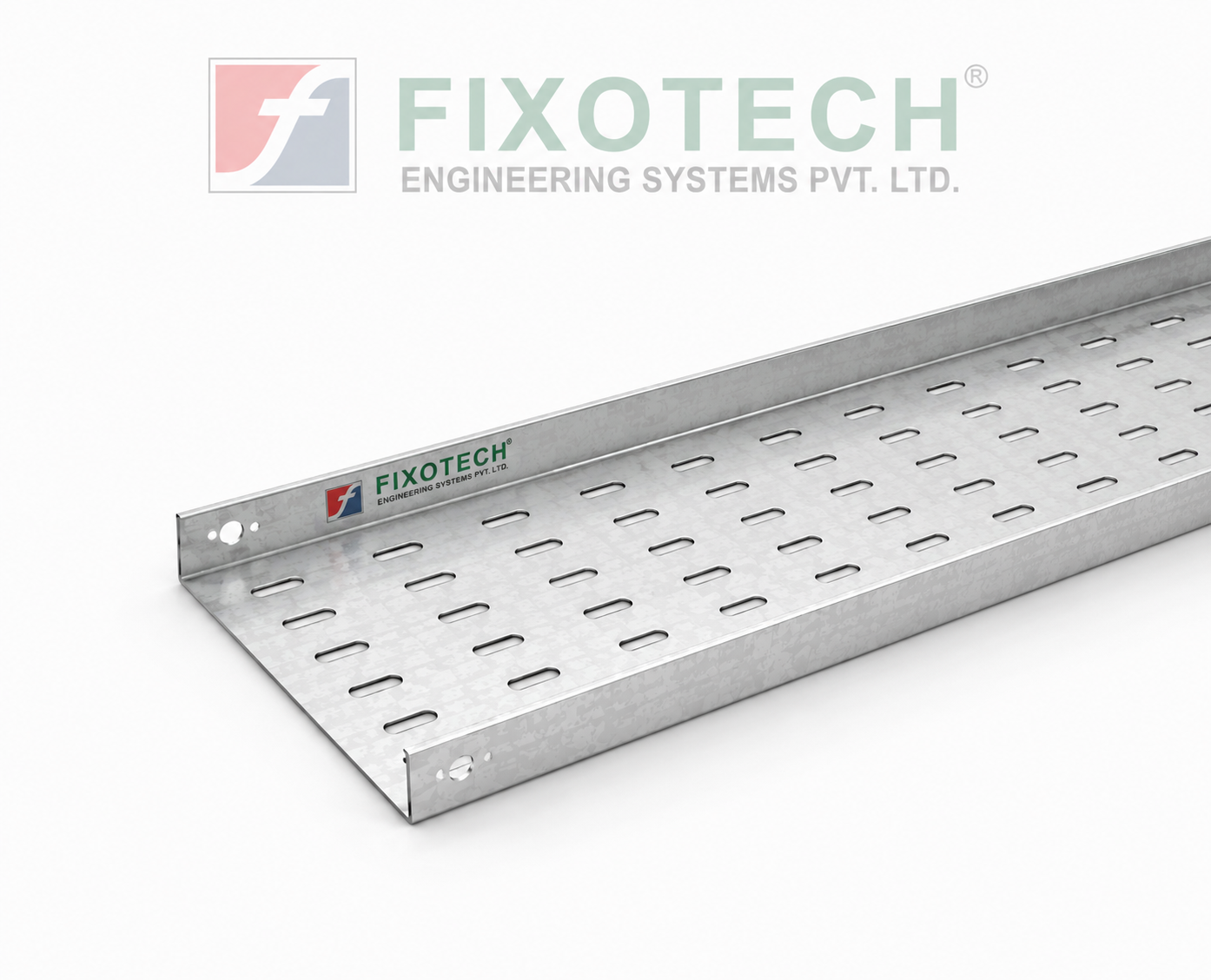 | PERFORATED CABLE TRAY Perforated Tray In electrical systems, a perforated cable trayeither with or without coversis a typical part used to support and arrange cables. View product → |
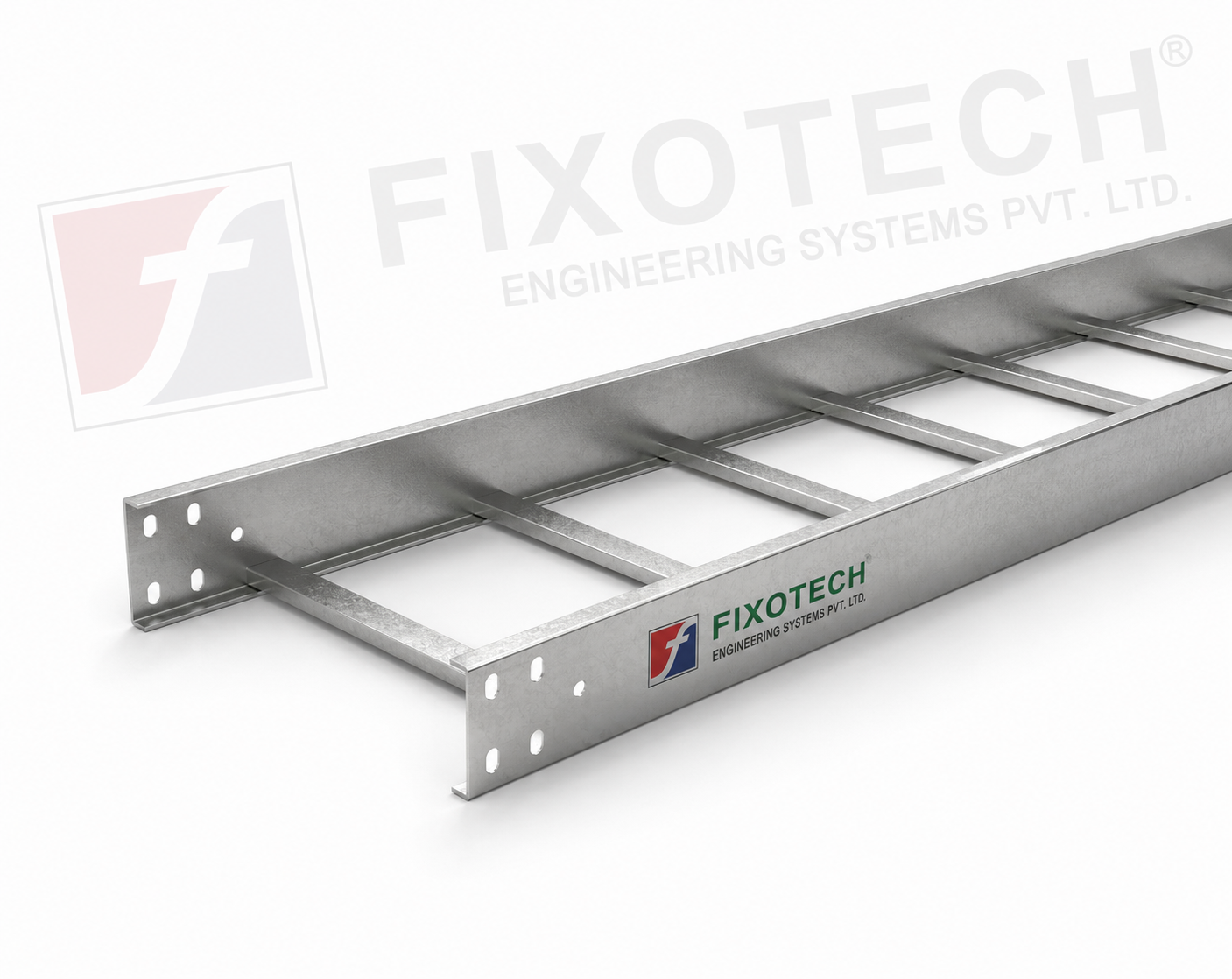 | LADDER CABLE TRAY Other common name in Cable tray industry is ladder tray. Simple design consisting of side rails with rungs connected. View product → |
Compare Complete Bids Against Standards and Installed Cost
Select the supplier with the lowest project risk, not the lowest straight-tray metre rate. Require every quotation to use the same route quantities and state the governing product standard—IEC 61537 or NEMA VE 1—plus the exact load and support-span classification.
“Heavy duty” and “500 kg/m” are not checkable without span, tray type, width, material and installation conditions.
| Bid item | Low-risk evidence | Warning sign |
|---|---|---|
| Straight tray and ladder | Width, depth, material, finish, length and unit rate are stated | One blended rate hides different products |
| Fittings and covers | Bends, tees, reducers, covers and dimensions are itemised | Fittings are excluded or priced as allowances |
| Supports and hardware | Brackets, hangers, splice plates, bolts and bonding jumpers are included | Support steel appears only in an installation note |
| Protection and inspection | Coating grade, inspection records and packing method are identified | “85 microns” is quoted for every galvanised component |
| Fire-survival system | Test evidence covers the cable, tray, supports, joints and mounting arrangement | Ordinary steel tray is sold as fire-rated without a complete test |
Recalculate the installed price from a normalised bill of materials. Add supports, coating upgrades, transport, packing, erection, damaged-component replacement and site modifications; a cheaper metre rate can produce the costlier route.
- Check cable fill, ampacity and heat dissipation against cable-manufacturer data and the installation standard.
- Confirm delivery dates for every fitting, not only straight lengths.
- Score drawing quality, inspection records, response time and warranty commitments before awarding the order.
A complete, auditable quotation is worth more than a small rate saving that creates redesign, shortages or rework.
Frequently asked questions
What technical information should you give every cable tray manufacturer?
Provide the cable schedule, route drawings, tray widths, cable weights, support conditions, environmental exposure, required finish and future capacity in one identical brief.
How do you check cable tray width, load capacity and support spacing?
Confirm the tray accommodates the cable bundle with separation and expansion space, then verify its load rating at the specified support span rather than comparing width alone.
Which materials and coatings suit industrial cable trays?
Select the material and finish against humidity, chemicals, temperature, outdoor exposure and galvanic corrosion risks at the installation site.
How should you compare cable tray quotations?
Check fabrication quality, inspection records, testing, standards, accessories, delivery, installation assumptions, warranty and future maintenance before comparing the total installed cost.
Related products
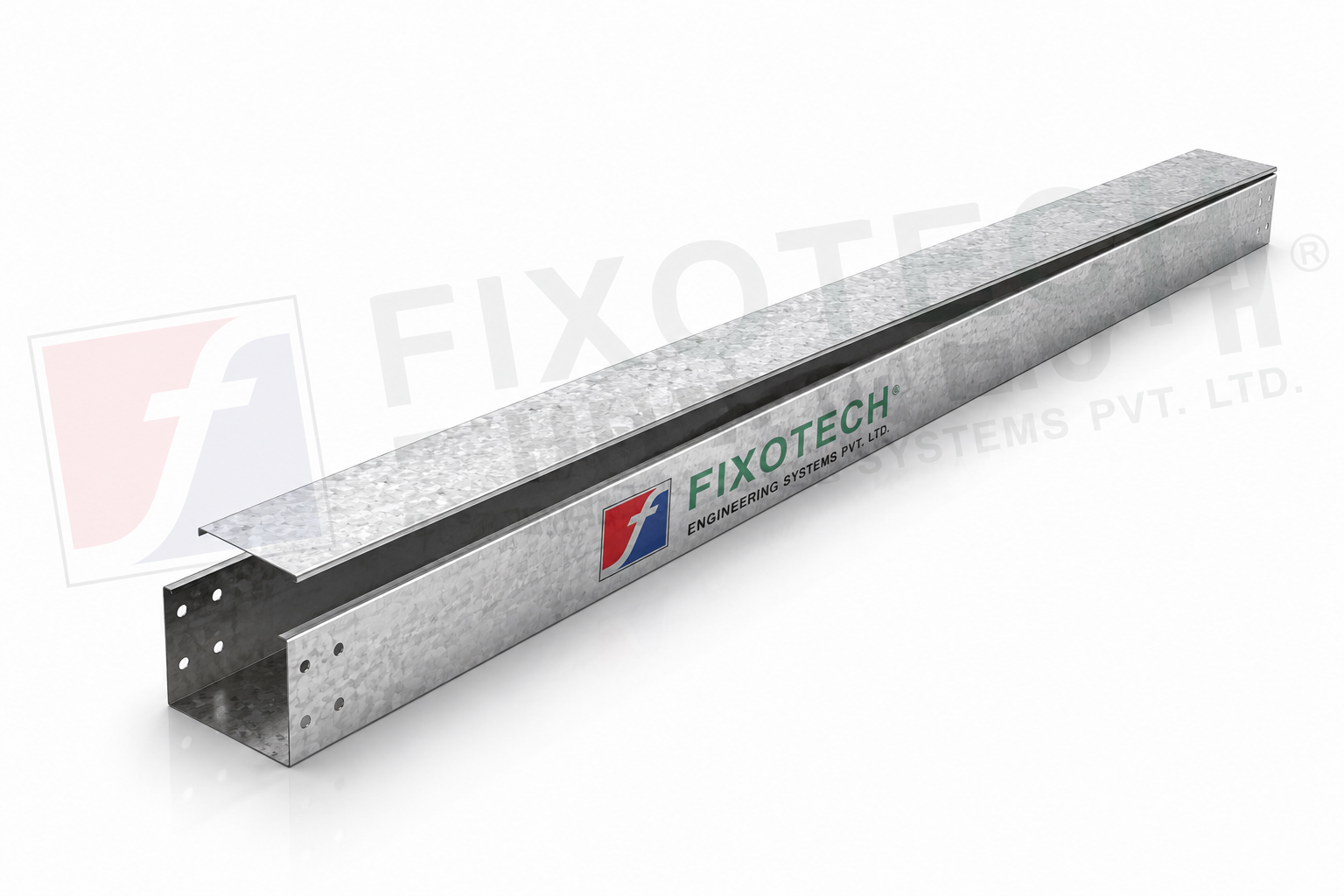 | RACEWAY CABLE TRAY - CEILING RACEWAY RACEWAY CABLE TRAY - CEILING RACEWAY A cable management system made especially for routing and arranging cables over ceilings or overhead spaces is called a ceiling raceway cable tray. View product → |
 | PERFORATED CABLE TRAY TRAY Fixotech |
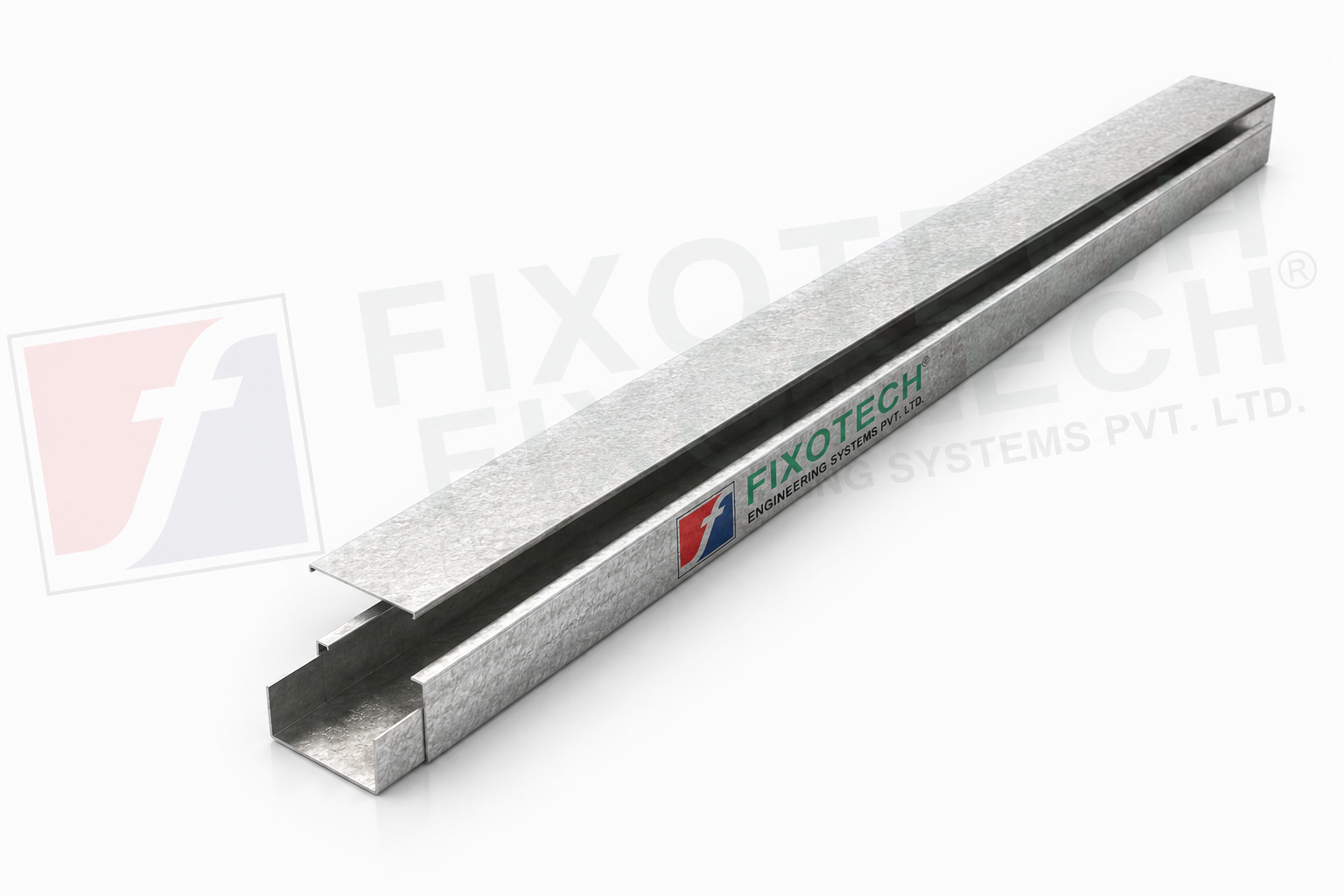 | RACEWAY CABLE TRAY - FLOOR RACEWAY RACEWAY CABLE TRAY - FLOOR RACEWAY A cable management system called a floor raceway cable tray, or just a floor raceway, is used to route and safeguard wires between floors, especially... View product → |
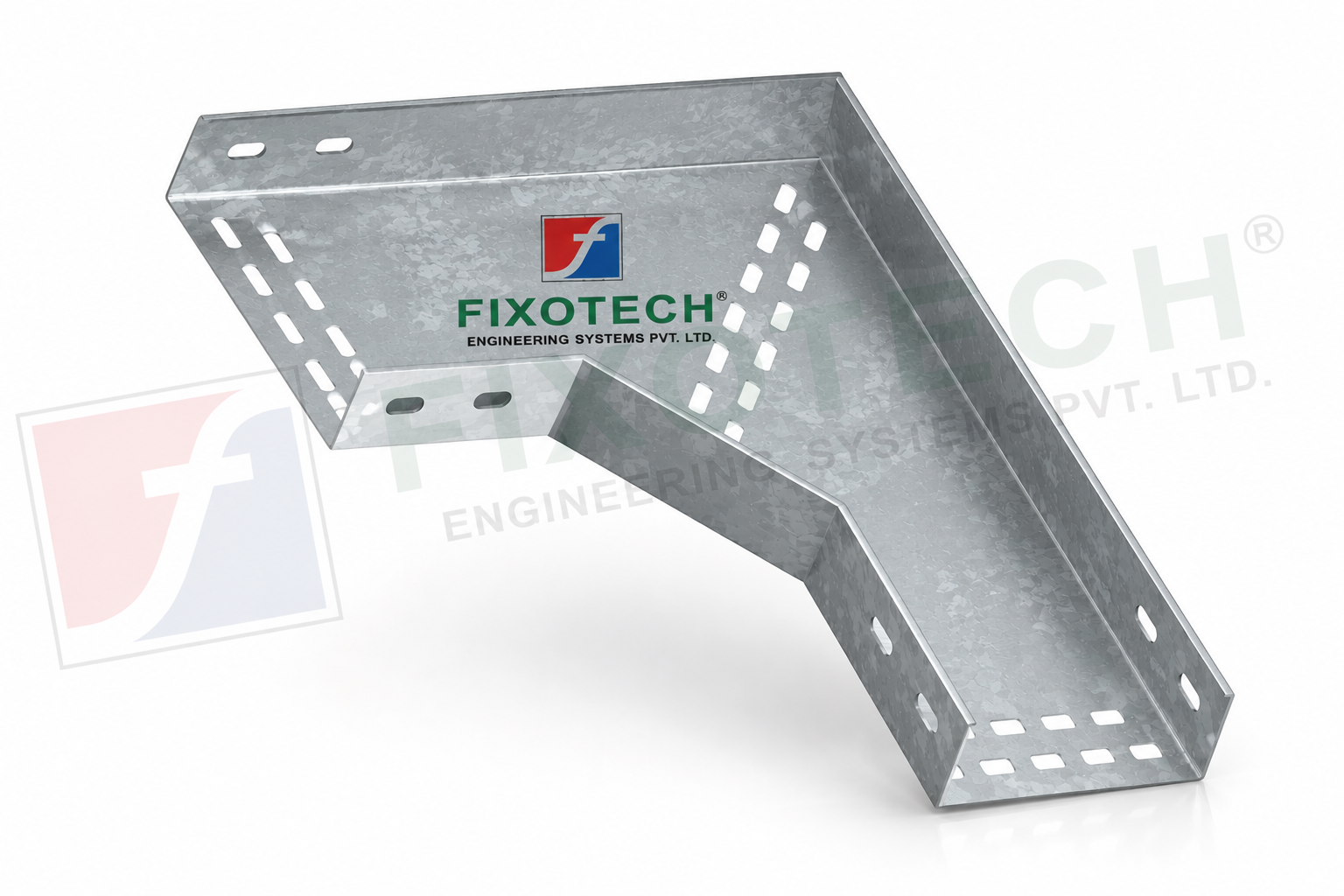 | PERFORATED CABLE TRAY One particular part of cable management systems that is employed when directional adjustments in cable routing along a horizontal plane are required... View product → |